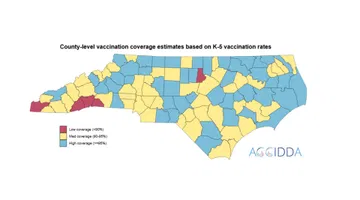
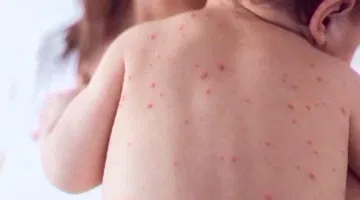
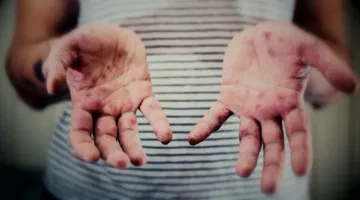
North Carolina public schools require students get the MMR (measles, mumps, rubella) vaccine, but families can ask for an exemption, so it's not safe to assume every student in your child's classroom has been vaccinated.
Who should get the measles vaccine?
Other WRAL Top Stories
The Centers for Disease Control and Prevention (CDC) recommends children get two doses of the MMR (measles, mumps, rubella) vaccine:
- First dose at age 12 through 15 months
- Second dose at age 4 through 6 years (before school entry)
While MMR vaccination is not routinely recommended for children younger than the age of 12 months, MMR vaccination can be safely given to children as young as 6 months if they are at higher risk.
Any adult born after 1957 who has not received the vaccine should also get vaccinated. One dose of MMR vaccine is sufficient for most adults, according to the CDC.
Child care centers set their own vaccine rules
According to the state, children enrolling in a child care program, including child care centers and homes, religious child care centers, pre-K programs and others, will be asked to get certain vaccines, including the measles vaccine.
Families will be asked to submit a certificate of immunization filled out by your doctor or an exemption for medical or religious reasons.
According to the state, young children are required to get their:
- First dose of the MMR vaccine between 12-15 months of age. Any child 16 months or older who has not gotten their first dose should not attend child care until they do.
- Second dose between the ages of 4-6 years, before kindergarten.
Some children ages 6-11 months may get a dose early because:
- They were exposed to someone with measles, or
- They are traveling to an area of the U.S. that has measles cases or are traveling internationally.
Doses administered before 12 months of age do not count toward the one-dose requirement between 12-15 months.
Wanda McFargo, who is the owner of Wanda's Little Hands Education Center in Raleigh, welcomes kids as young as 12 months old.
"That's the firs thing that we get up front to ensure, to make sure they do have their immunizations, updated immunizations," McFargo said.
McFargo said she is also requesting records from staff members.
"We do not require them to show immunization, but that is something like I said, we were just discussing that just again, just to take precaution," McFargo said.
K-12 schools
The state Department of Health and Human Services breaks down vaccine requirements for children in kindergarten through 6th grades, 7th through 11th grades and 12th grades. See a list here.
The list of vaccines required for children to start school in North Carolina includes 2 does of MMR (measles, mumps, rubella).
Medical, religious exemptions from vaccine requirements
Parents can request that their child be exempt from vaccine requirements for medical and religious reasons. A personal or philosophical opposition to vaccination is not considered a valid reason for an exemption in North Carolina public schools.
A child, for example, with a weakened immune system or severe allergy can get exempt from certain vaccines, but that requires written proof from a doctor.
To apply for a religious exemption from vaccine requirements, an individual (or the parent for minor children) must submit a written statement including their name, date of birth and reason for objection to a vaccine. That statement should be delivered to the school or child care program where the child is enrolled.
Colleges and universities
Students entering any North Carolina four-year college or university must have certain vaccines, including public, private and religious schools. Schools will ask students to submit:
- A certificate of immunization filled out by your doctor or provider; or
- An immunization record from a high school in North Carolina; or
- An exemption for medical or religious reasons.
How schools respond to measles cases
The state has a guide to how schools should respond if a case of measles is suspected.
According to the state, schools and child care centers should:
- Contact your local health department. If you can't reach them, call the state epidemiologist on-call at 919-733-3419, available 24/7.
- Immediately isolate anyone experiencing symptoms in a private area until they can seek health care.
- Child care/schools: Children should stay isolated until a parent/guardian can pick them up. Follow guidance from the health department on when children and staff can return.
- Colleges/universities: Follow isolation/quarantine guidance for campuses.
- Child care/schools: Children should stay isolated until a parent/guardian can pick them up. Follow guidance from the health department on when children and staff can return.
- Work with public health staff to communicate with your community. Immediately notify parents/guardians of children who are susceptible to measles.
NC pediatrician explains how to stay safe from measles
WRAL News asked pediatrician Dr. Lori Langdon about the potential for dangerous consequences of measles cases in children.
"Your memory cells lose their memory and they have immune amnesia," Langdon said. "This, for a large part, explains why children, after having measles are so very susceptible to what we call secondary bacterial infections."
It is just one reason why she emphasizes the need for both parents and their children to get the measles vaccine.
"This is your wakeup call," Langdon said. "This is the time to do it. I would not have vaccinated all six of my own children if I thought that there was a danger or a concern with the vaccine itself."
More on measles
WRAL News has a Q&A that will be updated as more cases are reported in North Carolina. You can also check out the vaccination rates in elementary schools in your county.