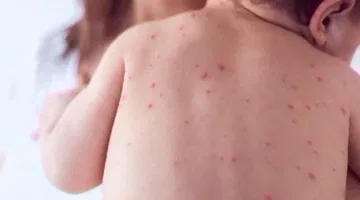
Measles cases are spreading in North Carolina, with exposures reported in Wake, Durham and Orange counties, among others.
Wake County Public Health is urging families to make sure everyone -- young and old -- has been vaccinated to protect against this highly contagious and potentially serious disease.
Other WRAL Top Stories
Q&A: What to know about the measles outbreak
Below, find a list of commonly asked questions about measles. Some were taken from the Centers for Disease Control and Prevention's Q&A page, while others were asked by WRAL News and answered by state health officials.
Who should get the measles vaccine?
The MMR vaccine (measles, mumps and rubella) vaccine is safe, effective and widely available, according to Wake County Public Health.
Children should receive two doses – one between the ages of 12-15 months and the second at 4-6 years old.
Any adult born after 1957 who has not received the vaccine should also get vaccinated.
Two doses of the MMR vaccine are about 97% effective at preventing measles. One dose is about 93% effective.
Where can I get a measles vaccine?
The MMR vaccine is readily available at most doctors' offices, clinics and pharmacies.
Most health insurance plans, including Medicaid, generally cover the vaccine, often without any out-of-pocket costs.
Wake County Public Health offers the vaccine at our health clinics by appointment which can be made by calling 919-431-4000.
How does measles spread?
Measles spreads through the air when an infected person coughs or sneezes and it’s so contagious that up to 90% of people nearby who aren’t immune will also become infected.
You can get measles just by being in a room where a person with measles has been - even up to two hours after they have left.
What are the symptoms of measles?
According to the CDC, signs and symptoms of measles include:
- High fever
- Cough
- Runny nose
- Red, watery eyes
- Rash
Symptoms may appear 7-14 days after contracting the virus, but the infected person is contagious before the telltale rash appears.
WRAL News spoke to Dr. Zack Moore, an epidemiologist for the state, to learn about how prepared the state is for a measles outbreak, and tips to avoid catching it on vacation in the United States and abroad.
I think I have measles. What should I do?
Immediately call your healthcare provider and let them know about your symptoms so that they can tell you what to do next. Your healthcare provider can make special arrangements to evaluate you, if needed, without putting other patients and medical office staff at risk for getting measles.
If I received 2 doses of a measles vaccine, do I ever need a booster vaccine?
No. If you received 2 doses of measles vaccine at age 12 months or older according to the U.S. vaccination schedule you should be protected for life, and do not need a booster dose for measles protection. If you're not sure whether you should get a dose of measles vaccine, talk with your healthcare provider.
How effective is the measles vaccine?
According to state epidemiologist Dr. Zack Moore, if you get two doses of the measles-containing vaccine, that's 97% effective. Barring that, people who are exposed are highly likely to develop measles, and unfortunately, some of those cases can be severe.
Could I still get measles if I am fully vaccinated?
Very few people—about three out of 100 people who get 2 doses of measles vaccine (or about seven out of 100 people who get one dose of a measles vaccine) will still get measles if exposed to the virus.
How long does it take for the measles vaccine to work in your body?
For the measles vaccine to work, the body needs time to produce protective antibodies in response to the vaccine. Detectable antibodies generally appear within just a few days after vaccination. People are considered protected after about 2 or 3 weeks, but the vaccine may provide protection sooner
Are North Carolina hospitals prepared to quarantine and treat patients with measles?
The Triangle’s three major hospital systems all say they’ve taken steps to prepare staff for a potential increase in measles cases.
UNC Health, Duke Health and WakeMed say they’ve reviewed isolation protocols with staff on the frontlines in the health systems.
Dr. Anne Nolan, director of Infection Prevention at WakeMed, shared the first step is isolation.
“If a patient arrives with measles-like symptoms, we would ask them to wear a mask and place the patient on airborne isolation precautions as recommended by the CDC,” said Nolan.
Urgent isolation with highly contagious viruses with measles is essential to reduce spread.
Duke Health Pediatric Disease Specialist Dr. Tony Moody added that patients would be taken to rooms where ventilation pulls air into a room, rather than out. He shared that the ultimate goal is to keep patients out of high-congestion areas, such as emergency rooms, altogether.
Moody said Duke Health has more than 100 rooms designed for airborne infection isolation.
WRAL News asked Moody if he was concerned about the number of rooms.
"Absolutely, and we ran into the same problem with Covid, when we were in a situation where we had too many patients for the rooms," Moody said.
Doesn't the vaccine provide herd immunity?
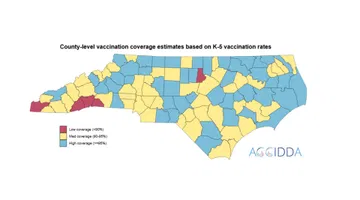
Several of North Carolina's counties haven’t hit a 95% vaccination rate amongst kindergartners. Would those counties be most at risk during an outbreak? North Carolina residents can check the vaccination rate for their children's school and in their county here.
Moore: Yes, they definitely are. Statewide, we've now fallen below 95%, but diseases don't spread statewide or even across the county, they spread locally.
So if you drill down in the kindergarten dashboard for immunizations, you'll see that there are some particular school communities where coverage is much, much lower, and so that's just a reflection of the fact that the risk is not even across the state. There are these pockets where [there are] a lot more people who are susceptible.
The reason why we're worried about that is because measles is so highly infectious, and the vaccines are very effective, but no vaccine is 100%.
Why are people hesitant to get vaccines?
"What we're seeing now, globally and now in the United States, is increasing miscommunication and misunderstandings about vaccines, leading people to not get the recommended vaccinations," Moore said.
He added: "Globally, measles vaccine coverage has been declining for several years. That's why we're seeing these big outbreaks. Even in parts of the world that hadn't had a lot of measles activity. There have been big outbreaks in Europe, Canada, etc., and also now here in this country and here in North Carolina, we're starting to see those vaccine coverage rates go down, so that just provides a fertile ground for measles to spread."
What are the biggest complications from measles?
According to Moore, [there are] common complications, ear issues, diarrhea, but then there are less common and more severe complications, particularly pneumonia, that can develop with measles, that are very concerning.
“Measles isn’t just a childhood illness—it can be dangerous for people of all ages, especially babies, older adults and those with weakened immune systems,” said Wake County Public Health Director Rebecca Kaufman.
What should parents and schools do if they suspect someone has measles?
We don't want people with possible measles just showing up unannounced in emergency rooms and exposing a lot of people," Moore said. "We want our schools and our providers to know what to do if they suspect that there might be a measles case.
We're also specifically sending outreach to schools that have lower immunization coverage and might be at higher risk to make sure they know what to look for; working very closely with our local health departments. Many of them have close communications with their providers and their populations.
Some of them are taking steps to make the measles vaccine more available to people who might not be sure of their own vaccination status or might need a measles vaccine. If you are going to be traveling internationally, or you're going to an area where we know there's a measles outbreak, talk to your doctor, because there may be additional protection that you can get."
What should people do if they’re unsure of their vaccination status or their children’s vaccination status?
Moore: I'd encourage anybody to talk to your doctor if you have those questions because every individual circumstance is a little different.
Most people were vaccinated, or those born before 1957, were exposed to measles. It's only if you're going to be traveling internationally, or going to an area where there's a measles outbreak, or if you have no reason to expect that you might not have gotten vaccinated, that you need to get another dose, but those are good questions to talk to your doctor about.
Do North Carolina hospitals have the funding to fight a potential outbreak in NC?
Moore: It is a concerning time for us, not only with the increase in measles but also some of the changes that are happening at the federal level. We saw a lot of our funding pulled back some of that pandemic-era funding that was being used to shore up our communicable disease detection and response systems.
That means that some of the capacity we had, for example, to help local health departments with case investigations or finding contacts if we had a measles case, we've lost some of that, some of the people who work on our basic infectious disease detection and response activities.
We've lost quite a few of those people due to those federal funding cuts that happened a few weeks ago, we've lost some of the staff in our state's largest hospital systems that help with disease detection and communication around communicable disease issues.
So it's a worrisome time, not only because we're seeing an increase in measles, but at the same time we're seeing these threats to our public health infrastructure and our public health staff that you know, make us more vulnerable.
What else should North Carolinians know about protecting themselves against measles?
The measles vaccine is the only protection out there against infection.
Measles vaccines are highly effective. One dose is about 93% effective at preventing measles infection two doses, about 97%. There are no other ways to prevent measles infection.
"I just want to be clear about that, because there's a lot of talk about vitamin A, which can be used in some situations as part of treatment for somebody with severe measles in certain settings under a doctor's care," Moore said.
"I think people confuse that with thinking that vitamin A can prevent someone from getting infected with measles and it cannot. We've seen, in other states, some issues with vitamin A toxicity and kids being given vitamin A under the mistaken belief that it's going to protect them against measles, and then ending up with overdoses on that."