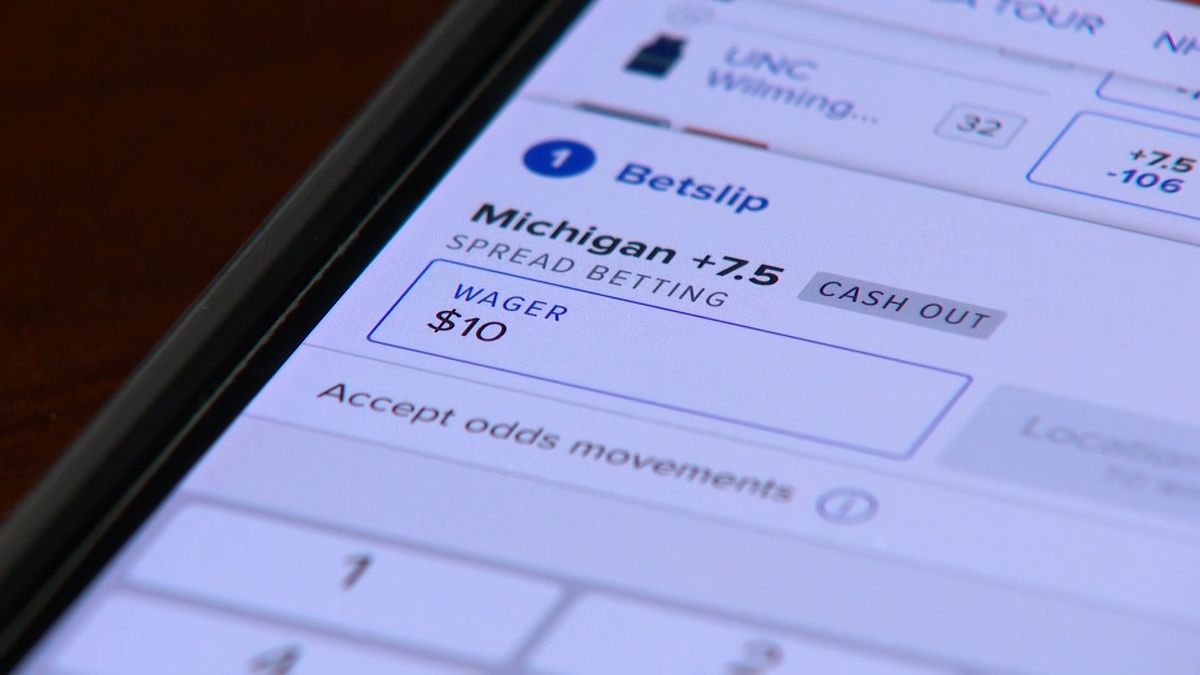
Americans are expected to bet billions of dollars on this week’s Super Bowl, the biggest betting day of the year.
In North Carolina, wagers are expected to top $76 million based on a report from the Sports Betting Alliance.
Other WRAL Top Stories
In 2025, the first full year it was legal; bettors wagered more than $7 billion statewide. In December alone, wagers topped $650 million, marking the fourth straight month at that level.
As betting grows, so does concern about its impact, from addiction to integrity in sports.
“It’s a giant industry,” said Sarah Howe, CEO of the Addiction Professionals of North Carolina. “Billions of dollars across the country. It’s taking off like wildfire.”
Kelly Crosbie, director of the Division of Mental Health, Developmental Disabilities and Substance Use Services at the North Carolina Department of Health and Human Services, said the scale is impossible to ignore.
“We have massive amounts of North Carolinians’ money being spent,” Crosbie said. “We didn’t have that two years ago. It’s pervasive in the culture.”
The WRAL Documentary Unit is examining the impact of legalized sports betting over the past two years, with a documentary set to premiere across all WRAL platforms in March.
One of the biggest questions: Does legalization help catch cheaters or create more of them?
State Representative Marcia Morey, a Democrat who represents House District 30 in Durham County, has been a vocal critic of legalized sports betting. Morey, a former judge, opposed legalization from the start.
“Once you introduce an element of wagering on athletes, the whole game changes,” Morey said.
In January, federal prosecutors charged 26 people in a massive point-shaving scheme involving college basketball. One case involves a former North Carolina A&T player from Winston-Salem, accused of helping to throw a game. Investigators said players across more than 17 Division I teams were bribed to underperform.
The charges come after betting related scandals involving athletes in the NBA and Major League Baseball.
Supporters of legalized betting argue those cases prove their point.
Former state representative Jason Saine, a Republican who represented House District 97 and helped lead the legislative push to legalize sports betting before leaving office, says legalization brings transparency.
In legal markets, sportsbooks are required to collect betting data and report suspicious activity. Illegal and overseas betting sites face no such requirements.
“When you look at the cases where we’ve caught people cheating, it’s because it was legalized,” Saine said.
Critics push back, saying legalization dramatically expands betting, putting more pressure on players and increasing the risk of corruption.
“I think that’s an empty assumption,” Morey said, “That we’re in a better position now to find cheaters than we would have been without legalization.”
Saine argues the problems existed either way but are now visible.
“The problems were still there,” he said. “Now we bring them to the forefront and we can address them.”
Sports betting was legalized in North Carolina before some states banned prop bets on college athletes. Lawmakers are still debating whether additional restrictions are needed.