How a former NASCAR executive with deep Chapel Hill ties plans to move UNC athletics forward
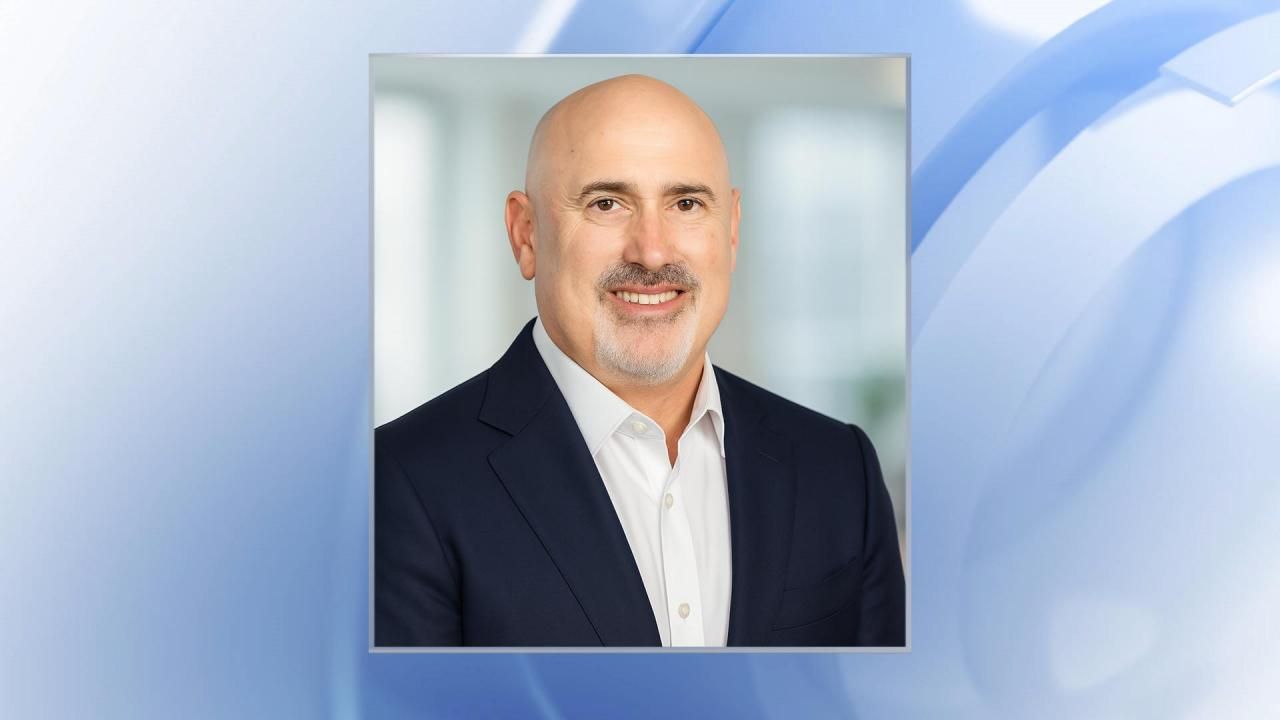
Steve Newmark grew up in Chapel Hill surrounded by North Carolina athletics leaders.
He was close with the family of UNC-Chapel Hill’s former athletics director, Dick Baddour. His parents were friends with legendary Carolina basketball coach Dean Smith. Smith’s trusted assistant coach, Bill Guthridge, lived a neighborhood over. Newmark worked for about a decade at the UNC Faculty Club, where the daughter of former UNC women’s soccer coach Anson Dorrance was among his campers.
Other WRAL Top Stories
Now it is Newmark’s turn to lead the Tar Heels.
He will become the university’s athletics director next summer when current AD Bubba Cunningham moves into a senior advisor role. Newmark, a longtime NASCAR team executive, started Aug. 15 as the executive associate athletics director, a nine-month apprenticeship of sorts.
The Chapel Hill of his youth has changed. “A realtor takes me out to say, ‘Hey, we need to look at a house here,’” Newmark, 54, said. “That used to be a field where we used to go hang out in high school. Now it’s 200 homes and a beautiful neighborhood.”
The college sports landscape has changed even more, in ways those long-ago leaders might not recognize. Unlimited transfers with immediate eligibility. Revenue sharing with players. Name, image and likeness deals. Conferences that stretch coast to coast. An insatiable need for more money.
“We are somewhat at an inflection point,” Newmark said.
It’s why Newmark, a lawyer who spent the past 15 years as the president of NASCAR’s Roush Fenway Keselowski (RFK) Racing, is here. Race teams generate about 80% of their revenue from sponsorships, Cunningham said, and college athletics is seeking a boost in that area to keep up with ever-rising expenses. NASCAR is famous for plastering its cars, drivers suits and helmets with logos.
Even before Newmark’s hire, UNC was considering naming rights to its venues, including football, and selling more signage on fields, courts and even players in the form of jersey patches. State Farm will have corporate logos on the Kenan Stadium turf for the season opener against TCU.
“I promise we won’t look like a NASCAR driver’s fire suit,” Newmark said. “Once we set the bar there, you got to work down from there. I personally believe the entire country and the sports fan base is getting acclimated to seeing more marketing and promotion integrated into the games.”
Time for a transition
Dean Jordan, a top executive at Wasserman Media Group with deep contacts and television rights experience, helped connect Cunningham and Newmark, whose affinity for the school is well known.
“That was not a secret to anybody,” said Newmark, who attended William & Mary in hopes of extending his soccer career, though injuries kept him from the pitch. Newmark played soccer at Chapel Hill High with Wake Forest athletics director John Currie. Newmark earned his law degree at the University of Virginia.
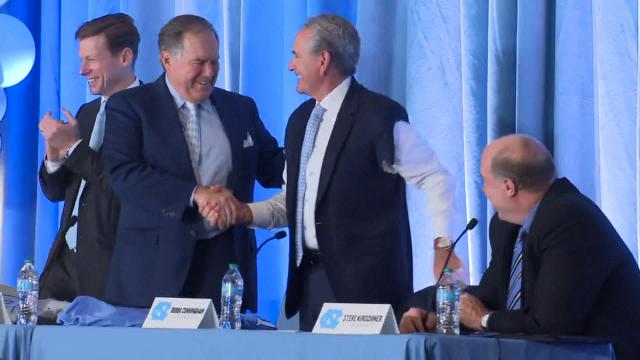
Cunningham and other UNC officials visited with Newmark over the past year to get a look under the hood of a professional organization. Newmark served on the search committee that ended with UNC hiring NFL coaching legend Bill Belichick.
“That was an interesting process for everybody involved, including yourselves,” Newmark told reporters Wednesday. “I think Bubba and I commiserated about it quite a bit on some late-night phone calls after some of the twists and turns of that process.”
Cunningham, who became athletics director in November 2011 and had two academic years remaining on his contract, was considering his future — at UNC and elsewhere. His conversations with Newmark and UNC Chancellor Lee Roberts drifted toward a transition.
“I’ve seen a whole bunch of different [athletics directors], but the ones that are most successful are the ones that can develop relationships across campus and build the campus community, and have the economic or the financial background to make sure you can create revenue that’s going to support what you want to do,” Cunningham said. “And it just seems though he had a great balance of those two.”
His hire was a bit of a shock.
UNC didn’t conduct a formal search, and the UNC Board of Trustees didn’t have to give its approval of the hire because it has been stripped by UNC System Peter Hans of decision-making in athletics after the Belichick search. Newmark and Roberts both grew up in Chapel Hill and have known each other for a long time.
“The fact that we landed on such a qualified individual to work with Bubba to continue to modernize our approach to athletics is confirmation that saving the resources a search firm would have required was appropriate,” a university spokesman told WRAL when Newmark’s hire was announced on July 1.
Newmark signed a five-year contract through August 2030 that will pay him $1.2 million in base salary and quarterly payments as athletics director with a slew of potential bonuses for athletic and academic achievement. Cunningham’s reworked contract pays him more than $1.3 million in base salary and quarterly payments through June 2027.
Cunningham’s salary will drop to $540,000 a year, with the chance to earn large bonuses, when he moves into the new senior advisor role and Newmark takes over, allowing the veteran AD to stay on board for a few more years and lead on various projects.
“We both believe that there’s a potential to be unlocked and for us to continue to grow and expand as the university grows and expands,” Newmark said.
Crucial time for Tar Heel athletics
The next five years — Newmark’s initial term — could well set the course of UNC athletics for decades or more. There’s the enormous investment in the Tar Heels’ often average football program and Belichick, who signed a five-year, $50-million contract. In the short term, before he coached a game, the football program has seen increased sponsorships, ticket sales, media attention and donations.
UNC this year sold out of every football ticket earlier than ever, even with a 25% price increase, and is projecting $19 million from ticket sales — up from $12 million during the previous year. Existing premium sections sold out, too. Higher attendance is expected to drive more than $750,000 in additional food, beverage and merchandise sales. Membership in The Rams Club hit an all-time high and more than 1,000 new members bought tickets. Donations exceeded $18 million, a new high, for the fiscal year in which Belichick was hired.
Football’s importance in driving revenue for the entire enterprise is vital, a fact Roberts has made repeatedly. UNC’s athletics department budget has risen sharply in recent years. It will exceed $180 million this academic year and likely reach $200 million soon. And donors can only do so much.
“We have a big upside from a financial standpoint,” Cunningham said. “And you’re seeing it this year. The investment is already starting to pay off.”
There’s the future of the Tar Heels’ storied men’s basketball program and its future home arena, which may well be constructed at Carolina North at the cost of nearly $1 billion, likely surrounded by an entertainment or live-play-work district such as the one planned around Lenovo Center in Raleigh, where NC State plays its men’s basketball games. A decision on whether to renovate or rebuild the Smith Center at its current location or build a new arena somewhere else is expected by the end of the year.
Cunningham, as part of his new duties as senior advisor to the chancellor, is tasked with development at Carolina North, a 250-acre tract of land two miles north of main campus where the university has long envisioned funnelling planned growth.
Asked about what he wanted to see before the start of this year’s basketball season, he quipped: “Any way that you can put a whole layer of premium suites by the time the season starts,” referring to the Smith Center. The arena, which is home of the men’s basketball team, turns 30 in January. It lacks premium seats and suites and other amenities of modern facilities.
“When the Smith Center came out, I remember it,” he said. “I remember when we transitioned from Carmichael [Auditorium], and it was state of the art. It was incredible. And time has passed, and it’s not where it needs to be to support an elite collegiate athletic basketball team.”
And then there’s conference consolidation or realignment. Given its national brand and location in a growing populous state passionate about college athletics, UNC seems positioned for an invitation from either or both of the Southeastern Conference or the Big Ten, the twin behemoths of college athletics. Which one is preferable may depend on what those leagues look like when it’s decision time.
But much of the school’s athletics identity is tied to the North Carolina-based Atlantic Coast Conference, its home for the last 70-plus years. The league offers an easier path to football relevance and caters to UNC and the state in a way the Southeastern Conference and Big Ten never would.
Those leagues, however, offer larger paychecks from media rights deals and more sway over the future of college athletics. As part of a settlement with its top football brands, the ACC set specific fees to exit the conference, a departure from its previous position, but it also added success and viewership initiatives intended to allow its biggest brands, including UNC, to earn more money and close the gap with the other leagues.
“There’s significant upside for us,” Cunningham said of the league’s initiatives.
That’s a lot to consider.
UNC's plans to grow population, athletics
Roberts, who became permanent chancellor a year ago, wants the university to grow. As the state’s population has boomed, UNC’s student population has remained steady. To rectify that, the university is adding 5,000 students over the next 10 years, a process that started with the incoming freshman class which grew by 500.
Other peer schools — flagship public universities that focus on both academics and athletics — have substantially larger student bodies. Texas, Florida and Michigan each have more than 50,000 students. UNC has 32,000.
“Lee’s North Star is kind of the guiding principle that dictates our strategy, which is to position UNC as the premier public educational institution in the country,” Newmark said. “And our mission is to be able to serve that. And so what I think you’ve seen Bubba do is try to prepare the athletics department for the challenges that are, we think, coming in the next few years.”
North Carolina added highly paid general managers in football (Michael Lombardi) and men’s basketball (Jim Tanner) since December. UNC also hired Rick Barakat as its chief revenue officer for athletics — “the right person at the right time,” Newmark said.
A new pre-game football tailgating event, dubbed “Chapel Thrill,” features a slew of new sponsored spaces and a concert series. UNC added additional premium seating locations in Kenan Stadium, selling terraces and a new Kenan Skybox to accommodate increased demand for Belichick’s first year.
Barakat has been public about his increasing sponsorship opportunities, including renegotiating the department’s contract with Learfield, which handles much of its sponsorship sales. UNC added State Farm logos to the Kenan Stadium turf in advance of the opener against TCU.
“We’re taking a fresh look at what we can free up and make available to corporate sponsors,” Barakat told WRAL earlier in August. “What better hits the objective and the criteria — TV visible signage, more beachfront locations we can monetize, jewel assets like field logos or court logos.”
He said the fact that UNC has been selective in the past about where sponsors might be allowed to advertise has allowed him to pitch opportunities to be the first, not the ninth, at a particular location or deal.
“That’s what he’s supposed to do, and it’s our job to dial it back,” Newmark said.
Cunningham said naming rights and jersey patches — which have not yet been approved by the NCAA — would likely drive the biggest amount of revenue. But, he added, those will take the longest to get sold. Unlike college teams, NASCAR teams don’t own tracks or get to sell tickets to races. So it’s all about sponsorships.
“That’s where the sponsorship experience that he brings us is going to be really valuable to Carolina,” Cunningham said. “Let’s make sure that it fits … with what we’re doing and what we’re saying as an institution culturally. What’s the right fit for us?”
The university has committed to maintaining its current varsity sports, a larger program than most universities. The Tar Heels have had national success across the board, with recent titles in women’s sports such as soccer, field hockey, tennis and lacrosse.
“We really value broad-based programming — 28 teams, 800 kids,” Cunningham said. “And now we’re getting more comfortable saying we have to find ways to support them. And we can do $20 million [in revenue sharing] on top of that and we can do NIL on top of that. So I think the sense is this means a lot to us. So figure out how to finance it.
"And I think that’s just opening up more doors, and we’re more comfortable going into those spaces and saying we’re going to do this because why we’re doing it is so important.”




Copyright 2026 by Capitol Broadcasting Company. All rights reserved. This material may not be published, broadcast, rewritten or redistributed.