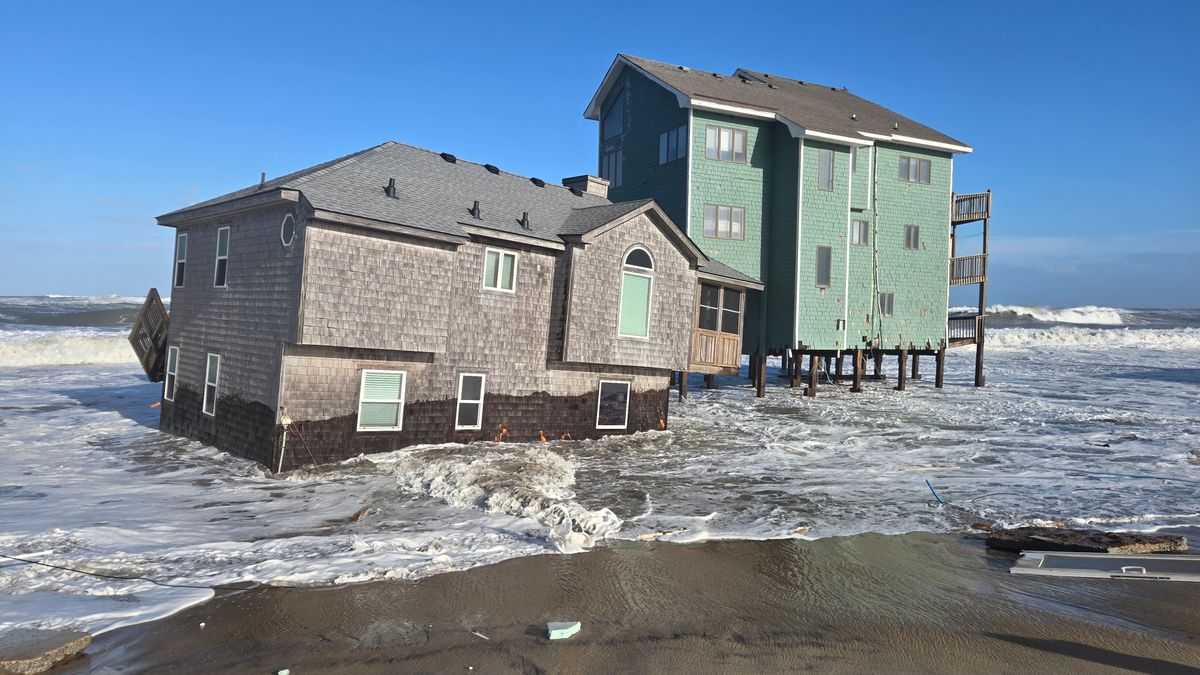
Eight beachfront homes in the Outer Banks collapsed into the Atlantic Ocean this week as Hurricanes Imelda and Humberto passed offshore.
With king tides forecast for next week, more homes could be damaged or even destroyed.
Other WRAL Top Stories
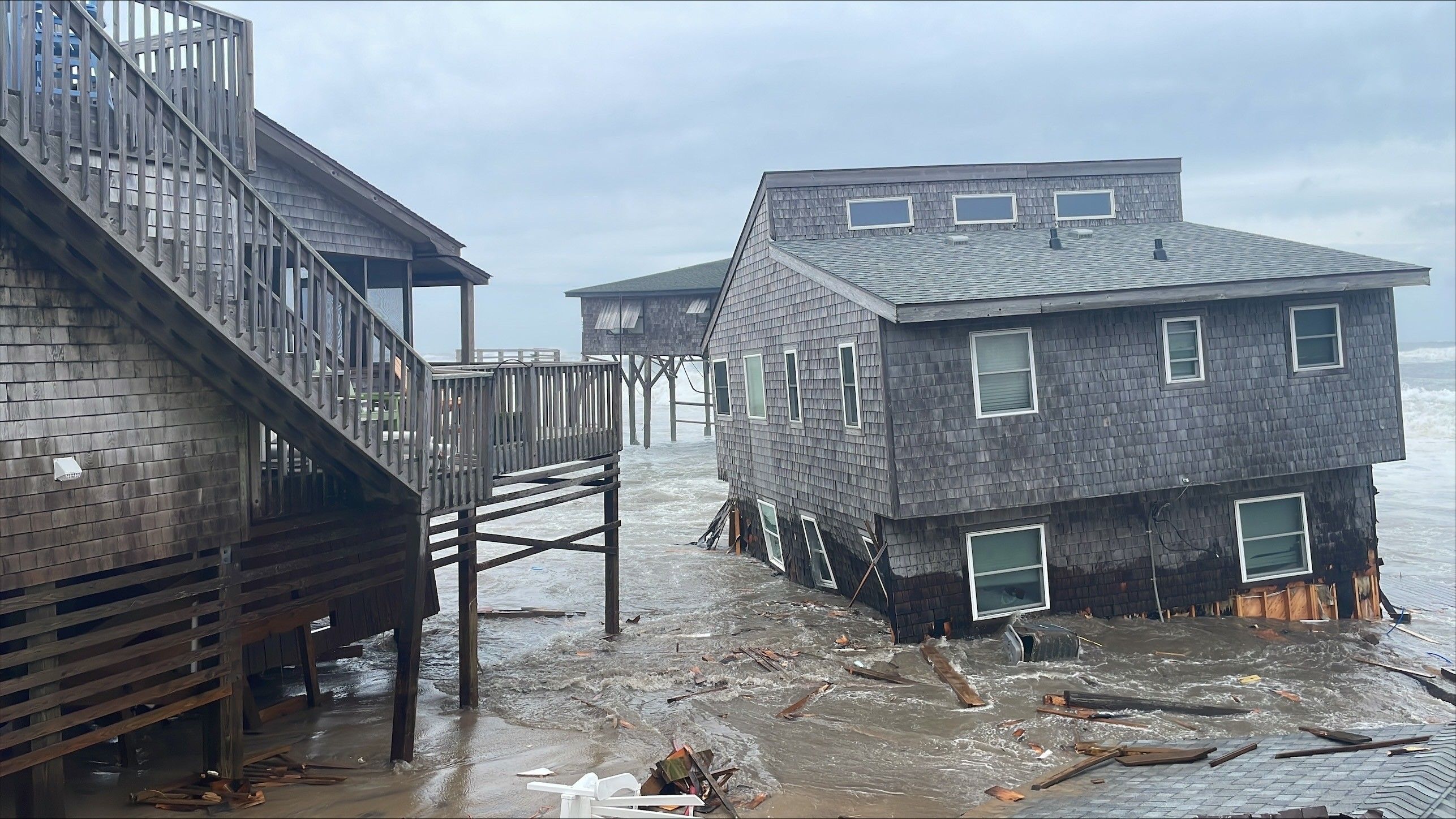
Five homes fell in Buxton within 45 minutes on Tuesday when the storms were closest to the Carolina coast, according to the Cape Hatteras National Seashore.
Another home fell Tuesday night, and two more fell on Thursday. Each collapse creates a dangerous debris field that ultimately has environmental impacts on the beach and for the ocean.
Photos: Outer Banks homes collapse into the ocean
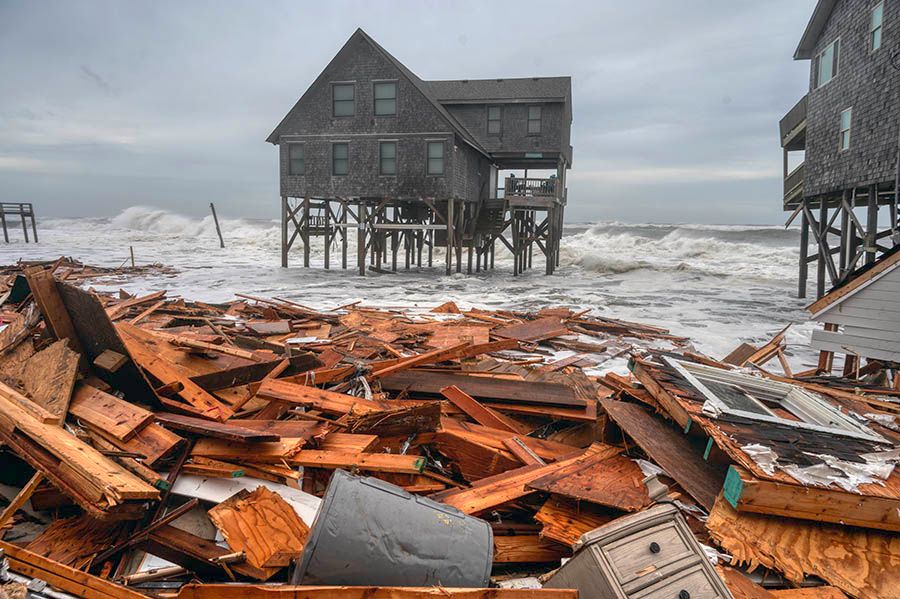
None of the homes was occupied, and no one was injured.
The entire beachfront, from northern Buxton through the northern section of off-road vehicle (ORV) ramp 43, is closed for public safety. ORV drivers using ramps 38 should avoid traveling to the south and anyone using ramp 43 should avoid traveling north.
Since 2020, 19 homes on Hatteras Island have collapsed in the Buxton and Rodanthe area.
Laura Moore, a professor in the University of North Carolina at Chapel Hill’s College of Arts Sciences’ Earth, Marine and Environmental Sciences department, has studied patterns along the coast and the impact of climate change.
"Unfortunately, Buxton and Rodanthe are one of these places where there is not enough sand coming in to replace the sand that is coming out by long-shore currents and so the shoreline is moving land where chronically the shoreline is eroding,” Moore said.
Dare County Manager Bobby Outten said the county has more than 100 miles of shoreline and government is limited in preventing houses from collapsing.
"The county doesn't own the beach [or] doesn't own the land," Outten said. "Those houses that are vulnerable, that are in the surf like that, and so we don't have that authority [or] that jurisdiction.
"And so, the question becomes, how do we get those houses off of the beach before they fall?"
Moore says there's an expected increase in the frequency of severe storms due to climate change. Those storms are occurring on higher water levels than in the past and they are more intense.
Property owners, who can't collect insurance until a house falls, are inclined to wait until the worst happens rather than spend thousands to move a house away from the encroaching ocean.
WRAL News previously reported about how many sea level rise experts believe there are areas of barrier islands that are not ideal for development.
Rodanthe has become the focal point in the national conversation about the impacts of climate change on sea level rise in coastal areas.