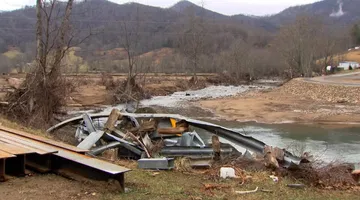
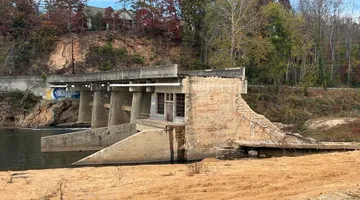
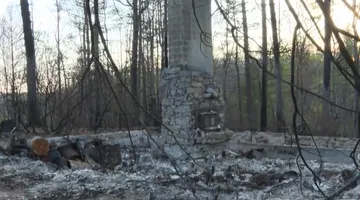
More than a year after Hurricane Helene tore through the North Carolina mountains, small rural counties are still footing the bill while waiting for federal disaster funds to arrive.
In Avery County, local officials say they have spent about $50 million on cleanup and recovery — even though the county’s annual operating budget is $42 million. Only a small portion of that has been reimbursed by the Federal Emergency Management Agency (FEMA), according to Commissioner Dennis Aldridge.
Other WRAL Top Stories
“Our fund balance is going down about $2 million a month,” Aldridge said. “The math is not compatible.”
A system under strain
Avery County crews cleared more than a million cubic yards of downed trees and debris after Helene, repairing washed-out roads and temporary bridges. But recovery has been slow, with county projects still awaiting FEMA approval and payment.
Aldridge said the delays stem from changing rules, frequent staff turnover within FEMA, and new federal review requirements.
“We’re willing to do whatever is required,” he said. “But we can’t do that whenever everything changes so quickly.”
A FEMA spokesperson told WRAL the agency has obligated more than $818 million for over 1,700 recovery projects in North Carolina, along with an additional $2 billion for debris removal.
The spokesperson said FEMA “remains committed” to helping communities recover and noted that oversight for contracts exceeding $100,000 now requires review by Homeland Security Secretary Kristi Noem, who “approves these contracts within 24 hours” to balance speed and accountability.
However, FEMA did not answer specific questions about how much of that funding has actually been paid out, whether the 24-hour review timeline is being met in practice, or why local governments say they’re still waiting for reimbursement more than a year after the storm.
Under a new federal policy, contracts exceeding $100,000 must be reviewed by Homeland Security Secretary Kristi Noem — a threshold local leaders say has created additional bottlenecks.
FEMA has also scaled back Emergency Watershed Protection projects meant to rebuild riverbanks and deepen waterways filled with sediment. In Avery County, three major rivers have widened and shallowed since the storm, and officials warn that future floods could spread faster and farther without those repairs.
Counties stretched thin
Neighboring Yancey County faces similar challenges. Local leaders there said FEMA has reimbursed only about 8% of what the county spent on cleanup and recovery.
Across the state, county managers said the reimbursement backlog has forced them to borrow, delay capital projects and draw down reserves. Avery County’s debt to debris-removal contractors now exceeds its total annual budget.
Some smaller municipalities are in worse shape, with multimillion-dollar storm costs and yearly budgets under $2 million.
In a recent letter to Congress, Gov. Josh Stein urged the Trump administration to release additional disaster aid, warning that federal support for Helene recovery covered “barely 9%” of North Carolina’s estimated $59.6 billion in damages.
Stein noted that the federal government covered more than 70% of the recovery costs for historic storms like Katrina, Sandy, and Maria, and cautioned that FEMA’s Disaster Relief Fund was nearing a shortfall that could further delay reimbursements.
“The people of North Carolina deserve a fair shake,” Stein wrote.
Even as the financial strain deepens, many western counties remain physically more vulnerable than before Helene. Riverbeds shifted, slopes destabilized, and thousands of acres of downed timber now dry in the sun — a combination that raises the risk of flooding, mudslides and wildfires.
Officials said they can’t afford to mitigate growing risks while waiting on FEMA dollars that may take years to arrive.
The delays are not unique to North Carolina.
Local governments across the country report longer waits for federal disaster funds. A Wall Street Journal analysis found FEMA has paid out a smaller share of approved reimbursements than in previous years as stricter oversight and a surge of billion-dollar disasters overwhelm the agency’s processing system.
The climate cost
Scientists said the reimbursement delays highlight a growing vulnerability as climate change fuels more destructive weather across the Southeast. The United States has experienced more than 400 billion-dollar weather and climate disasters since 1980, according to NOAA data.
North Carolina alone has seen more than 120 such events, including hurricanes, floods, and wildfires that each triggered federal disaster declarations.
NOAA ended regular updates to its billion-dollar disaster database this year, though Climate Central has continued tracking the data. The nonprofit reports 14 billion-dollar disasters in the first half of 2025, costing more than $100 billion nationwide.
As disasters grow more frequent and expensive, small counties like Avery and Yancey must spend millions upfront before FEMA assistance arrives — a strain that could worsen as climate-driven storms intensify.
Aldridge said Avery County now faces a “tremendous amount of fuel load” in its forests, with downed trees from Helene drying on the ground. Fire roads and river access points washed away in the storm have not been rebuilt, complicating firefighting plans.
“Our fear of an uncontrolled burn is very great,” Aldridge said.
Waiting for relief
The state created a $3 billion emergency relief package and offered cash-flow loans to local governments through the Department of Commerce, but counties say that covers only a fraction of what is needed. Avery County received a no-interest loan of about $3.5 million, which Aldridge said was helpful but far short of closing the gap.
WRAL sent multiple emails requesting comment from FEMA’s Region 4 office about the status of reimbursements and the impact of new oversight rules. FEMA did not respond to questions about how much of North Carolina’s Helene Public Assistance funding has been disbursed, whether new disaster-specific guidance was issued, or the status of watershed restoration projects.
For counties like Avery, the disaster isn’t over — it’s on the ledger. And without federal relief soon, they could already be underwater before the next storm hits.
“We can’t wait much longer,” Aldridge said.