Most new voucher recipients didn't come from an NC public school, new data shows
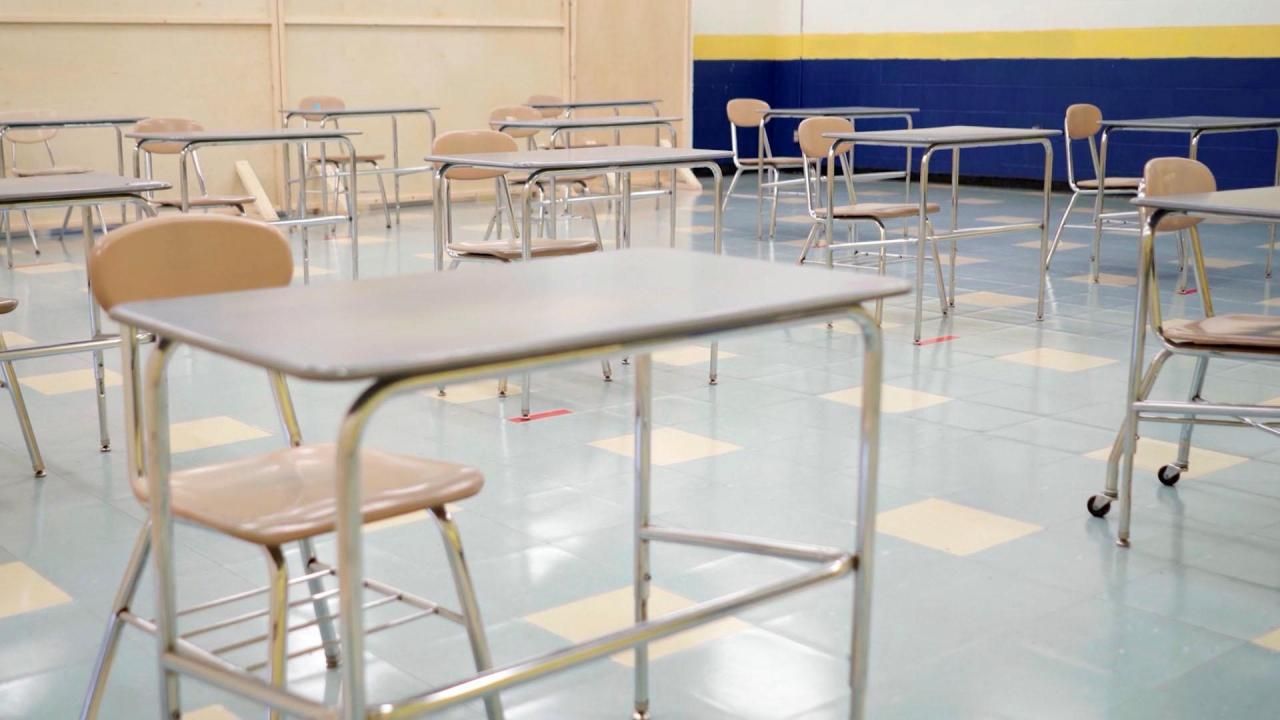
Most of North Carolina's publicly funded general private school tuition vouchers this year went to students who were not enrolled in a North Carolina public school the year before, a new state report shows.
The North Carolina Department of Public Instruction found 6,710 recipients of the voucher, called an Opportunity Scholarship, this year attended a public school in the state last year.
Other WRAL Top Stories
At the same time, the number of Opportunity Scholarships the state is funding rose from 32,549 during the 2023-24 school year to 80,325 during the 2024-25 school year. That increase occurred as eligibility for the program opened up to all families for the first time, regardless of income or whether they were already attending a private school.
The Opportunity Scholarship program is now open to all families of North Carolina school-aged children, and it allows them to apply for funding to send their children to a private school. The student must still be admitted to the private school. About two-thirds of private schools accept Opportunity Scholarships and some now require that students apply for the voucher before applying for school endowment-funded financial aid.
Opportunity Scholarships are awarded on a sliding scale, with the lowest-income families receiving nearly $7,500, based on the amount of funding the state provides per student, on average, to public schools. The wealthiest families get only half of that.
Supporters of expanding the program to all income levels said families deserved help toward sending children to the school of their choice. Opponents argued it would send public dollars to too many families who didn't need the money.
The new data aren't surprising to people who have been monitoring private school tuition voucher programs across the country.
Michael Petrilli, president of the Thomas B. Forham Institute think tank, said universal expansion of the programs typically draws in people already in private school.
"The government offered private school families a big subsidy, and so of course, they're going to take it," he said. "They would be crazy not to just like a tax cut or tax credit that the government offers."
Petrilli supports publicly funded voucher programs but doesn't support expanding them to the wealthiest families.
Many of the newly eligible families already in private schools may be making a lot of sacrifices to afford the private schools, said Mike Long, president of Parents for Educational Freedom North Carolina.
"t's not where a child came from," he said. "It's about where they're going."
But to Heather Koons, the expanded program is costing the state tens of millions more dollars to pay for a totally new set of students already in an alternative to public school, at a time when she says the state needs to invest in public schools more.
Koons, the communications and research director at Public Schools First NC, mentioned the 2022 North Carolina Supreme Court decision that ordered billions more dollars to be invested in the state's public schools for things like higher employee pay and improved special education services. That decision is still being battled in court.
"Our lawmakers are constitutionally bound to provide a public and free education to all," Koons said. "And so if someone wants the choice to go to a private school, they should not expect the taxpayers to fund that choice."
The North Carolina State Education Assistance Authority, which operates the Opportunity Scholarship program, doesn't track prior school attendance. The state Department of Public Instruction instead collected data on Opportunity Scholarship recipients and cross-referenced it with data on students who were enrolled in a public school last year.
It's unclear whether the students who didn't attend a public school last year attended a private school or homeschool or were newcomers to the state.
The department collected the data as a part of a newly required report. Last year, the North Carolina General Assembly required the department to calculate the number of public school students transitioning to a private school under the Opportunity Scholarship program. That's so the state can calculate any potential savings from the program, because the voucher amount for a wealthier family is less than what the state spends on each public school student. The General Assembly would then capture those savings and reinvest them in the state's public schools.
Based on the data DPI collected this spring, that would amount to about $10 million that would be reinvested.
No money is saved when providing vouchers to the students who weren't in public school before, resulting in a net increase in education spending.
The department presented the report to the State Board of Education on Wednesday. The board is set to accept the report Thursday, which includes the recommendation to reinvest the $10 million.



Copyright 2026 by Capitol Broadcasting Company. All rights reserved. This material may not be published, broadcast, rewritten or redistributed.