ELIZABETH PAUL: Local public schools are vital to community resilience
EDITOR'S NOTE: Elizabeth Paul is policy and research director for the Public School Forum of North Carolina.
Local public schools are more than a collection of classrooms and hallways lined with lockers. Our public schools provide a space for connection, bringing people together through sports, arts, and activities to build relationships across generations.
Other WRAL Top Stories
In times of need, our public schools are places of resources and support for all students and families in the community, regardless of household income, race, or ability.
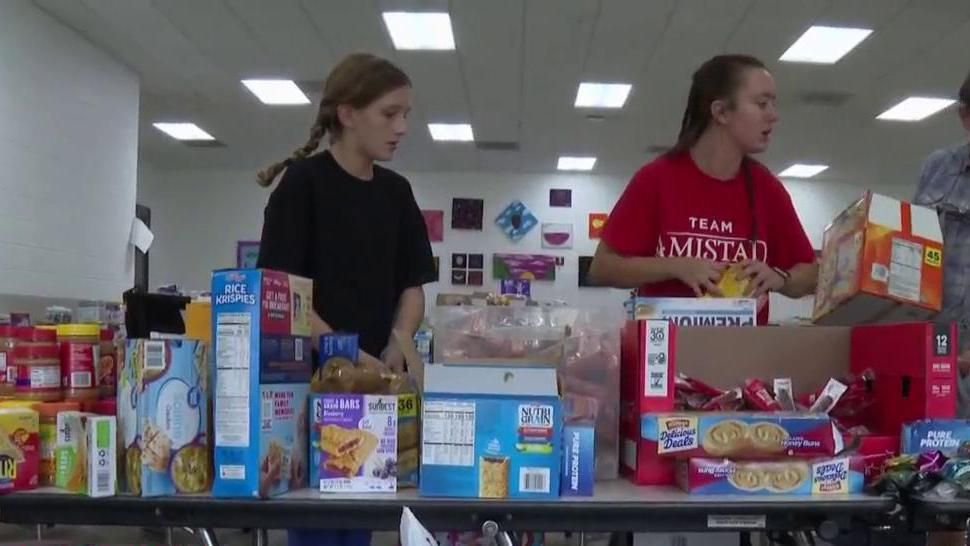
In the aftermath of Hurricane Helene in western North Carolina, local public schools, teachers, and staff are working tirelessly to support children and families. Watauga High School, just outside of Boone, spent four days accounting for every student, including by going door to door.
Ashe County Public Schools opened three emergency distribution centers in schools and served over 800 hot meals out of a high school parking lot in one afternoon -- free for anyone in need.
Buncombe County School locations were used for water distribution and the principal, along with teachers, from North Buncombe Elementary brought birthday cupcakes and presents to one of their students while checking in on families in the community.
These are just a few of many examples of how local public schools are the cornerstone of a community, especially in a time of need. In fact, federal law mandates that students experiencing homelessness -- including those displaced after a natural disaster -- have the right to enroll immediately in a local public school in the community in which they are currently living, even if they do not have the paperwork typically required to enroll.
This is a testament to the unique and central role that public schools play in our state, which is why we need to support them more than ever.
On Oct. 9, the General Assembly passed a $273 million relief package for western North Carolina that included $16 million for the Department of Public Instruction to compensate school nutrition employees, along with compensation for employees and school calendar flexibility for districts impacted by the storm.
The bill included all but one of DPI’s requests for help –- $150 million for building, equipment, and technology loss in impacted districts.
DPI highlighted that their request for $150 million to address needed repairs is only a first-round request, noting that it will not be enough. Yancey County Schools lost an entire elementary school building, estimated to cost $42 million alone.
The ongoing need for support in western North Carolina comes as an override vote looms for Gov. Roy Cooper’s veto of House Bill 10, allocating an additional $248 million of taxpayer funds to private school vouchers for the current school year.
Although the voucher program was originally designed to provide scholarships for low-income families to attend private schools, the legislature eliminated the income eligibility requirements beginning with the current school year. This prompted a drastic increase in applicants and a wait-list of around 55,000 families, the majority of which make over $115,000 annually.
If the veto is overridden, it will take hundreds of millions away from local public schools and instead send those taxpayer dollars to private schools that do not have to report what they teach or which students they accept.
The Public School Forum's analysis of the 200 private schools that received the most taxpayer dollars in the 23-24 school year revealed that only 42% were accredited, only 2% required teachers to hold state certification, and 89% use some form of discrimination in their admissions process.
Moreover, children in rural public schools, including those in western North Carolina, will lose the highest rate of funds. Even without additional voucher funding, the state is spending nearly $20 million on private school vouchers for the current school year in the impacted districts alone.
The vast majority of North Carolina’s families choose to send their children to local public schools; however, our state continues to rank near the bottom in public school funding — 48th in the nation — and spends nearly $5000 less per student than the national average.
Despite this, and even in a time of crisis, our public schools continue to serve their communities. If we continue to underfund these schools, we risk their closing, leaving families with no or few viable options, especially in rural communities.
We cannot take our local public schools for granted. They are often the backbone of our communities and serve over 1,500,000 children and their families. Those children need their schools to be funded and supported.

Copyright 2026 by Capitol Broadcasting Company. All rights reserved. This material may not be published, broadcast, rewritten or redistributed.