Families, school boards appeal block of $1.7B-plus Leandro plan to NC Supreme Court
Five low-wealth school districts and families whose children attend them have asked the North Carolina Supreme Court to review a decision that blocked a $1.7 billion education funding transfer.
On Nov. 30, the North Carolina Court of Appeals, on a 2-to-1 vote, blocked a Nov. 10 decision by Superior Court Judge W. David Lee that required state finance executives to move more than $1.7 billion in unappropriated state funds into three different education budgets — effectively circumventing the General Assembly’s authority over state spending.
Other WRAL Top Stories
The Court of Appeals found Lee did not have the authority to order the budget transfer -- a finding that aligning with what Republican lawmakers, opposed to the funding plan, had been contending.
The money is for the so-called “Leandro plan” that Lee approved in court earlier this year. That plan seeks to improve the state’s schools. By law, the state funds education, and counties fund school facilities.
The plan stems from the same lawsuit, which the plaintiffs -- five low-wealth school districts and families who children attended them -- filed in 1994. The Supreme Court ruled in favor of the plaintiffs in 2004.
The plan's main goals are to ensure high quality teachers are in every classroom, high quality principals are in every school and more North Carolina children have access to pre-kindergarten.
The plaintiffs and the Charlotte-Mecklenberg NAACP chapter and school district families -- known as the Penn Intervenors -- filed similar requests Wednesday and Thursday for the state Supreme Court to review the Court of Appeals decision and to additionally review whether courts can force the carrying out of an order “for the grave, persistent constitutional violation that this Court previously recognized in" court orders.
Both the plaintiffs and the Penn Intervenors have also asked for a writ of certiorari. That would mean the Supreme Court would review the issues raised, even if the Supreme Court determined the plaintiffs or Penn Intervenors didn’t have standing to appeal the Court of Appeals decision as they've asked to.
The Court of Appeals decision was rendered as a special order, versus a final judgment.
The plaintiffs have asked the Supreme Court to review the Court of Appeals’ actions, including the decision to shorten the time span to respond to the petition that led to the Court of Appeals’ decision.
They’ve also asked the Supreme Court to review the Court of Appeals decision, because the decision raises constitutional questions about whether the Constitution is effectively a funding appropriation made by law, whether courts can remedy a solution to a constitutional violation by the state and whether the General Assembly can ignore the State Constitution and override the judiciary.
“The Court of Appeals… has interpreted the State Constitution to provide no remedy for such violations and to render the courts impotent where the General Assembly refuses to act,” the plaintiffs wrote.
EARLIER:
North Carolina General Assembly leaders are have asked to intervene in a 27-year-old lawsuit against the state over education funding.
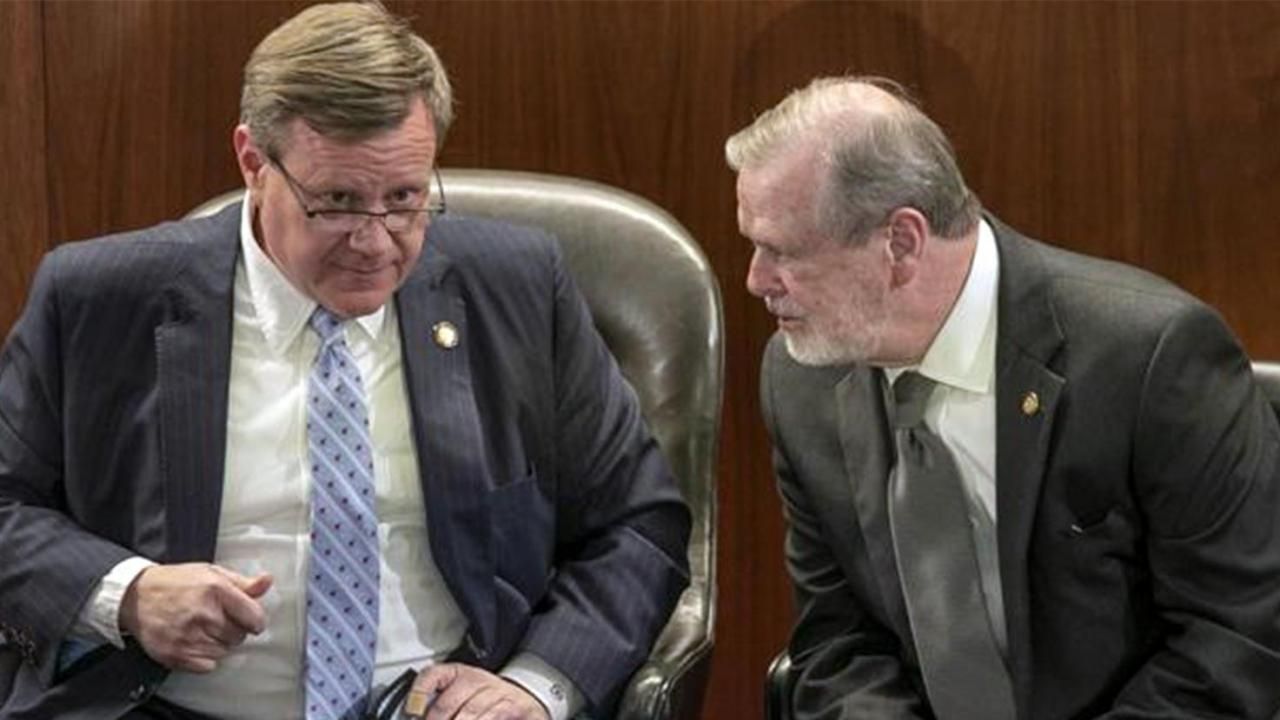
Senate President Pro Tempore Phil Berger, R-Rockingham, and House Speaker Tim Moore, R-Cleveland, want to appeal a Nov. 10 decision by Superior Court Judge W. David Lee that required state finance executives to move more than $1.7 billion in unappropriated state funds into three different education budgets — effectively circumventing the General Assembly’s authority over state spending.
Berger and Moore’s filing says they want to intervene “for the purposes of responding to the Court’s November 10, 2021, Order and associated proceedings challenging act(s) of the General Assembly and provisions of the North Carolina State Constitution.”
The plan Lee ordered, they argue, directly conflicts with their authority to set make appropriations and with the appropriations made in the new state budget for this year and next year.
Attorneys at Womble Bond Dickinson law firm in Charlotte filed the notice on behalf of Berger and Moore on Dec. 8.
The North Carolina Supreme Court sided with the original plaintiffs — five lower wealth school districts and some families of students who attend them — years ago and ordered the state back in 2004 to adequately fund schools. But Lee presides over the case in superior court now as the resolution to it remains unsettled.
The money is for the so-called “Leandro plan” that Lee approved in court earlier this year. That plan seeks to improve the state’s schools. By law, the state funds education, and counties fund school facilities.
Lee had argued in his Nov. 10 order that he could order the transfer because the voter-approved North Carolina Constitution requires the state to fund education — a provision that he said was equivalent to a law passed by a publicly elected legislature.
The North Carolina Court of Appeals, upon request by North Carolina Controller Linda Combs, prevented the transfer by a vote of 2-to-1 on Nov. 30.
Court of Appeals Judges Chris Dillon and Jefferson Griffin ruled Lee, as a judge, can’t order an appropriation of funds. Judge John Arrowood dissented, citing irregularities in court proceedings and an “unreasonably” short window of time in which the state and plaintiffs in the case could respond to Combs’ petition.
North Carolina Attorney General Josh Stein also appealed Lee’s Nov. 10 order on Dec. 7, though it is unclear why. The one-paragraph request cites only the state’s right to appeal.
Stein has represented the state, as defendants, in the case and previously wrote in filings that Lee had the authority to order the state to fund the Leandro plan.
Who is a party in the lawsuit
Berger and then-Republican House Speaker Thom Tillis filed a motion to intervene in the lawsuit back in 2011. At the time, they wanted “clarify” portions of an order Manning had written; the order and what the lawmakers said the legislative intent of a pre-kindergarten was were in dispute.
But court records show then-Superior Court Judge Howard Manning denied the request. Manning determined the General Assembly was already implicated under the “State of North Carolina.”
“The State of North Carolina is the defendant in this case -- not the legislative branch -- nor the executive branch,” Manning wrote. “The State of North Carolina's obligations to establish and maintain public schools is the ‘shared province of the executive and legislative branches.’”
Plaintiffs contend the General Assembly is already a party in the case, as the “State of North Carolina” is a listed defendant. They note that the General Assembly has never proposed a remedy for the 2004 state Supreme Court order but has had an opportunity to do so.
They cite North Carolina § 1-72.2, which states, “in any action in any North Carolina State court in which the validity or constitutionality of an act of the General Assembly or a provision of the North Carolina Constitution is challenged” that “both the General Assembly and the Governor constitute the State of North Carolina.”
But Berger and Moore have argued the General Assembly is not a party because it is not specifically named.
In their filing to intervene, they cite the same statute as giving them standing to intervene.
What the money is for
The court case at issue is the so-called Leandro lawsuit — named for a former plaintiff. In that case, five families and school boards in lower wealth counties sued the state in 1994, alleging they were unable to provide a sufficient education for their children because they lacked the funding to do so.
The Leandro plan’s main goals are to ensure high quality teachers are in every classroom, high quality principals are in every school and more North Carolina children have access to pre-kindergarten. Within the plan are numerous suggestions for adding or changing laws and policies, such as removing the cap on funding to educate children with disabilities.
Lee’s order concerns only the second and third years of the plan, when funding increases are smaller than in later years. These years also don’t yet include pay raises for school employees that will be determined by a study of competitive pay across states.
About third of the funds would go toward teacher pay raises and more than $100 million each would go toward teacher enhancement programs, hiring or support personnel, increasing special education funding and raising appropriations for disadvantaged or at risk” students.
The plan includes other items, as well.
The budget approved last month by the state House and Senate — and signed by Gov. Roy Cooper — funds some teacher raises, new support personnel and other efforts totaling just under $800 million.. It additionally funds education outside of the Leandro plan, such as $100 million for a teacher pay supplement in all but the state’s most populous counties.





Copyright 2026 by Capitol Broadcasting Company. All rights reserved. This material may not be published, broadcast, rewritten or redistributed.