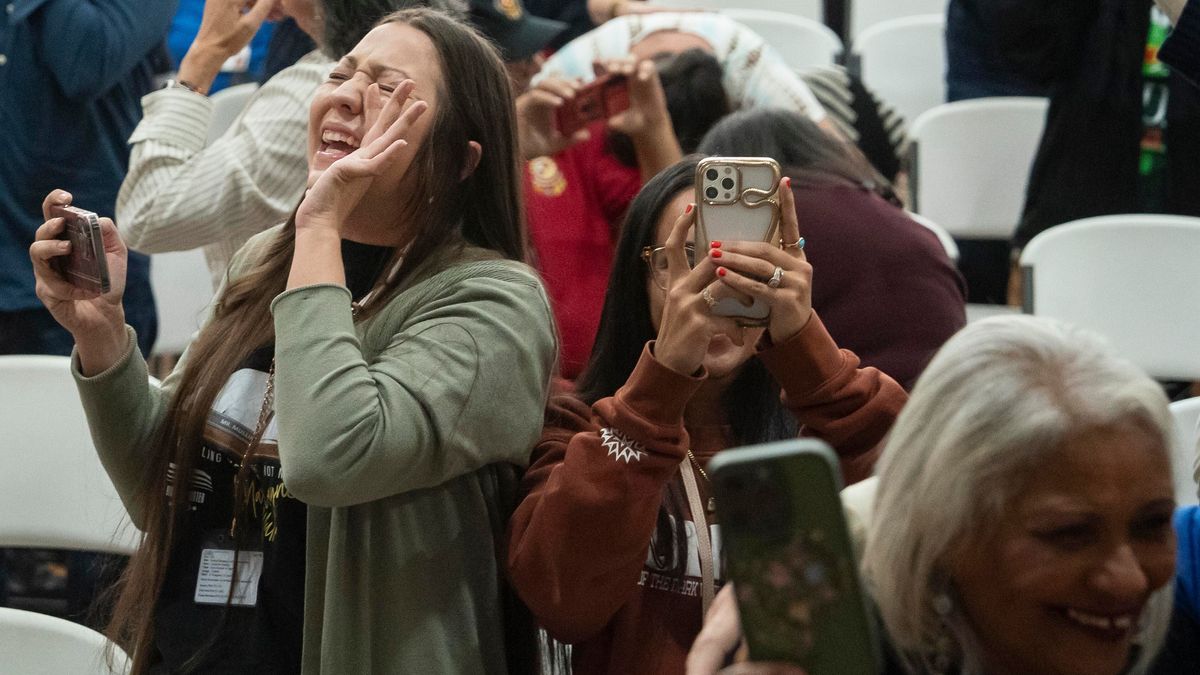
North Carolina's Lumbee Tribe gained full federal recognition Thursday after President Donald Trump signed a wide-ranging defense spending bill containing a provision to recognize the tribe.
The bill reached Trump's desk after the U.S. Senate passed it Wednesday in a 77-20 vote. Included in the bill was the "Lumbee Fairness Act," which extends federal recognition to the Lumbee Tribe of North Carolina and makes its members eligible for federal services and benefits.
Other WRAL Top Stories
“For 137 years, the Lumbee Tribe fought for the full federal recognition they were promised, and today that promise has finally been fulfilled,” Senator Thom Tillis, R-NC, said in a statement Thursday. “By signing the Lumbee Fairness Act into law, a historic injustice has been corrected, and the Lumbee people can finally access the full federal benefits they have long earned and deserve.”
The 3,000-page NDAA bill funds the military and its contractors and recommends new changes to national defense priorities. The bill is stuffed with provisions unrelated to the military — ranging from new rules for businesses that invest in China to the replacement of a drinking well in a small Virginia town and federal recognition of the Lumbee Tribe.
The federal recognition received bipartisan support in Congress from North Carolina's representatives, with six Republicans and four Democrats supporting the measure. The measure was also supported by North Carolina Governor Josh Stein.
"The history of the Lumbee Tribe in North Carolina long predates the history of the state of North Carolina," Stein said. "I applaud this long-delayed recognition, which will reap benefits for the Lumbee and North Carolina."
What happens now for the Lumbee Tribe?
Federal recognition unlocks the potential for billions of dollars in public and private investment in and around the Lumbee homeland of Robeson County in southeastern North Carolina, where many of the tribe’s 55,000 members live. Robeson County is consistently ranked among the poorest in the state.
“Full federal recognition will boost economic opportunity in southeastern North Carolina and cement the legacy of a tribe that has made so many important contributions to our state and nation,” said Pamela B. Cashwell, Secretary of Natural and Cultural Resources. “I am excited for the future, both as someone of Lumbee heritage and as the cabinet Secretary overseeing the North Carolina American Indian Heritage Commission.”
Money for health care, education and community services could begin flowing into the region from the federal government now that the Lumbee are a formally recognized tribe. They’d also be allowed to build a casino — a major development not just for the tribe but potentially the entire state economy, since Robeson County sits right along a major thoroughfare, Interstate 95, directly south of Fayetteville and not far from Wilmington, Myrtle Beach and other tourist hotspots.
"For nearly 50 years, the Lumbee Tribe has fought for the same rights and benefits that every other federally recognized tribe receives," said Senator Ted Budd, R-NC, in a statement on Thursday. "I'm glad to have played a role in securing this major victory for such and importat group of North Carolinians.
The tribe has been pushing for decades for this moment. Until now, those proposals have repeatedly failed to win enough support to pass Congress — even with the backing of Trump, a Republican, as well as former Democratic presidents Joe Biden and Barack Obama. Lumbee recognition has long been heavily opposed by other Native American groups.
Some opponents say the Lumbee aren’t a true indigenous tribe but rather a relatively new mixed-race group formed by the intermingling of natives, escaped slaves and others. Other tribes have opposed recognition of the Lumbees over concerns about increased competition for federal aid or casino visitors.
The Eastern Band of Cherokee Indians, the only federally recognized tribe in North Carolina, released a statement earlier this month, prior to the House vote, from Principal Chief Michell Hicks saying he was "deeply disappointed and alarmed" at the prospect of Lumbee recognition.