'It's not good for anyone.' Wake schools will pay $450,000, make changes after disabled child was placed in a closet
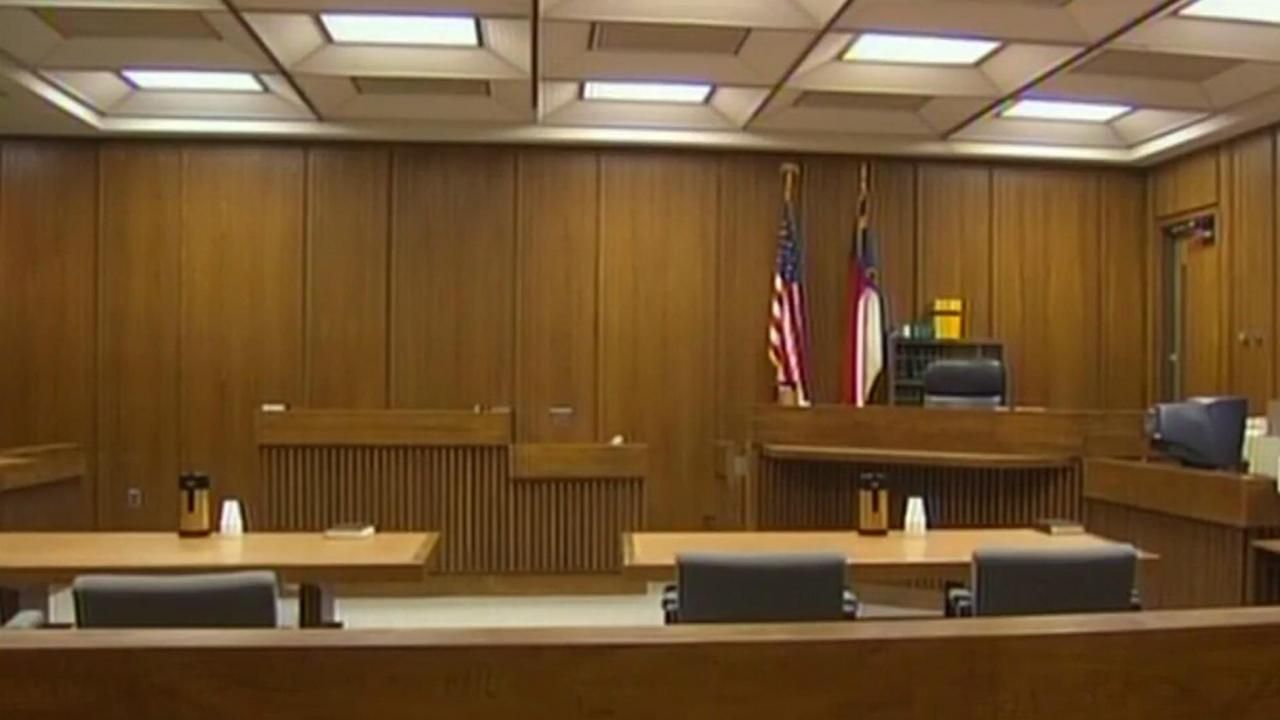
The Wake County Public School System will pay $450,000 to the family of a disabled student after reviews found the child was restrained and secluded in a closet more than 20 times.
The family of a then-Scotts Ridge Elementary School student argued they had not been notified of the restraint or seclusion used on their daughter and that the restraint and seclusion tactics they eventually learned of were sometimes in response to minor behaviors, like being disruptive.
Other WRAL Top Stories
Jocelyn Pease said her daughter eventually began refusing to go to school.
The settlement comes two years after the first administrative law judge ruled in favor of the Pease family. The judge found the school system had denied the child a “free and appropriate education” as guaranteed under federal special education law by using inappropriate punishments and failing to develop or implement behavioral interventions for the child. A state hearing review officer upheld the judge’s findings a year later, prompting an appeal by the district and, ultimately, a settlement agreed to and approved by the school board this month.
A movement against seclusion in schools is growing, and several members of Congress sponsored a bill earlier this year to restrict seclusion of students, among other actions, in schools.
“It's not good for anyone. It's not,” Pease told WRAL News. “Restraint and seclusion harms teachers, it harms students, it harms the students that are witnessing this. They're seeing a child struggle with a problem, and it's being met by a caretaker using forced exclusion and false imprisonment. And that has got to affect the mental health of every child in the school system.”
The Wake County school system has previously settled a lawsuit with a family of a Southeast Raleigh High School student, who alleged a teacher had secluded students with disabilities in a storage room.
The Peases' daughter, who has been diagnosed with behavioral health issues, was removed from class and held in a room she could not leave for 10 minutes to an hour and a half about two dozen times from 2017 through 2019. She was removed during her time as a student in Scotts Ridge Elementary School’s Behavior Support classroom.
Her parents first learned of the restraint only in February of 2019, when she was restrained in the school cafeteria. The mother of her best friend witnessed the restraint and filmed it, later showing it to the parents.
Meanwhile, the school system had reported no instances of restraint or seclusion being used on students in required federal data submissions.
The school system had not used the terms “restraint” or “seclusion” in documentation but rather referred to seclusion incidents as “time outs” in “quiet rooms,” or using other terms that did not match the action, Pease said. “Calm space,” “safe space,” “escorted” or “removed” are other terms that can be used instead of “seclusion” or “restraint,” she said.
As a part of the settlement with the Pease family, the system will correct any data errors, publicly present data on restraint and seclusion incidents and provide thorough reports to parents of any restraint or seclusion used on their child during the school day.
The school system has already submitted new data to the federal Office of Civil Rights going back to the 2015-16 school year, spokeswoman Lisa Luten said.
“There are different guidelines for state and federal reporting, which has contributed to issues with the reporting data,” Luten said in a statement. “It has been well publicized that confusion around federal reporting in particular has been a nationwide issue, but since the reporting expectations were clarified, WCPSS has been working diligently to improve its current practices and correct its historical data.”
The system will also publish its Elementary Behavior Support manual on its website, provide an explanation of restraint and seclusion to parents of students in that support program, and contract with a third-party to review the program.
Pease hopes more transparency will help parents understand what can happen and what their rights are, or their children’s rights are.
“We'd like to help the current parents of children in these special programs, to know what's happening, to be able to protect their children, and solve problems and find solutions and get them help when they need it,” Pease said. “And when things are done in secret, they can't get the help that they need.”
Stacey Gahagan, the Peases’ attorney, said state law doesn’t require notification every time.
“But we want it to be every time,” Gahagan said.
Parents already receive the system’s restraint and seclusion policy every year, Luten said.
“We continue to work on ways to effectively communicate with parents about these issues, especially parents of those students with the most significant behavioral challenges,” Luten said.
The Peases’ daughter was in an Elementary Behavior Support classroom at Scotts Ridge Elementary, where she and other students were educated away from their general education peers. The goal of the program is to give students the skills they need to re-enter the general education classrooms.
Under state law, students are allowed to be restrained or secluded to prevent injury, fighting or property destruction, and only as a last resort. Schools cannot use restraint or seclusion merely as a disciplinary measure.
An administrative law judge found school employees sometimes skipped agreed-upon methods to calm Pease’s daughter down before restraining her.

In the incident in the cafeteria, caught on video, the child had feared she would get in trouble for eating lunch with friends, because she had scored poor marks on her behavior chart that day, according to the administrative law judge in 2021. When officials found her in the cafeteria, they began moving furniture around to surround her, and the girl curled up in a fetal position on the ground. She was grabbed from under her arms and taken to a seclusion room until she could calm down.
Her behavior intervention plan called for calm-down routines and other methods to avoid incident, but the judge found they were not used.
In other instances, the girl was secluded for “tipping back her chair, flipping markers, and grabbing teacher's arm,” which the school’s assistant principal said was perceived as threatening, justifying seclusion.
For the upcoming school year, the girl will return to the Wake County Public School System as a high school freshman, with an intervention specialist to help her, per the settlement.
She had taken time away from the school system during a brief stint in a private school after the family learned of the instances of restraint and seclusion.
“She's doing much better,” Pease said. “She's had a big road of healing.”
So far, her new teachers seem to be “extremely caring and extremely smart,” Pease said. Her daughter will be in general education classrooms, leaving Pease optimistic she’ll have a good school year.




Copyright 2026 by Capitol Broadcasting Company. All rights reserved. This material may not be published, broadcast, rewritten or redistributed.