Hemp vs. marijuana: NC courts empower police searches that some law enforcement leaders call unconstitutional
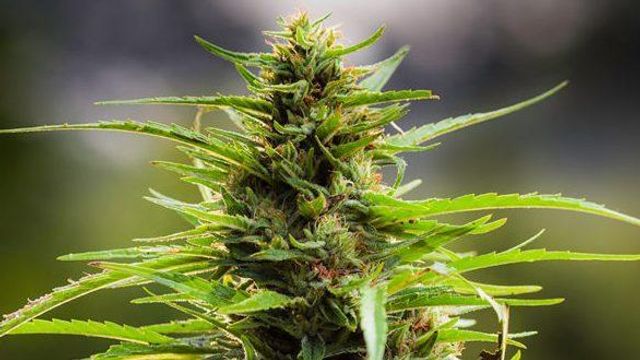
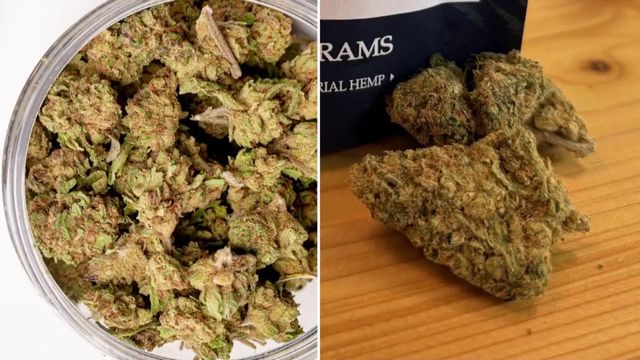
When North Carolina legalized smokable hemp in 2018, police and prosecutors spoke frequently and clearly about their biggest fear: It would effectively legalize marijuana in North Carolina, they said, due to the fact that hemp looks and smells exactly like marijuana.
Those similarities, the thinking went, would present a challenge to enforcement of state laws that prohibit marijuana. After all, how could police justify a search by saying they smelled illicit marijuana when legal hemp has the same odor?
Other WRAL Top Stories
But those concerns haven’t become reality, in part because judges have largely ignored them. Searches, arrests and prosecutions have continued.
Some court rulings had put additional requirements on police to say why they thought something was illegal marijuana and not legal hemp. But this month the North Carolina Court of Appeals ruled that’s not necessary — allowing law enforcement to more aggressively search and arrest people without needing any proof that the person targeted might have been engaged in illegal activity.
That should trouble North Carolinians regardless of whether they personally use hemp or marijuana, said Amily McCool, a Raleigh lawyer who specializes in marijuana cases. Some of her clients, she said, have been people who had hemp but got arrested anyway. Yet others were racially profiled by police officers who made dubious claims of smelling marijuana, she said, and then ended up arrested for something else entirely.
Now that the Court of Appeals has given police across the state the green light to get even more aggressive in those kinds of actions, the potential for abuse will only grow, McCool said.
“People should be upset that they can be searched, without consent or a warrant, when there’s an equal chance they have a legal product,” she said.
“The cops don’t care if they get it wrong,” she added. “They’ll just say ‘Well, let’s just let the courts figure it out.’”
Probable cause in question
The only real difference between the two plants is something microscopic: Hemp can’t get people high. It has a significantly lower concentration of tetrahydrocannabinol, or THC, the chemical that gives marijuana its intoxicating effects.
At first glance — or whiff — neither humans nor police dogs can tell the difference between hemp and marijuana. And even on the microscopic level, the State Crime Lab also lacks the technical ability to tell the difference.
That all adds up to a simple conclusion, the State Bureau of Investigation wrote in a memo on hemp legalization when it was up for debate years ago: Police would lose the probable cause that’s required to stop and search people by smelling or seeing what they think could be marijuana, as they’d done for decades. And it would be difficult, the memo added, to get a conviction even if they were able to enter their evidence.
“The inability for law enforcement to distinguish the difference between hemp and marijuana is problematic in all marijuana prosecutions” the SBI wrote, and that inability “defeats the previous basis for probable cause to seize items believed to be marijuana.”
The Conference of District Attorneys, a lobbying group for the state’s elected prosecutors, told state lawmakers the exact same thing in 2019, after hemp had already become legal. “Law enforcement will not be able to seize or arrest for marijuana … and prosecutors will have a very difficult time and will not be able to prosecute any violations of marijuana laws,” the group’s now-retired leader warned, WRAL reported at the time.
In the years since, however, none of that has come true — in large part due to judges in North Carolina not particularly minding how officers come to find marijuana on someone, or the possibility that it might not be marijuana at all.
However, individual judges take different approaches. So do individual prosecutors, individual law enforcement agencies and even individual officers within the same agencies, said UNC School of Government professor Phil Dixon — whose job includes helping train and advise judges, prosecutors and criminal defense attorneys on complex criminal law issues.
“Crossing city lines or county lines might be the difference between getting searched, or even prosecuted,” Dixon said in an interview.

North Carolina’s Democratic governor, Josh Stein, recently described the state as “the Wild West” due to its combination of having kept marijuana illegal while also having legalized hemp with virtually no regulations or testing on the products that can be sold, or who can buy it.
The state’s inability to make sure products labeled as hemp are what they claim to be — combined with judges’ hesitance to enforce rules on police officers trying to navigate that “wild west” reality — has created a hodge-podge of enforcement.
New ruling expands police powers
The new court ruling this month expanding police authority to search and potentially arrest people for marijuana based on smell or sight alone, without the officer needing to explain why he thought the substance actually was marijuana, was a notable expansion of those powers.
Previously, in the post-hemp era, courts had let officers use the smell excuse only if they could also point to something else that bolstered their suspicion of criminal activity: Maybe they also saw a gun, maybe they heard someone reference drug slang, anything that could be cited as a belief that the person wasn’t a law-abiding citizen with legal hemp.
But now, the court said, none of that is necessary: Smelling or seeing what is believed to be marijuana is enough for a search. The ruling was unanimous and bipartisan, from a three-judge panel made up of two Republicans and one Democrat.
Searches can lead to criminal charges or, for farms, dispensaries and other businesses in the hemp industry, having their inventory seized.
“Things like this scare the crap out of you,” said Eric Stahl, who runs a hemp dispensary and cafe in north Raleigh. “Because if a local law enforcement officer decides he wants to bust a store, he can go in and confiscate their materials. In the back of his head, he probably knows it’s legal hemp. But he can do it and say, ‘Hey, let the courts decide.’”
Stahl added that business owners — and hemp users — in more rural areas likely have much more to worry about than those in the big cities. Raleigh police officers, he said, have never had any kind of reputation for abusing their search powers to target hemp businesses like his.
“We were one of the first stores on the ground in the state, opening in late 2018,” he said of his dispensary, Modern Apotheca. “And the only time we’ve ever had police in the store has been when they’re coming in as customers.”
While business owners like Stahl don’t have complaints about local police, the same isn’t true of everyone. McCool, the Raleigh lawyer, said some of her clients have been people who really did have legal hemp on them but got arrested anyway and had to go to court to prove their innocence.
“They’ve always used these powers to stop people as a pretextual search,” she said. “And there’s no secret they target Black and Brown people disproportionately. We as defense attorneys have had the ammunition, the past few years, to push back against that. But the Court of Appeals just keeps making it harder and harder to win those cases.”

State data shows that Black people make up nearly two-thirds of marijuana arrests in North Carolina, even though Black people are less than one-third of the population. White and Black people use marijuana at roughly the same rates, multiple studies have shown.
Trey Holloway, a Black man who has used hemp for years and now works at the Hemp Farmacy store near downtown Raleigh, said he’s never been profiled by local police over hemp — in part because he knows not to smoke while driving and give police a reason to stop him, a lesson learned from his father, a former Wake County Sheriff’s Office deputy. But he does transport hemp for work sometimes, and this new court ruling worries him.
“There’s no differentiation in the aroma the plants give off,” Holloway said. “Knowing that, and knowing it’s based on the judgment of the police officer? It’s nerve-wracking to say the least.”
No action from high court
In addition to giving police around the state more power to arrest people for marijuana with little to no proof of illegal activity, that recent court ruling could have another effect: Adding pressure to the state’s highest court to finally weigh in and decide how to deal with this issue.
The North Carolina Supreme Court, under Democratic and Republican majorities alike, has so far avoided taking a stance on how to handle marijuana arrests in the post-hemp era.
But the court has multiple pending marijuana cases that could allow it to settle questions related not just to what police can do but also how prosecutors and judges can handle marijuana cases, Dixon, the government professor, wrote in a recent blog post.
This past week a handful of groups representing police and prosecutors asked the court to do exactly that. They include some of the same interests who previously said hemp legalization would end probable cause — and who are now hoping the state’s Republican-majority Supreme Court will make it clear they were wrong.
“Failing to investigate a marijuana odor further simply because there could be an innocent explanation would be like a building manager ignoring a fire alarm simply because it
could have been triggered by someone burning popcorn in a breakroom microwave,” the groups that lobby for prosecutors, police chiefs and sheriffs wrote in their brief.
Crime lab can’t prove weed is weed
Even after hemp’s legalization in North Carolina, prosecutors have kept charging people for marijuana, and juries have kept convicting them, even though the state crime lab has remained unable to run tests differentiating hemp from marijuana.
McCool said she can’t speak for most counties in the state but that in Wake County, prosecutors handling high-level drug cases have had to hire private labs on the taxpayer dime to get potential marijuana tested. But it’s so expensive, she said, that they don’t do it for lower-level cases. Sometimes that puts pressure on prosecutors to offer a plea deal, she said, but not always.
“We often have to take these cases to trial and argue they can’t prove, beyond a reasonable doubt, this is marijuana,” she said. “And most of the time that goes well for us defense attorneys.”
A spokesperson for the North Carolina Department of Justice, which oversees the lab, confirmed it remains unable to tell the difference between marijuana or hemp, even after raising that concern with state lawmakers years ago during the hemp debate.
“That testing requires specialized equipment that the lab does not have,” said Nazneen Ahmed, the DOJ spokesperson.
She declined to comment more broadly on the DOJ’s stance on issues surrounding marijuana, hemp, searches and arrests, citing ongoing litigation.

The DOJ is led by Democratic Attorney General Jeff Jackson, who has previously supported marijuana legalization as part of his political campaigns. But since becoming attorney general in January, Jackson has continued handling appeals for local prosecutors — a key role of the AG’s office — including appeals in marijuana cases.
One of those was his victory at the state Court of Appeals this month that opened the door to more aggressive searches.
In that case, an officer in coastal Beaufort County pulled over a teenager — who’s not named in the case due to his age — after claiming to smell marijuana coming from his car. The officer found what looked like weed, plus a gun, and arrested him.
The teen fought to have the evidence thrown out and the charges dismissed, arguing the officer had no reason to believe he was smelling marijuana instead of hemp. The teen won at trial, with a local judge agreeing the cop’s search lacked the probable cause required by the Fourth Amendment.
Jackson’s office appealed the loss on behalf of local prosecutors and won. The Court of Appeals acknowledged the SBI memo that had declared hemp would destroy probable cause for marijuana, but the judges said they don’t put any legal weight in what the SBI thinks.
“The SBI may, as a matter of policy, instruct its agents not to investigate or charge under the circumstances described in the SBI memo,” the judges wrote. “The SBI, however, lacks authority to declare that an officer cannot establish probable cause under these circumstances. Notably, SBI decisions cannot bind the courts as probable cause determinations are for the courts to discern.”



Copyright 2026 by Capitol Broadcasting Company. All rights reserved. This material may not be published, broadcast, rewritten or redistributed.