Cooper, seeking NC's open U.S. Senate seat, tackles health care cuts in Raleigh speech
Former Gov. Roy Cooper is raising concerns about the state economy as Republicans in Washington slash health spending and Republicans in Raleigh show no immediate interest in replacing the funding.
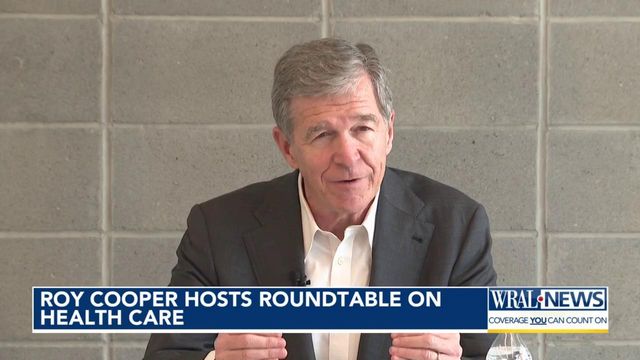
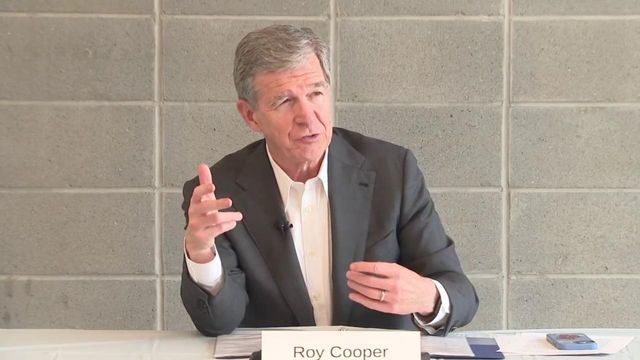
Cooper, a Democrat, launched a U.S. Senate campaign two months ago but hasn’t held many public events since the launch. Friday’s event at Chavis Park in southeast Raleigh marked some of his first remarks, as a candidate, on a topic that is expected to be a key issue in next year’s midterm elections.
Other WRAL Top Stories
President Donald Trump’s budget, which Republicans in Congress approved earlier this summer, was called the One Big Beautiful Bill by supporters. In an effort to help pay for large income tax cuts, the law will cut health care spending and could potentially end Medicaid expansion in North Carolina — unless the GOP-led state legislature takes action to stop that. Stopping it would require state taxpayers to chip in millions more dollars for health care costs that the federal government no longer wants to pay.
“Groceries are higher, utilities are higher, rent is higher, childcare is higher and harder to find, and now we're seeing the cost of health care significantly increase — or even be eliminated — by the ‘Big, Beautiful Bill’ that just passed,” Cooper said Friday. “My opponent, Michael Whatley, says that he would have voted for the Big, Beautiful Bill in a heartbeat.”
Republicans contest some of Cooper’s claims, questioning whether the law really will end Medicaid expansion in North Carolina. They also say that while prices may be rising, so are wages. Federal data shows that between July 2024 and July 2025, inflation rose 2.7% and wages rose an average of 4.2%.
“Wage growth has outpaced inflation in 2025, giving consumers more buying power,” North Carolina Republican Party spokesman Matt Mercer said in a statement Friday.
Whatley and Cooper aren’t officially opponents yet — both still have to win their respective primary election in March to become the formal nominee — but they are considered the strong front-runners.
Whatley — who was chairman of the Republican National Committee when the Trump-backed tax-and-spending bill passed — has strongly supported the federal legislation. He has largely focused on the income tax cuts it includes. On Friday, a campaign spokesman for Whatley said he stands by the bill, including the cuts it made to Medicaid and new work requirements for people on the program.
"Medicaid funding in the OBBB cuts illegal aliens, people fraudulently double-dipping in multiple states, and able-bodied adults between the ages of 19-64 who don't want to look for a job," Whatley spokesman Jonathan Felts said. "Roy Cooper wants illegal aliens to get Medicaid and Michael Whatley doesn't."
Legal immigrants can get Medicaid coverage, but no one in the country unlawfully is eligible to enroll in Medicaid. However, some Republicans say certain individual states have pushed the boundaries and allowed immigrants onto Medicaid who shouldn't have been allowed. According to the Kaiser Family Foundation, a nonpartisan health care research firm, 19% of immigrants living in the U.S. have Medicaid, as do 23% of native-born Americans.
Other recent polling by the Kaiser Family Foundation found that while only 17% of Americans support cutting Medicaid funding, 62% support the work requirements it seeks to implement.
The law is expected to add $3.4 trillion to the national deficit over the next decade, the Congressional Budget Office found, due to the fact that the spending cuts — including more than $1 trillion in health care cuts — weren't enough to fully pay for the cost of the new tax cuts.
Trump said as recently as May that he would veto the bill if it cut Medicaid. But after Republican lawmakers inserted Medicaid cuts into the bill, he signed it into law anyway, saying he approved the cuts to help target waste, fraud and abuse. It's estimated that millions of people will lose their health coverage once all parts of the bill go into effect, which will be spread out over the next several years.
"[Trump] said he wasn't going to touch Medicaid," Cooper said Friday. "What they decided to do is to give tax breaks to the wealthiest — to the billionaires and millionaires. And to get that money to do it they have, in fact, not only touched Medicaid but taken a sledgehammer to it."
Cooper said he agrees with cutting government waste and fraud, but that "any independent person who looks at this bill, that's not what's going to happen."
Felts, the Whatley spokesman, said Cooper is misleading voters.
"Roy Cooper is just a career politician willing to lie to voters so that he doesn’t have to give up his taxpayer-funded paycheck," he said.
Medicaid cuts and rural hospitals
If Medicaid expansion in North Carolina ends up going away because of the new federal law — which may or may not happen depending on how state officials interpret parts of the law — it would affect the roughly 670,000 North Carolinians who have health care because of Medicaid expansion.
Beyond that, the possible end of the program is also anticipated to siphon tens of billions of dollars a year out of the state’s economy, in which health care is one of the largest industries. Rural hospitals would almost certainly be forced to shut down and lay off thousands of workers, U.S. Sen. Thom Tillis (R-NC) said when he voted against the bill this summer, saying he “will always do what is in the best interest of North Carolina, even when that puts me at odds with my own party.”
Tillis’ opposition wasn’t enough to kill the bill, which passed despite his ‘No’ vote. But it did effectively end his career in the U.S. Senate. Trump lashed out after Tillis bucked the party’s support for the bill. The president pledged to endorse a primary election challenger against Tillis. Tillis then announced he wouldn’t seek reelection, creating a rare opening for a seat in next year’s elections.
“In Washington over the last few years, it's become increasingly evident that leaders who are willing to embrace bipartisanship, compromise, and demonstrate independent thinking are becoming an endangered species,” Tillis wrote in announcing his decision not to seek reelection.





Copyright 2026 by Capitol Broadcasting Company. All rights reserved. This material may not be published, broadcast, rewritten or redistributed.