Voting rights advocates prep for federal trial over NC 'election integrity' law
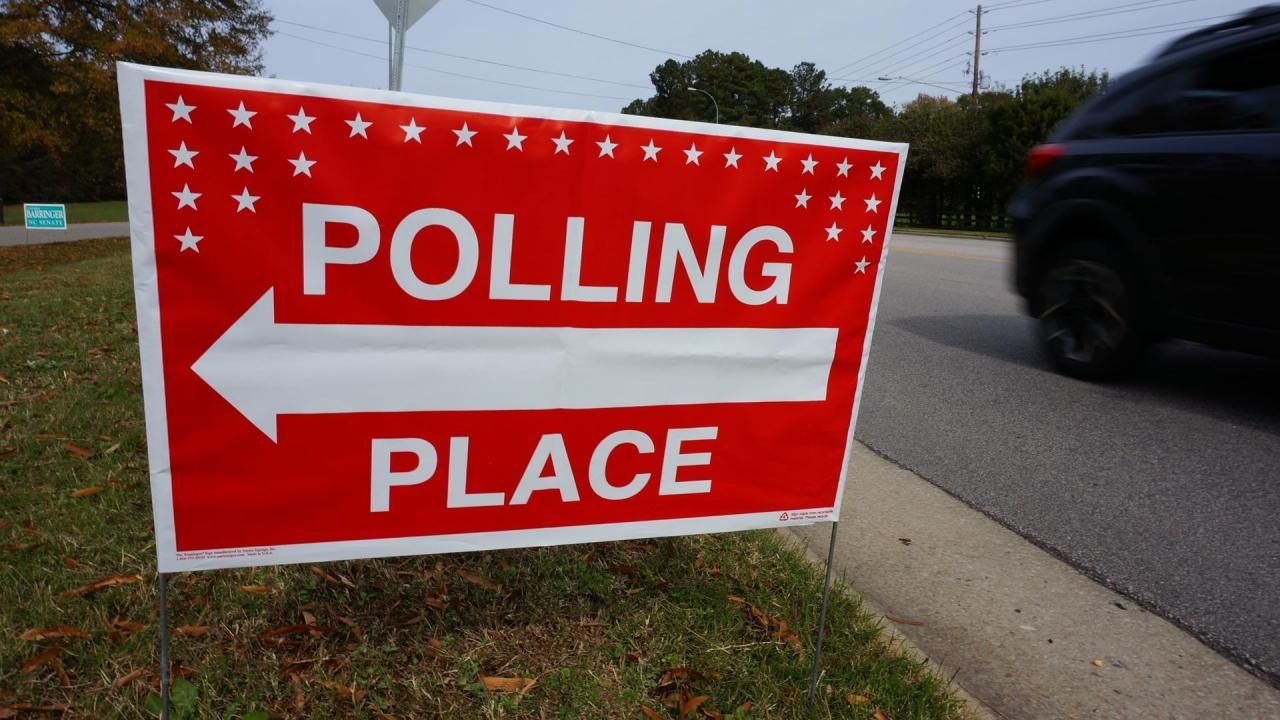
A federal trial scheduled for next week could help shape the rules that govern the 2026 elections in North Carolina, as voting rights advocates challenge a law approved by Republican lawmakers who said it would protect election integrity.
The trial could be happening in Winston-Salem at the same time state lawmakers return to Raleigh to further assert their influence ahead of next year's midterms — by attempting to further gerrymander the state's U.S. House of Representatives districts in favor of GOP candidates.
Other WRAL Top Stories
Marques Thompson is the organizing director for the group Democracy NC. He said Tuesday that the law his group is suing over, as well as the proposed new maps, both have a shared goal: Making it less likely that the will of the people matters when it comes to who wins or loses elections.
"Anything that undermines that very purpose of democracy just makes it harder for our democracy to work properly," he said. "It just undermines trust in the system. And so it's always disappointing when lawmakers make laws, or changes to the elections, that aren't principally trying to understand the needs and the wishes of the people."
The current congressional maps have 10 safe Republican seats, three safe Democratic seats and one competitive seat that was won in 2024 by Rep. Don Davis, a moderate Democrat. Republican legislators say they want to help their party keep control of the U.S. House in 2026 by any means necessary.
Republican legislators are likely to target Davis, possibly by creating a map with 11 safe Republican seats, three safe Democratic seats and no competitive seats — something critics say would be a stark contrast to North Carolina's status as a battleground state where Democrats and Republicans often split the statewide vote roughly 50-50.
"President [Donald] Trump delivered countless victories during his first term in office, and nine months into his second term, he continues to achieve unprecedented wins," state Senate leader Phil Berger said of the redistricting plans. "We are doing everything we can to protect President Trump’s agenda, which means safeguarding Republican control of Congress."

The law Thompson and others are suing over, meanwhile, makes several changes to the state's voting rules. One is a tightening of the rules used for same-day registration during early voting. People can use that process to sign up to vote for the first time, or to update their address, or to make any name changes that have happened since the last time they voted.
The new changes make it more likely for people to be rejected during that same-day registration process and have their ballots thrown out. When people use same-day registration, a postcard is sent to the address they say they live at. If that piece of mail isn't delivered, their registration is canceled. That could weed out people listing fake addresses to vote. It could also throw out legitimate ballots from legitimate voters, based simply on mistakes made by Postal Service employees.
Critics say it will inherently affect young people and women — two groups that polls show disproportionately vote for Democrats — since women change their names more frequently than men after getting married, and young people tend to move more frequently.
"Young voters already face so many challenges at the polls as they navigate an often new, unfamiliar and unfortunately sometimes unwelcoming system," said Adrianne Spoto, voting rights attorney for the Southern Coalition for Social Justice, which is involved in the lawsuit. "Rather than adding even more barriers to this process, making it harder for this important group to participate in our democracy, we should be fostering a system that allows everyone's voices to be heard."
She and other critics say disenfranchising women and young people was the true motivation Republicans had in mind when changing the rules — not anything related to making elections more secure. Multiple recent audits of state elections have shown that allegations of voter fraud, even if all proven true, would affect only a tiny fraction of votes.

Republicans disagree about the bill's motivations.
"Democrats don't care about election integrity," Sen. Warren Daniel, R-Burke, wrote in a news release when the bill — which he sponsored — passed the Senate two years ago.
Former Rep. Grey Mills, R-Iredell, added when the bill passed the House that "the whole bill is aimed at improving our elections, improving the integrity of our elections, and helping our elections work better for everybody in North Carolina."
Top Republicans met with several advocates for stricter election rules while they were writing the bill, WRAL News previously reported, including Cleta Mitchell.
The Moore County lawyer served as one of President Donald Trump's lead attorneys during his failed efforts to overturn the 2020 election. She now leads a group, the Election Integrity Team, that has made several proposals for changing election laws. Many of the group's proposals were included in the new law that's now the subject of this lawsuit. Legislative Republicans, however, downplayed Mitchell's involvement after WRAL broke the news of her meetings with top legislators.
Mitchell attempted to dodge a subpoena that the plaintiffs in the case were trying to serve on her to possibly call her to testify at trial. At one point, she emailed the plaintiffs to say "nice try" after one of their failures to serve her with the subpoena, according to court documents. But last week, Federal District Court Judge Thomas Schroeder ordered Mitchell to accept service of the subpoena, so it's possible that she might testify.
Schroeder noted in his ruling that Mitchell has said she wasn't involved in writing the law. But he also cast doubt on the veracity of that claim in his recent order.
"Mitchell opposes service of any trial subpoena on the grounds that her role in the passage of the challenged legislation, SB 747, was 'non-existent,'" Schroeder wrote. "But the court has already found that there was sufficient evidence to suggest that private citizens and advocacy organizations that espouse views Plaintiffs label discriminatory against young voters may have influenced SB 747’s enactment. Moreover, the deposition testimony ... describes her involvement in drafting the recommendations that were presented to the North Carolina Senate elections and redistricting committee chairs."
Mitchell didn't immediately respond to a request for comment on Tuesday.






Copyright 2026 by Capitol Broadcasting Company. All rights reserved. This material may not be published, broadcast, rewritten or redistributed.