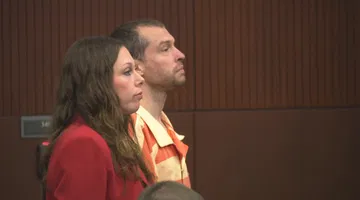
As the man accused of killing a Raleigh teacher sits in jail, one past victim says more should have been done to keep the alleged murderer off the streets.
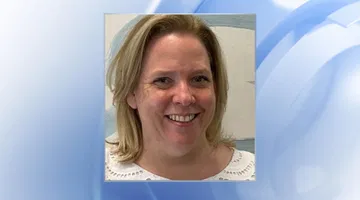
36-year-old Ryan Camacho is facing multiple charges in the killing of Zoe Welsh, a long-time science teacher at the private Ravenscroft School. Police say Camacho attacked Welsh while she was on the phone with 911, after he broke into her home.
Other WRAL Top Stories
For Wes Phillips, the killing hits far too close to home.
“It's not like there weren’t signs,” said Phillips, a long-time Raleigh resident and father. “We were really adamant about the danger that we felt we were in, and perhaps other people were in, and it just wasn't taken seriously.”
According to Phillips, nearly a decade ago, Ryan Camacho stalked, harassed and terrified his family for more than a year. Camacho’s actions, Phillips said, forced his family to move twice, and pleas that something be done went unanswered.
Phillips said one of the scariest moments came on October 8, 2016, during Hurricane Matthew. Phillips said he was with his son at their then-home in Mordecai when he looked outside and saw Camacho.
“It was like a horror movie, like he was standing there in a black jacket, staring at us in front of our house during a hurricane. Not talking, like making sure that we knew who he was,” Phillips said.
Phillips had already moved his family once that year, he says, to get away from Camacho, who had lived next door to the family in the Five Points area. Phillips said the move came after property damage and disturbing behavior from Camacho.
On October 8, Phillips called the police and then jumped in his car, shooting video on his cell phone. At one point in the video, Camacho can be seen trying to open the driver’s side door.
“I had locked the car, and he was pulling on the door, trying to get in,” Phillips said.
Phillips said Camacho eventually disappeared, returning several days later. Phillips said he and his son were out when his wife looked outside to see Camacho walk up and grab a large rock.
Security video taken that day shows a man throwing a rock into the windshield of Phillip’s car, and then through the sunroof, before punching and kicking the car several times.
Phillips moved his family again after that, trying to put as much distance between his family and Camacho as he could.
Two years later, Camacho returned to the Phillips’ now former Mordecai townhome, this time with a gun.
“He shot into our building where he thought that, I can only assume, where he thought that we lived,” Phillips said. “That's something that stays with us.”
No one was injured in the shooting. Court documents show Camacho did face multiple charges for shooting into an occupied dwelling, ultimately spending two years in prison.
Phillips says that wasn’t enough.
He said he called the police three to four times about Camacho before that, and attempted to have a no-contact order served. He said Camacho ultimately faced no charges for harassing his family.
“Part of the reason I'm here is it makes me really angry. It makes me angry that it feels like there was a complete institutional, just failure here that led to, you know, a woman being killed,” said Phillips.
WRAL has been asking prosecutors and judges why Camacho hadn’t faced more serious consequences sooner.
In an interview on Monday, Wake County District Attorney Lorrin Freeman did point out that Camacho has spent a significant amount of time behind bars, much of that time for shooting into Phillips’ former home.
“He has spent a lot of time bouncing between the prison system and the local jails over the last few years and has really been in custody all but maybe a total of 12 months within the past 6 years,” Freeman said.
Freeman also pointed out that in December, Camacho faced breaking and entering charges, and prosecutors did push to have Camacho involuntarily committed. That request was ultimately denied by Judge Louis Meyer.
WRAL has reached out to Judge Meyer for comment. So far, we’re still waiting for a reply.
“The judge has to make a decision based on the evidence available to them at that point in time. They don’t have the benefit of course of a crystal ball and look and see what’s going to happen,” said Freeman. “Based on the evidence that was available to the court at the time, the court did not find that he met the threshold for involuntary commitment. For involuntary commitment, the judge has to make a finding that they are a danger to themselves or others. And when we talk about danger in that context, it’s an imminent danger to themselves or others.”
For his part, Wes Phillips said he doesn’t know what needs to change to keep dangerous people off the streets. But he is now haunted by a new question.
“My wife and I are asking ourselves right now as we think about what happened this past week,” said Phillips, “how close did we come to being that person, and could that have been prevented?"