State of the schools: Wake superintendent talks cellphone policy, outlook for budget adjustments
Local school boards should be able to make their own decisions as far as cellphone restrictions, Wake County Public School System Superintendent Robert Taylor said Wednesday.
Taylor hopes state lawmakers hold off on imposing a statewide ban, though two different bills have already passed through state House and Senate committees favoring some version of a cellphone ban. In both bills, school boards would adopt their own approaches but must meet a goal of near-total restrictions on cellphone use during class time.
Other WRAL Top Stories
Taylor wants to make sure students and educators integrate cellphones appropriately into their lives. The bills would allow for some cellphone use for academic purposes.
"We're encouraging and hoping that the General Assembly doesn't put a complete ban, but they continue to allow districts to make local decisions about what's best for them," Taylor said. "So we've talked to students, parents, educators, to get feedback from everybody about how we can have a much better policy."
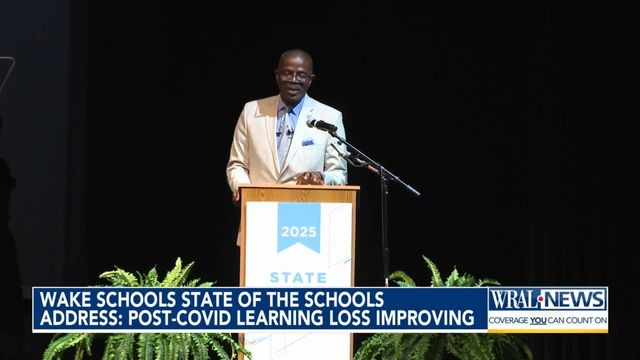
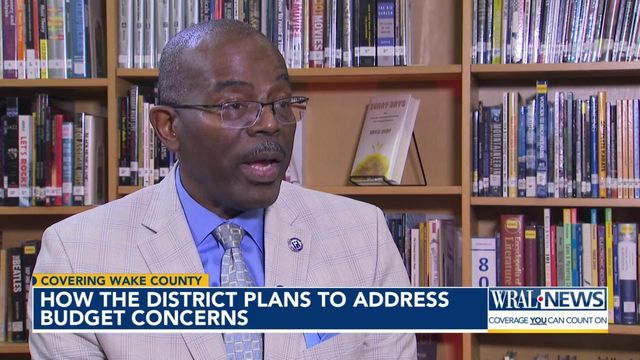
Taylor spoke ahead of his State of the Schools speech Wednesday. In interview with WRAL News, Taylor reflected on his first year and a half as the superintendent of the nation's 15th-largest school system and looked forward on the challenges he's facing in the more immediate future, such as fixing ongoing heating and air conditioning issues amid rising school costs and funding uncertainties. At least 28 early dismissals have occurred already this year because of nonfunctioning heating or air conditioning on especially hot or cold days.
The school system is projecting up to $29.1 million in new operating costs next year, without factoring in pay raises or any overhauls to HVAC maintenance practices or funding.
"It is about a funding issue," Taylor said. "We know we have a $140 million need for HVAC units. That also involves being able to purchase those units, those being available on the market and all of that has an impact on how you're able to address it."
Budget constraints
The district has already lost $5 million in federal funding for next year and is facing uncertainty about whether more cuts are coming, as the Trump administration continues to slash grant programs and contracts across the federal government. Going into the new school year, the district is already expecting rising costs for four new schools, employee benefits and rising enrollment.
About 80% of the district's expenditures are for personnel, and about 95% of expenditures are for school-level activities and employees.
"Ultimately, specific kinds of cuts may cause us to look at positions we have to reduce and it will be about eliminating vacant positions, if it comes to that, and we go from there," Taylor said.
Federal changes
During his speech, Taylor noted potential for federal policy changes that would affect the school system, as well. He stressed that the school system "will follow the law, period" and is daily communication with legal counsel to ensure compliance.
The Trump administration has issued orders intending to reduce diversity, equity and inclusion programming in schools and colleges and to end programs that preference a racial background, leading experts to suspect scholarship programs for Black students, for example, could be in jeopardy.
The Wake County school system has an Office of Equity Affairs that intends to close the gaps in test scores and discipline between different subgroups, including racial subgroups.
"We will not abandon our values," Taylor said. The district will do everything in its power, within the law, to mitigate the impact of federal funding or policy changes.
School safety
Taylor also addressed the need to continue to evaluate security tools as safety remains a common concern among students, employees and parents. He wants to look at using other technology and perhaps professional development to make sure people know how to act to make sure schools are safe.
"That is always a No. 1 priority for us," Taylor said. "If we're not safe, then we can't focus on instruction."
So far this school year, the system has adopted the Say Something anonymous reporting app for collecting tips about safety concerns and launched a panic button app for school employees in case of emergency.
Being more responsive to concerns
When he was hired, Taylor said he wanted to make the school system more responsive to parents' concerns and urgent needs.
Since then, Taylor has worked to reorganize some operations and, including by breaking down more responsibilities regionally so administrators have fewer schools they need to serve.
He is still working to reorganize more, such as reorganizing the special education department to ensure better compliance.
The district has faced criticism for how it handled reports of abuse by a special education teacher, James Rencher, who continued to teach for months after the accusations and was later convicted of several misdemeanor counts of abuse last year. The district has hired two more investigators in human resources to better respond to complaints about staff.
Improving academics
Taylor is also looking at academic improvements, including in reading, where standardized test scores still have room to improve to pre-Covid-19 pandemic levels. The district needs to look at whether teachers are using the right approaches and receiving the right professional development to help them be more effective, particularly as they try to teach students with differing needs. The district has a new learning model that's designed to be more engaging for students.
"That's what our new learning model is about, asking teachers to look at instruction through the eyes of students and make that adjustment to meet their needs," Taylor said.
The district has finished spending nearly $500 million temporary federal pandemic stimulus dollars on things like summer programs, employee recruitment and retention bonuses and support staff, such as more school counselors and social workers. The school board asked the county to make many of those counselor, social workers and full-time substitute teacher positions permanent last spring. They were able to do that but are now staring down a shortfall of $7.5 million next year because of unexpected costs. About $3 million of that is because the school nutrition departments says supply and wage costs exceed the reimbursements they get from the federal government for free meals and what families end up paying for them.
Now the district is keeping an eye on ways in which changes at the federal education level will affect what Wake schools is able to do.
Changing approach to teaching
Taylor unveiled Wednesday night the school system's new learning model -- a four-pronged approach called, "See me! Challenge me! Engage me! Know me!"
The first part involves teaching student social and emotional skills and tailoring instruction to students' individual needs. It comes with professional development for educators.
The second part includes more challenging coursework and specialized academies to introduce students to high-demand careers. Taylor also wants to make sure children who aren't typically enrolled in more rigorous courses aren't kept out if they're deserving, and he's noted Black, Hispanic and lower-income children are lagging behind their peers -- something he wants to change. Taylor celebrated the district's higher enrollment in advanced placement, international baccalaureate and career and technical education courses.
The third part of the new learning model doubles down on hands-on learning that calls for students to use and build on critical thinking, creativity, collaboration and communication skills.
The final prong focuses on using data and plans to identify and spell out student needs. Students who need extra interventions will have personalized learning plans. The district is using national partners to drill into data on student attendance and identify approaches to get students back into classrooms, amid higher absence rates than before the pandemic.
Marketing the school system
Generally, the majority of Wake parents appear satisfied, per district feedback, Taylor said.
That contrasts with public surveying nationally that shows declining trust in public education as a whole. Pushes for expanded charter schools and publicly funded private-school tuition vouchers have resulted in stagnant or reduced public school enrollment across North Carolina and the nation, posing new sets of budgetary conundrums. Wake's student population hasn't grown much since the Covid-19 pandemic but is projected to continue to grow.
"While we are not perfect, what we say to everybody that when you look at the results, we educate children better than any other sector in the country, meaning private schools, charter schools," Taylor said. The district performs better, on average, than the rest of North Carolina on standardized tests.
"We have much deeper professional development, and that's what we want parents to know, that we are an institution that has been and has stood the test of time, and that is what we do here," he said. "Our numbers show that still 90% of our parents feel we're doing the quality job. Now that's not 100% so that means there's still 10% that we want to talk with and understand how we can better serve their needs. So we do want to hear from our public. We recognize that public schools is the greatest investment that we make in our people in this country."




Copyright 2026 by Capitol Broadcasting Company. All rights reserved. This material may not be published, broadcast, rewritten or redistributed.