Marketing behind popular e-cigarettes has widely touted the products as “safer” than traditional cigarettes. New research shows that’s not the case.
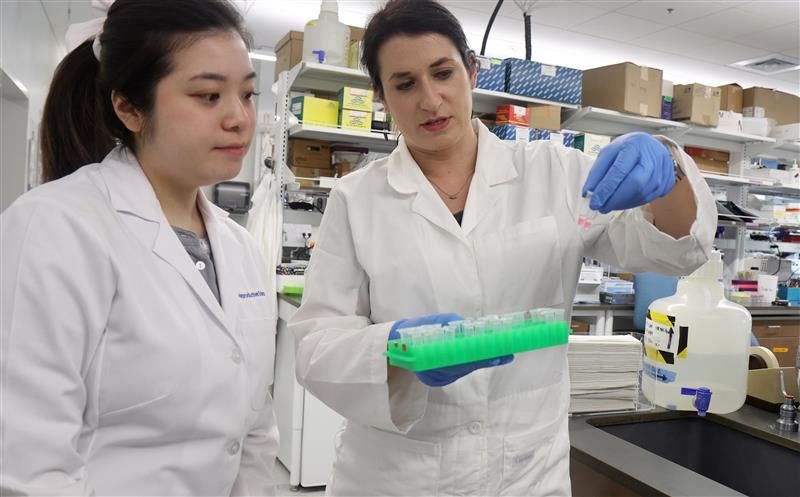
Margeaux Marbrey, assistant professor in the Department of Obstetrics and Gynecology at the Duke University School of Medicine, has been researching reproductive health for 15 years.
Other WRAL Top Stories
“So many people started using these devices, especially adolescents, and we didn’t know their effect on fertility and future pregnancy,” Marbrey said. “That’s what really drew us in.”
The investigator led efforts to investigate the effects of vaping during pregnancy in a new study.
“We used animal models for this study,” Marbrey explained. “We exposed the animals to e-cigarette vapors both in early pregnancy and middle of pregnancy. We looked at implantation – this critical timepoint when the embryo implants into the uterus – and also mid-pregnancy, when the placenta develops.”
The study revealed e-cigarettes containing nicotine had significant effects on the growth of the baby and placenta development.
Marbrey said the results that shocked researchers the most were tied to e-cigarettes that did not contain nicotine but did contain flavorings.
“When we looked at early pregnancy, we found those non-nicotine containing devices could actually promote early miscarriage,” said Marbrey. “That was extremely fascinating and scary to see that in the absence of nicotine, maybe women think these devices are safer, they’re actually more detrimental to pregnancy and the growth of the fetus.”
Studies estimate 15% of women use e-cigarettes during pregnancy. Marbrey estimates the true number is higher, because she believes that women do not disclose their vaping behaviors during doctor’s visits, and physicians are not asking the right questions.
“We don’t know enough about them. We need more research, especially on these e-cigarette devices and other exposures in pregnancy so that we can adequately inform patients and improve patient care in general,” Marbrey said.
A 2025 law banned popular disposable vapes in North Carolina. Flavored vapes without nicotine are not bound by the same regulations.
“When those flavorings are burned and inhaled, they can create really toxic effects in our bodies,” Marbrey explained.
Marbrey said a lack of regulation and enforcement has led to harmful products remaining on store shelves.
“There’s just so many different effects,” warned Marbrey. “You could pick up a vape off the shelf, and it could be different than the one right next to it. That’s really scary.”
Marbrey called for more research on the topic to be done stating, “Our findings don’t show the full picture; every vape is different.”
The researcher further warned pregnant individuals, “We shouldn’t assume anything is safe.”
She continued, “Don’t assume e-cigarettes are safe or to use these instead of cigarettes. I think anything during pregnancy should be questioned. I think we need to lessen any exposure during pregnancy, especially devices like these where we don’t know enough about them.”
The rise of vape culture is an issue WRAL’s Documentary Unit investigates further in Gen V: Teen Vaping in North Carolina.