House overrides veto of NC immigration enforcement bill, sending it to state Senate
North Carolina Republicans are one vote away from enacting an immigration law that they’ve been trying to pass for five years.
The North Carolina House of Representatives on Tuesday voted 72-44 to override Democratic Gov. Roy Cooper’s veto of House Bill 10, which would require sheriffs to work with federal immigration officials to detain people who are in the U.S. illegally in some circumstances. The bill also increases private-school voucher funding by $463.5 million over this year and next year.
Other WRAL Top Stories
Republican legislators tried to enact similar immigration-related requirements in 2019 and 2022 — but Cooper blocked each of those efforts and Republicans didn’t have the votes they needed to override his vetoes. This year, they do.
Republicans hold supermajorities in both chambers of the North Carolina General Assembly, meaning they can easily override Cooper’s vetoes if they vote as a bloc. Republican lawmakers have consistently overridden Cooper’s vetoes since obtaining a supermajority last year.
House Bill 10 could become law as soon as Wednesday. The state Senate is scheduled to convene and the bill could become law if a motion to override Cooper’s veto receives more than 60% of the vote in that chamber.
Sen. Danny Britt, R-Robeson, told WRAL that he expects the override to be successful.
“We have the votes to ensure we override the governor's veto to ensure our Sheriff's comply with federal authorities,” Britt said. “The safety of the citizens of this state are of utmost importance to myself and my Republican senate colleagues.”
The effort to force sheriffs to comply with Immigration and Customs Enforcement agents launched in one political context but is advancing in another.

Republican legislators first tried to force coordination in 2019, a year after Democrats won elections nationwide by pushing back against then-President Donald Trump’s crackdown on immigration. In North Carolina, the American Civil Liberties Union helped Democratic candidates defeat Wake and Mecklenburg county sheriffs who had helped federal agents deport immigrants detained in their jurisdictions.
Republican legislators introduced a bill to force sheriffs to comply with ICE shortly after those new Democratic sheriffs took office. The move prompted standoffs at the legislative building in Raleigh where sheriffs, who had asked for autonomy, walked out of a committee meeting as a Republican legislator raised his voice at them.
Now, House Bill 10 is on the verge of becoming law two weeks after a presidential election that some considered to be a referendum on the Biden administration’s border policies.
Trump beat Vice President Kamala Harris while making immigration a lynchpin of his campaign, casting Harris and President Joe Biden as weak on enforcement.
Trump has said he would conduct the largest deportation operation in American history, which could upend the lives of the 11 million people living in the United States without authorization — many of whom have family members who are U.S. citizens.
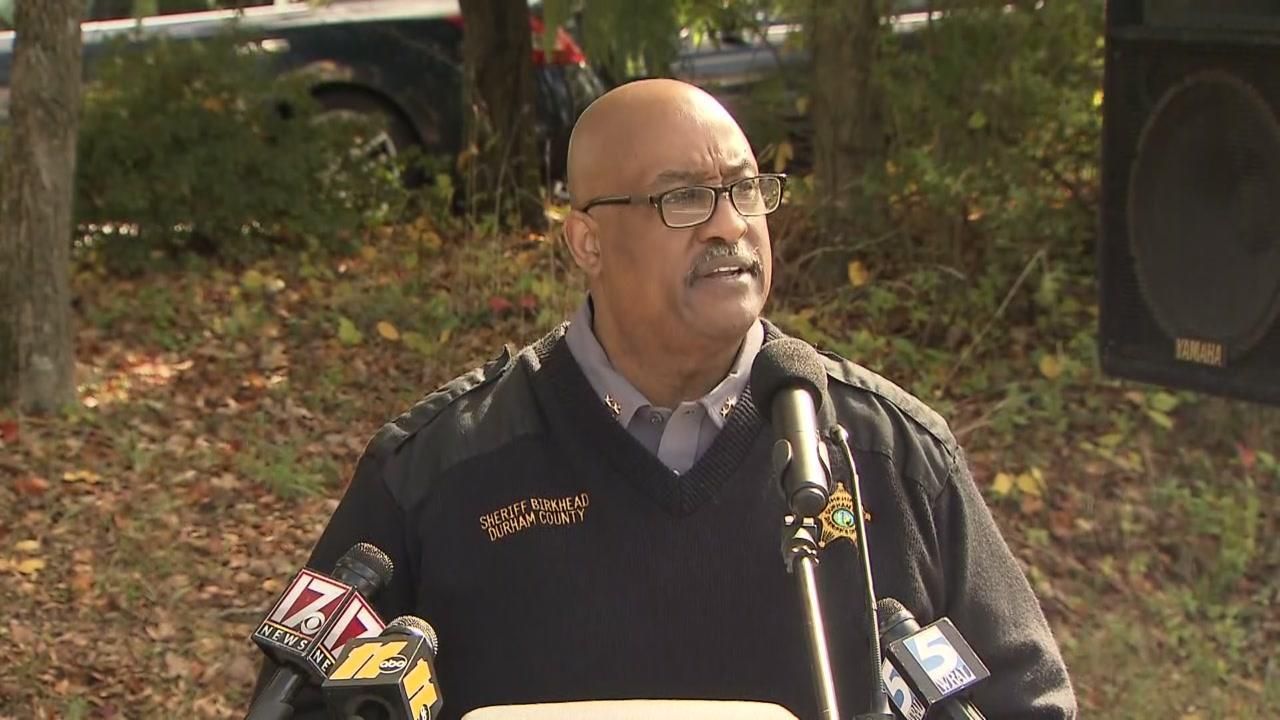
Under House Bill 10, county sheriffs would need to hold in detention anyone who is in the U.S. illegally, if federal Immigration and Customs Enforcement requests it.
Most North Carolina sheriffs do this already, but some — including those in Wake, Durham and Orange counties — have argued it’s unconstitutional to hold someone once they’ve made bail.
The bill would also expand the list of alleged crimes under which law enforcement agencies are required to look into a detainees immigration status. That now includes felonies and more serious misdemeanors, such as assault or violation of a violence protective order.
Cooper has long opposed requiring ICE cooperation in the circumstances outlined in the bill. He previously said the bill otherwise contained “some” good things, but not enough to outweigh the bad things — namely vouchers.
On Tuesday, immigration advocates argued that the ICE-related provisions would damage relationships between law enforcement agencies and immigrant communities.
The bill “forces local agencies to act as immigration enforcers, creating an environment where families live in constant fear and are less likely to report crimes or seek critical services,” Stefanía Arteaga, co-executive director of Carolina Migrant Network, said in a statement.
Meanwhile, House Democrats argued that the bill unfairly saddles sheriff’s offices with more costs and responsibilities. Republican legislators should provide sheriffs with more funding if they want sheriffs to enforce federal laws, said state Rep. Abe Jones, D-Wake.
“Tell ICE to do ICE’s work," Jones said. “Our sheriffs have enough work to do without doing ICE work for free.”
Some disagreed.
Carla Cunningham, D-Mecklenburg, cited a list of immigration statistics that she said showed “the need for collaboration between local law enforcement and federal agencies like ICE to protect American lives.”
Likewise, the North Carolina GOP has called the ICE cooperation bill a “common sense” measure.
The Associated Press contributed to this report.



Copyright 2026 by Capitol Broadcasting Company. All rights reserved. This material may not be published, broadcast, rewritten or redistributed.