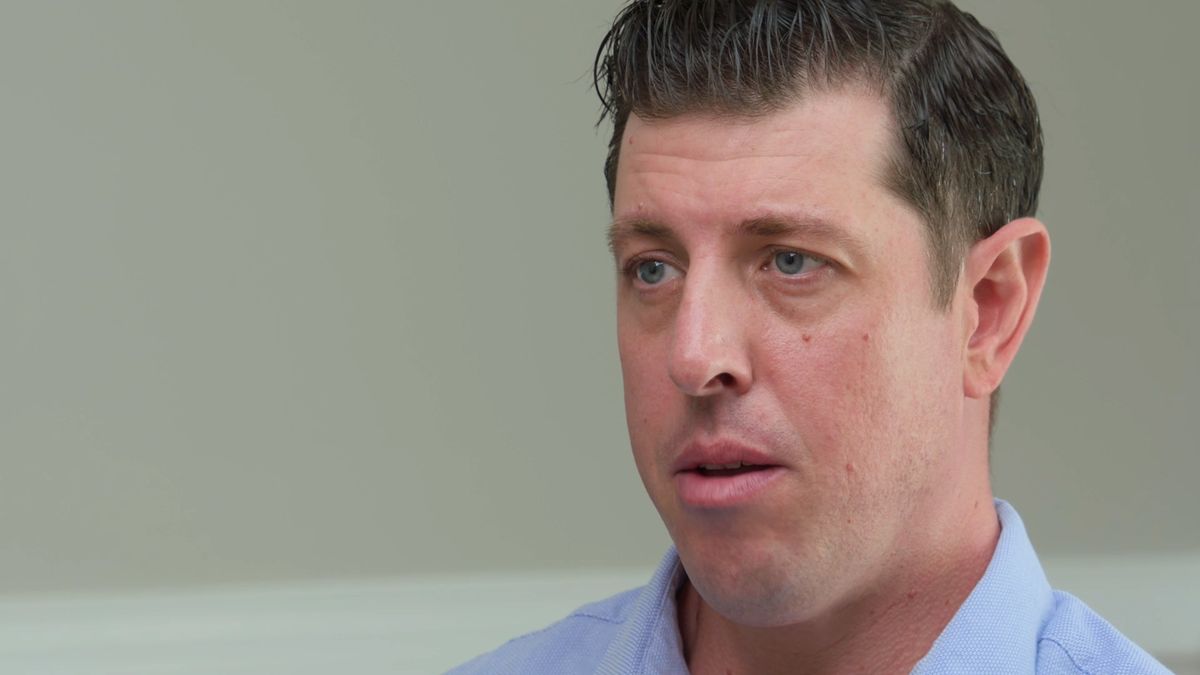
Matt Cross has a life mission: to train young men to become leaders. Mostly he does that through example.
Cross is a youth hockey coach, raised in Toronto and a Raleigh transplant. “As an athlete, I'm always trying to encourage and teach my athletes to be courageous and be brave and to be responsible,” he says.
Other WRAL Top Stories
After a cancer diagnosis at age 36, he’s added another element to that mission.
“Because I work with a lot of families and a lot of young people, it was very easy for me to decide that there was a reason why I was going through this,” he says. “It was very easy for me to look at this as an opportunity to make my family and friends proud and to show young people what you do when you have a really difficult obstacle in your life.”
It was a visit from his father that led Cross to face that obstacle: Testicular cancer.
His father was having heart problems and trying to understand what was going on. So Cross offered to wear an Apple Watch so they could compare EKG readings. When Cross got an abnormal reading, he promised his dad he’d check with a doctor.
Cross had another question ready for that appointment.
“While I was getting my physical, I said, ‘Hey, you know, why don't you check out this lump,’” he recalls.
“I had a lump on my testicle that was there for a number of months, and – typical guy – I figured I'd go to the doctor when I had a real reason to go to the doctor,” he says.
His dad and the abnormal EKG provided that reason.
The answer came on Christmas Day 2019.
“I was stage 2B. Stage 2B means that the cancer originated in the testicle,” Cross says.
Testicular cancer is the number one most common cancer for men ages 15 to 35. The standard treatment is removal of the testical that contains the cancer.
As a coach, Cross understood being in the fight, but he was looking for a win. Aware of the tradition of cancer survivors ringing a bell to signify that they had reached remission, Cross was disappointed when at first he didn’t see a bell at his doctor’s office.
He endured two surgeries and three cycles of chemotherapy, a total of 15 full days of infusions.
“The story goes, when I came in for my very last day of treatment, they had installed a bell,” he says. “So I was able to have a celebration and ring it.
“As a cancer patient and survivor, you learn to celebrate all the wins, the small ones, the big ones,” Cross says.
It’s that message he’s shared with his players and their parents.
“Cancer is all sorts of life lessons kind of thrown at you all at once,” Cross says.
“For a lot of people, it's devastating, and you're sick and you're literally just trying to survive. But if you can somehow get to that place where you're learning and you're growing and you're helping other people, I really think that's the way that you should try to go.
“The most amazing thing that ever happened to me was getting sick. It's nuts. No pun intended.”
Cross was surrounded by support from the hockey community throughout his fight.
He recalls, “That looked like emails, phone calls, texts, food gift cards, a GoFundMe. A lot of the local hockey teams taped their sticks purple and put ribbons on their jerseys.”
That support notched up the pressure for Cross to get well.
“It was really a big part of my fight; I can't let these people down,” he says.
In remission for five years, Cross has returned to his mission of modeling leadership.
A year to the day after his diagnosis, Cross launched the Raleigh Testicular Cancer Foundation. The goal is specifically to raise awareness and to educate about testicular cancer, and generally to get men to pay attention to their own health.
“Our slogan for our charity is Check Your Acorns. That's kind of like a clever, cute way to encourage men and young people to perform self checks,” he says.
“We're trying to tear down stigmas so that men book that doctor's appointment and that annual physical.”
Cross points to the widespread acceptance and awareness of the need for self-exams for breast cancer.
Men need that extra nudge, he says, to understand the risks of ignoring their bodies’ warning signs.
“It's not about being masculine and being strong,” he says, “it's about saving your life, potentially. The cure rates for cancer when you find them in stage one are significantly higher.”
Diagnosis: Young. The New Face of Cancer in NC
"Diagnosis: Young. The New Face of Cancer in NC" is the latest investigative documentary from the WRAL Doc unit, exploring the alarming trend of cancer striking younger adults in North Carolina and across the nation. The documentary follows three North Carolinians in their 20s and 30s who never expected a cancer diagnosis so early in life. Behind every personal story is the big question: Why is this happening?
Diagnosis: Young is available on WRAL’s streaming platforms and WRAL’s YouTube channel. It will also air on FOX 50 on Sunday, June 29, at 1 p.m. and on WILM on Sunday, June 29, at 6 p.m.
.