No County Left Behind: How Legal Aid of North Carolina is Making Justice Accessible
This article was written for our sponsor, Whitley Law Firm
The Cost of Justice
Other WRAL Top Stories
Most Americans budget for predictable expenses. We plan to pay our rent each month, and anticipate the cost of our utility bills. But much of life is unpredictable. Abuse, benefits denial, and eviction can happen at any time – with many underprepared. Nobody expects to need an attorney, and the cost can be overwhelming.
In North Carolina, 71% of low-income families will experience at least one civil legal issue this year – with most unable to afford legal representation. One local nonprofit is fighting back against the justice gap, and making legal representation accessible to North Carolinians in need.
“My mom spent her career working in nonprofits, so giving back has always been ingrained in me,” says Helen Headrick. Headrick is the Chief Communications Officer of Legal Aid of North Carolina, an organization that provides free civil legal services to low-income North Carolinians, helping protect their rights, families, and communities.
“We are the first line of defense for people who cannot afford an attorney,” says Headrick. “We make sure domestic violence survivors are safe in their homes, we keep families housed and out of shelters, and we ensure people receive the benefits they have earned.”
Accessibility & Representation: Why Legal Aid of North Carolina Matters
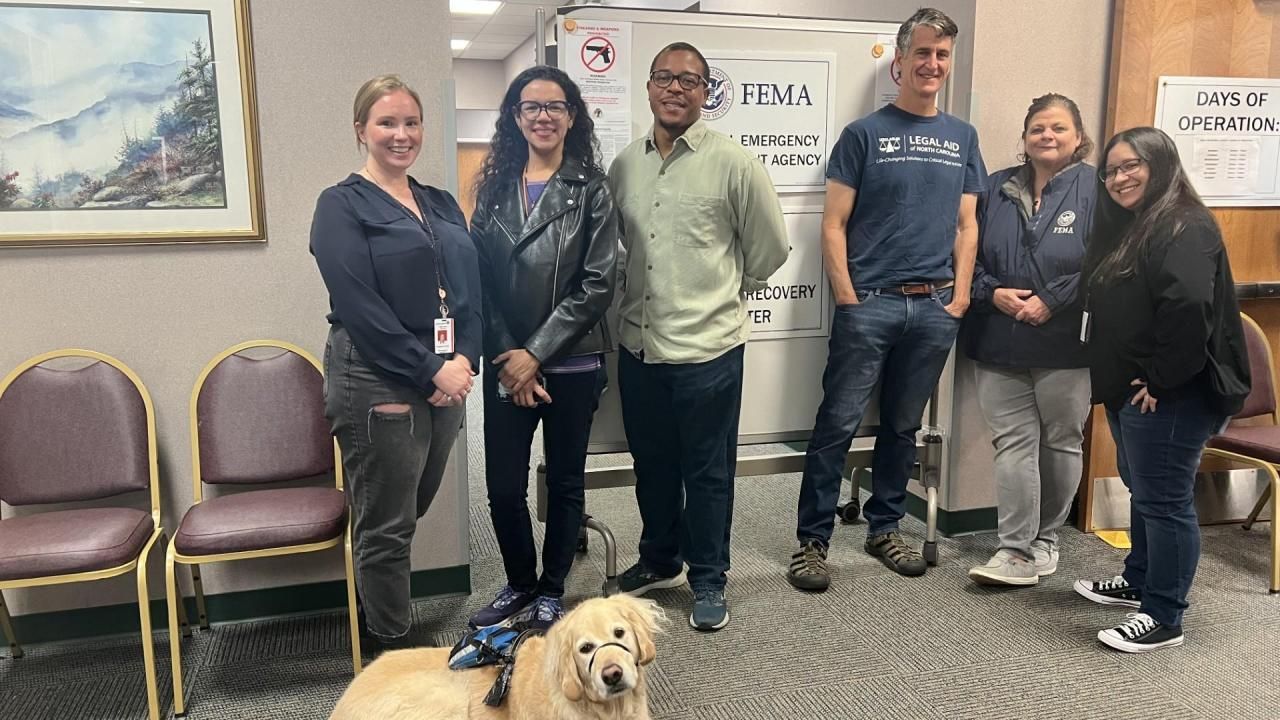
Legal Aid of North Carolina was founded on accessibility. With a presence in all 100 counties, it provides for both rural and urban North Carolinians, bridging the gap between populations. Headrick has watched the organization expand, and seen its impact first hand.
“A client story that has always stayed with me is of a woman I worked with and her two children,” says Headrick. “She was disabled and used a wheelchair. She and her children were victims of domestic violence. Leaving the relationship was especially hard because most domestic violence shelters could not accommodate her needs. Thankfully, a shelter referred her to Legal Aid of North Carolina. With our help, she was able to get a protective order, gain custody of her children, and keep her home.”
Stories like this are frequent at Legal Aid of North Carolina. In 2024, the organization handled 27,000 cases impacting nearly 70,000 North Carolinians, with its impact stretching far beyond legal cases. Every dollar given to Legal Aid of North Carolina in 2024 saved the state nearly eleven dollars in emergency services, social welfare, and law enforcement costs. The organization’s philosophy emphasizes well-planned action at the ground level to prevent the escalation of legal problems – a mission that saves the state thousands of dollars each year.
Bridging the Gap & Expanding the Mission
Recently, Legal Aid of North Carolina expanded its mission of accessibility like never before – using AI. The Innovation Lab, a new program developed by Legal Aid of North Carolina, works to expand access to legal services using technology and data. It aims to improve the accessibility of legal information and develop tools that simplify legal processes for clients.
“One tool from our Innovation Lab that has really transformed access to legal help is LANC‑LIA, our AI-powered virtual assistant,” says Headrick. “We created LIA because our website has a wide range of resources covering topics like domestic violence, housing, disaster relief, and more, and often people don’t even know what they’re looking for. LIA takes all of our resources and translates them into plain language that anyone can understand.”
Since its launch, LIA has led over 50,000 conversations with North Carolinians, granting families access to crucial legal information and services.
Continuing Crucial Services: How You Can Help
The work of Legal Aid of North Carolina is made possible by government funding, generous donors, and the work of hundreds of volunteer attorneys who offer Legal Aid of North Carolina services free of charge.
At Legal Aid of North Carolina, you don’t have to be an attorney to make an impact. Headrick encourages anyone who believes in accessible legal services to get involved.
“Our work is about more than just the law. It is about helping people regain hope and stability when they need it most,” adds Headrick. “Whether volunteering your time, donating, or simply using your voice to raise awareness, you can make a difference”
Ben Whitley of Whitley Law Firm added, “Access to justice shouldn’t depend on someone’s income. Legal Aid's work ensures that North Carolinians facing some of life’s hardest challenges still have an advocate in their corner.”
Interested in getting involved with Legal Aid of North Carolina? Visit www.legalaidnc.org for more information.
This article was written for our sponsor, Whitley Law Firm





Copyright 2026 by Capitol Broadcasting Company. All rights reserved. This material may not be published, broadcast, rewritten or redistributed.