It seems like everyone is writing a business book these days. Your peers are publishing. Your competitors are publishing. If you’re not publishing, what’s holding you back?
If you’re not shaping the narrative around your experience and vision, you’re letting someone else write your story. Bottom line? If you’re a senior executive looking to scale your business or expand your influence, you can’t afford not to write a book.
Other WRAL Top Stories
Here’s why: Your stakeholders—customers, employees and investors—are searching for leaders to trust. Public confidence in institutions is plummeting worldwide, according to the 2025 Edelman Trust Barometer. And when much in the media landscape seems manufactured, authentic stories earn trust. Writing a book gives you the opportunity to share your authentic story and connect with your audience.
A book is a credibility accelerator, a trust-builder, and an engine for long-term financial impact. Think of a book as the ultimate business card.
The business case for writing a book
As a sales professional, I've found that the quickest way to get in front of a C-level executive is to give them a content piece that makes them think or teaches them something new. A well-crafted book raises your credibility, accelerates relationship-building, and what’s more, fosters enduring trust with bottom-line implications.
I’ve written about the benefits of thought leadership, from building your personal brand to driving business results. To recap, highly visible CEOs see 80% higher average annual share price growth. When it comes to the impact of a business book, a 2024 study found that 90% of authors reported tangible benefits: boosting their reputation, generating leads, and helping them land speaking engagements.
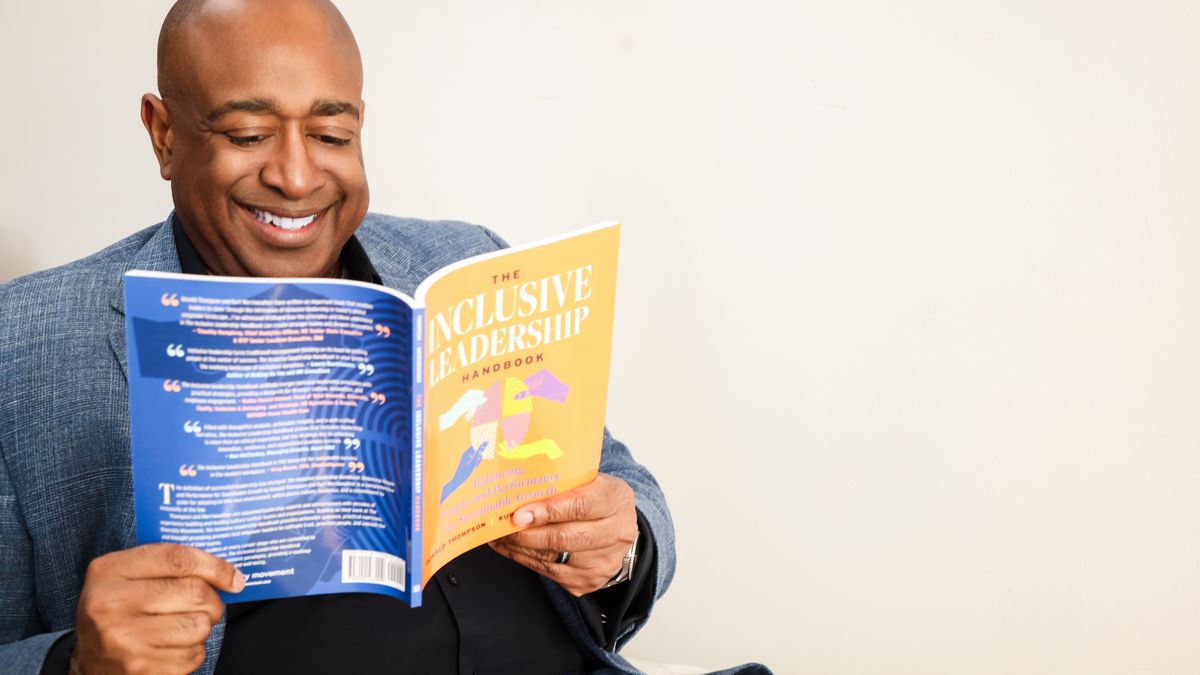
My experience backs up that study. In November, I will speak to 500 C-suite leaders at a conference in Brussels, an opportunity that came about because of The Inclusive Leadership Handbook. Originally written as part of The Diversity Movement’s thought-leadership strategy, the book has added to my credibility and expanded my influence. After TDM was acquired by Workplace Options, it continued to open doors, enabling me to represent my new company in front of a global audience. That’s the kind of staying power a book can offer.
Books highlight your expertise and raise your profile
Even in a crowded media landscape, people still read books because they’re hungry for authentic stories. Writing a book gives leaders the opportunity to articulate what they believe in, why it matters, and how their vision shapes the future. A compelling, well-executed book enables leaders to shape perception, inspire action, and distinguish themselves from competitors in ways that digital content alone cannot.
“We live in a world full of noise, and what breaks through that noise is authentic communications,” says best-selling author Bob Batchelor. “A lot of leaders have a story to tell, because they’ve done something interesting.”
Think of your book as a loudspeaker, amplifying your message for internal and external audiences, from employees to potential partners. A well-crafted book becomes a library of talking points for media mentions, speaking engagements, and business development.
No arguments. Just get started
Too many leaders hesitate, saying “I don't want it to be about me,” “I don’t have time,” or “I’m not a writer.”
Your book doesn’t have to be a memoir. It can be a blueprint, a collection of stories or a guide to your leadership philosophy. If your time is limited, start by recording voice notes on your phone. Dictate your thoughts, your lessons, your journey. Then, use gen AI tools to transcribe your notes and organize your main ideas. Regardless of book format or writing method, the important thing is to begin. Here are more practical steps to get you started on your journey to published author:
1. Decide your message (and your audience): Ask yourself, “What do I believe? What expertise can I share? Who am I trying to reach?” Self-reflection helps clarify your unique story and what you hope to accomplish with the book.
2. Create a strategic plan. Writing a book is just like preparing and executing on a product timeline. Treat this like any business goal. Establish a writing schedule and project milestones.
3. Make it a team project. Don’t hesitate to use outside resources to accomplish your project. If you’re not a writer, work with a ghostwriter or editor who can bring your voice to life. If you don’t know how you want to publish your book, find a professional to guide you through each publishing model: traditional, hybrid or self-publishing.
4. Promote your book and build your influence. Once your book is published, it becomes the foundation for articles, podcasts, speaking engagements, media pitches and investor decks. Here again, it’s important to work with experts who can elevate your message.
I believe every business leader has a story to tell. I also believe in getting support when you need it. That’s why I’m inviting you to a free webinar I’m co-hosting with author Bob Batchelor, “Write Your Book: A Leader’s Guide to Authorship.” Join us at 2 p.m. EST, Thursday, Aug. 14, and we’ll guide you through the process — from outlining your ideas to assembling the right team and building your brand. You’ll also hear insider tips, including lessons we’ve learned.
Write the book that builds your legacy
Today, trust is the new superpower, and relationships drive that trust. But you can’t build either one unless people know the authentic you. A book creates instant familiarity, encouraging people to remember who you are and what you stand for.
The most successful executives today are leading with authenticity, thoughtfulness, and courage. They are reshaping industries by writing books that frame their vision and their philosophy. Writing a book shows that you have done the work, refined the vision, and have something meaningful to offer.
Your book can define your legacy. But if you don’t tell your own story, that legacy may retire when you do.
About the Author
Donald Thompson, EY Entrepreneur Of The Year® 2023 SE Award-winner, founded The Diversity Movement, a Workplace Options Company, to fundamentally transform the modern workplace through diversity-led culture change. Recognized by Inc., Fast Company and Forbes, Thompson is author of Underestimated: A CEO’s Unlikely Path to Success, hosts the podcast “High Octane Leadership in an Empathetic World” and has published widely on leadership and the executive mindset. His latest book is The Inclusive Leadership Handbook: Balancing People and Performance for Sustainable Growth, co-authored with Kurt Merriweather, Vice President of Global Marketing at Workplace Options, parent company of The Diversity Movement. Follow Thompson on LinkedIn for updates on news, events and his podcast, or contact him at info@donaldthompson.com for executive coaching and speaking engagements.