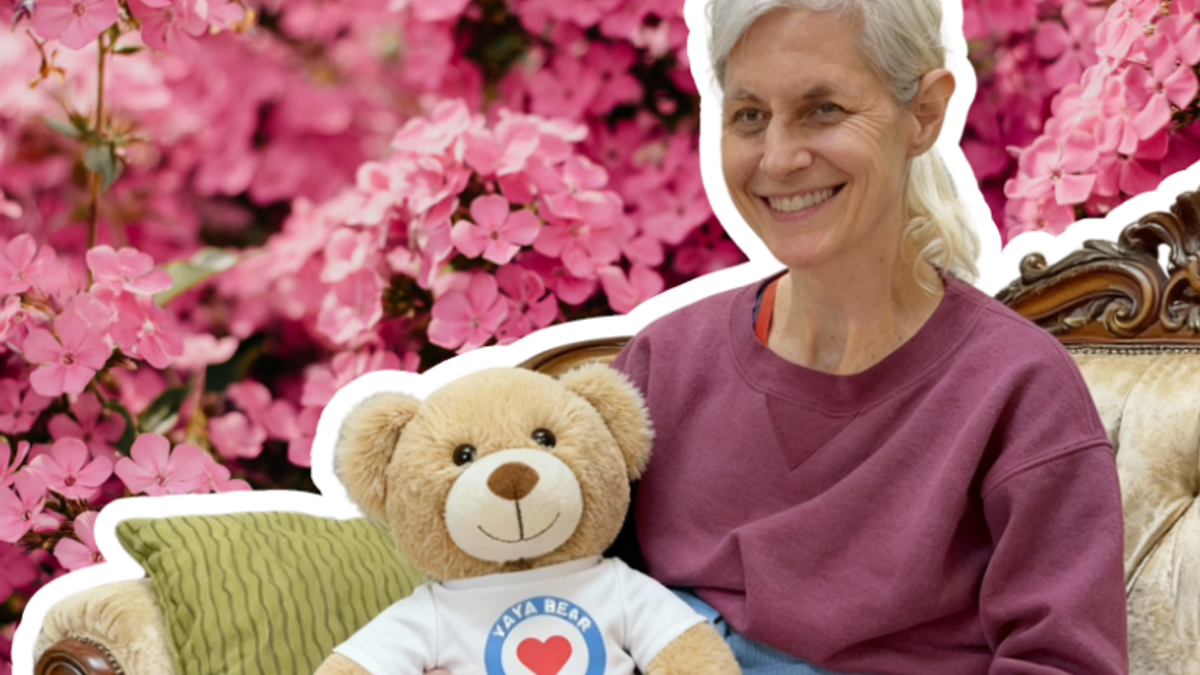
The staff glanced at one another in surprise. I’ve seen this moment before - the re-opening of a door we all assumed had been closed. It happens when an older adult finally feels seen enough to speak. But this time, the listener wasn’t a human. It was a teddy bear with an embedded voice-AI system built for elders.
This is Yaya Bear, CareYaya’s newest AI project – and the most human technology we’ve ever built.
Other WRAL Top Stories
Social Robotics and The Future of Companionship
We didn’t set out to build a “gadget”, but rather, to build presence.
Yaya Bear is a huggable, AI-powered companion designed for older adults, including those facing social isolation or living with dementia. Through natural language conversation, it gently captures life stories, offers companionship, and sends mood and engagement updates to family members. There are no apps to configure, no screens or setup tutorials. It simply responds to a voice and a touch.
Due to the form factor, older adults accept it instantly. They talk to it naturally. And when they share memories – about the house they grew up in, or who taught them to fish – Yaya Bear preserves those stories and ultimately transforms them into a printed and audiovisual autobiography narrated in their own words.
I think of it not as a “robot” or a “device”, but instead, a companion who truly listens.
A Breakthrough Built Here in North Carolina
Yaya Bear grew out of years of research at the intersection of aging, caregiving, and voice AI. CareYaya’s earlier project, QuikTok, a voice AI companion for older adults, was covered in WRAL and caught the attention of the National Institute on Aging. That work ultimately led to CareYaya being named a finalist in the National Institute on Aging’s Startup Challenge, recognizing our leading-edge research into voice-powered AI for older adults.
From that foundation came a simple insight: AI works best for older adults when it is embodied, familiar, and warm.
So we moved the voice AI out of the phone conversation and into a form factor that felt more like comfort. A teddy bear that could sit on a bedside table, or in a recliner, or accompany an older adult to the hospital or nursing home.
Along the way, we brought in incredible collaborators:
- Dr. Melissa Batchelor, director of the Center for Aging Studies at George Washington University, who brings decades of expertise in improving care for older adults.
- Researchers at Johns Hopkins Medicine and Duke Health, contributing clinical guidance and evaluation frameworks.
- AI researchers from OpenAI, who have helped us strengthen the conversational engine that powers Yaya Bear’s natural language and memory system.
This is North Carolina innovation at its best – rooted in community needs, informed by research, and built to be accessible to everyone.
Why Dementia Care Needs a Companion Like This
America’s demographic math is unforgiving. Loneliness among older adults is at historic highs. Caregiver shortages, especially in senior care facilities, grow more severe each year. Frontline caregivers are overextended, families are overwhelmed, and care programs are doing heroic work with limited resources.
Dementia itself creates a cruel contradiction: people forget the present while remembering the past vividly. Those memories – of childhood, of early adulthood, of loved ones long gone – can still bring immense joy, calm, and identity.
But, only if someone is there to listen. The crisis isn’t that we lack solutions, but that we’ve been looking for complicated ones, when the simple ones are staring us in the face.
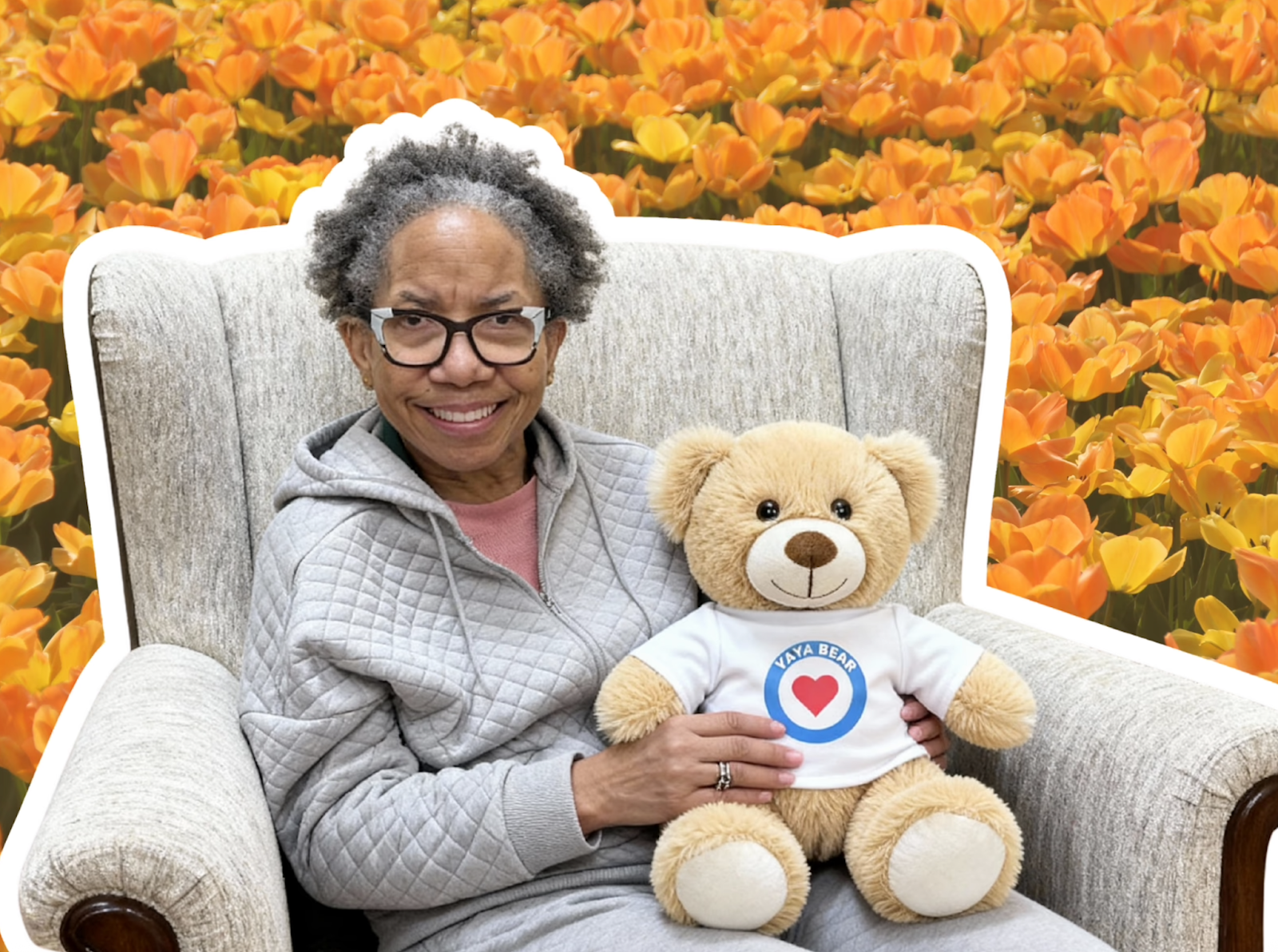
Yaya Bear fills the impossible hours – the afternoons when a daughter is at work, the evenings when a caregiver hasn’t arrived yet, the 2 a.m. moments when loneliness becomes a kind of pain. In our early testing in Raleigh, we saw exactly that. Research shows that social robots and AI companions reduce loneliness in older adults by up to 95%. Yaya Bear increased connection and recollection of fond memories. It made the next family phone call richer. It made the next visit easier. It sometimes even brought forward stories the family never even knew existed.
Social Robotics as a Legacy Project
In working with older adults for many years, I firmly believe that every conversation, properly heard, is an autobiography in progress. And so, every conversation with Yaya Bear is captured, with permission, and compiled into a narrative-rich life story. Not the polished, edited autobiography that people imagine writing someday, but the real one. The one spoken in the elder’s own cadence and memory.
Families tell us this is the part that surprised them: the bear doesn’t just comfort people in the moment, but it actually preserves their life history and becomes a witness to a life well-lived. The story will last well after Yaya Bear’s battery has died, and becomes a tangible legacy of voice, memory and love. This legacy project is a preservation of human connection over time, and making sure that people don’t disappear into the silence before they physically pass on.
The Future of Aging Might Be Soft and Cuddly
Nowadays, a lot of AI in healthcare tends to lean toward the clinical: diagnosis engines, workflow automation, predictive models. Important work, for sure. But I think the future of aging will require something else too – technology that feels more human, that remembers, and that shows up with care, in the hours when we can’t.
Yaya Bear is just one example. But it’s a glimpse of what’s possible when we build AI to address the true unmet needs of society.
We are building machines of love and grace. Sometimes, the most radical innovation isn’t the most advanced one, but the one a grandmother is willing to hold.
Welcome to the future - it’s soft, cuddly, and waiting on the couch to hear your story.
Neal K. Shah is a healthcare researcher specializing in caregiving, artificial intelligence and workforce innovation. He is the lead Principal Investigator on the Johns Hopkins-funded YayaGuide AI innovation project and serves on North Carolina's Steering Committee on Aging. He is CEO of CareYaya Health Technologies.