"We've named a new species," Lindsay Zanno, head of paleontology at the NC Museum of Natural Sciences, told a crowd on Thursday.
Scientists at the NC Museum of Natural Sciences have found that what was believed to be a juvenile T.rex skeleton is instead a distant relative, the first of its kind to be found in a full skeleton. Their work has also raised new questions about what is known about that popular predator.
Other WRAL Top Stories
The discovery “rewrites decades of research on Earth's most famous predator,” Zanno said.
The skeleton is part of the museum's "Dueling Dinosaurs" -- a unique fossil of two animals intertwined -- a Triceratops and what was originally thought to be a juvenile tyrannosaur.
The study of the skeleton showed it was not a young T.rex but a different and smaller meat-eater, one the museum has dubbed Nanotyrannus lethaeus. Zanno explained how comparing skull and other bones showed the similarities and differences that helped to make the determination.
The find settles a decades-long debate among dinosaur researchers about a skull discovered in a fossil bed laden with T.Rex specimens. That single skull has gone through different definitions and names as paleontologists tried to classify it. Was it a T.rex or another similar species, nanotyrannus?
Part of that argument was that a single apex predator -- T.rex -- lived without similar dinosaurs at the same time and place. But the identification of the nanotyrannus lethaeus shows that it shared space with the larger predator.
"This fossil doesn’t just settle the debate. It flips decades of T.rex research on its head,” said Zanno.
Pamela Cashwell, North Carolina secretary of natural and cultural resources, called it, "The most significant dinosaur news in a decade."
The Dueling Dinosaurs exhibit opened to the public in April 2024. Visitors to the museum can watch the work in the SECU DinoLab, and it was that work that led to the discovery.
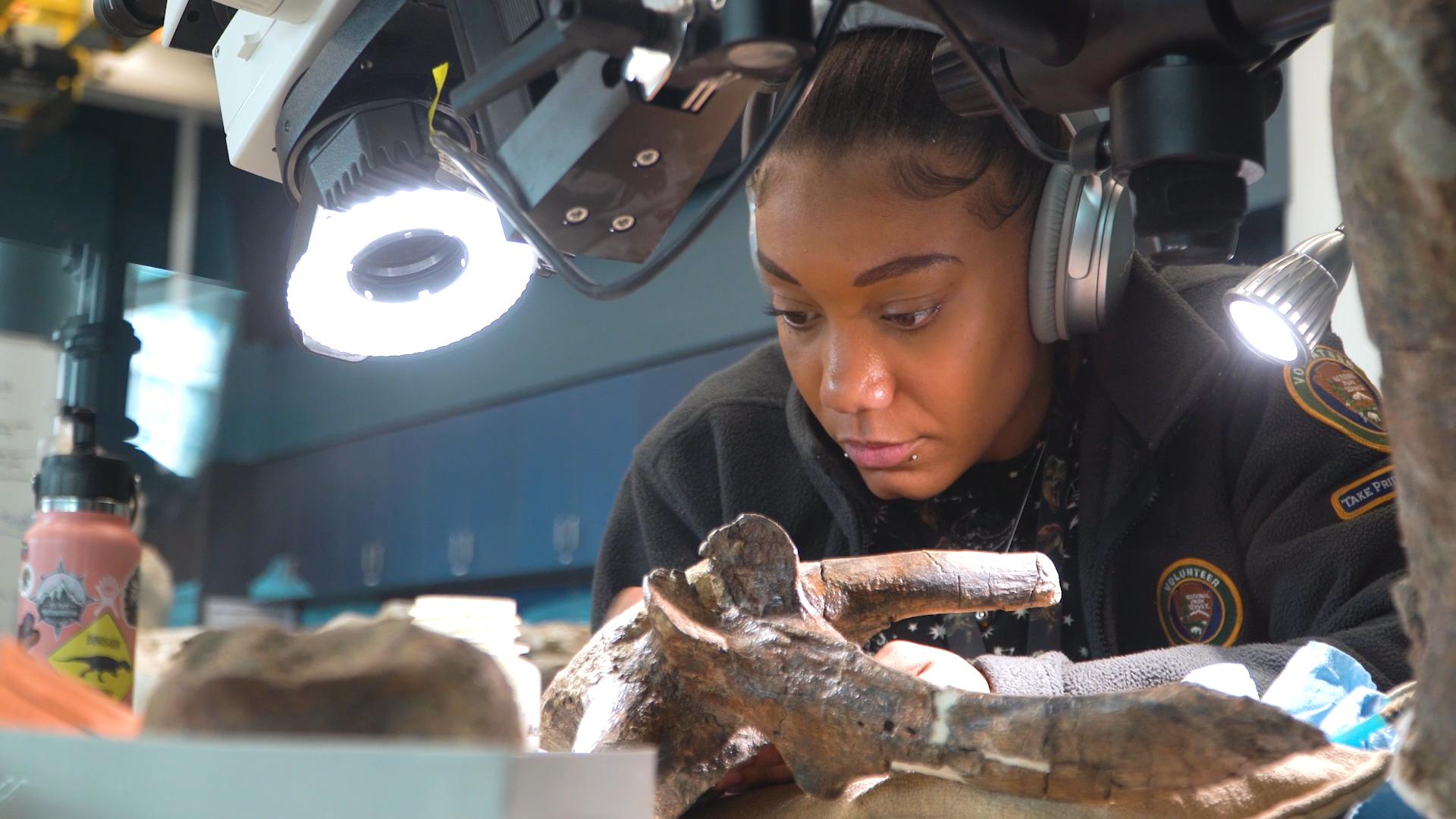
"Anyone who wants to see a 100% complete Nanotyrannus can come to the museum, speak directly with the scientific team, and stand next to the real skeleton,” Zanno said.