Half of Wake schools' HVAC jobs are vacant, ahead of upcoming heat wave
Ahead of a heat wave this week, Wake County schools says it's well short on workers to handle broken air-conditioning units.
During a meeting of the facilities committee Tuesday, school board members said they understood the high cost of shoring up the district’s HVAC systems — and making sure enough people can do it. But they said the district needs to be more transparent with the public about how much it will cost and what is being done about short- and long-term HVAC problems.
Other WRAL Top Stories
“It’s serious, and it’s affecting families,” Board Member Toshiba Rice said, referencing school closures that occasionally happen when air conditions is broken and the outside temperature is too high. Rice noted that families can lose out on income if a parent has to leave work to pick their child up from school.
“It seems like we’re always putting out a fire instead of being proactive,” Board Member Cheryl Caulfield said.
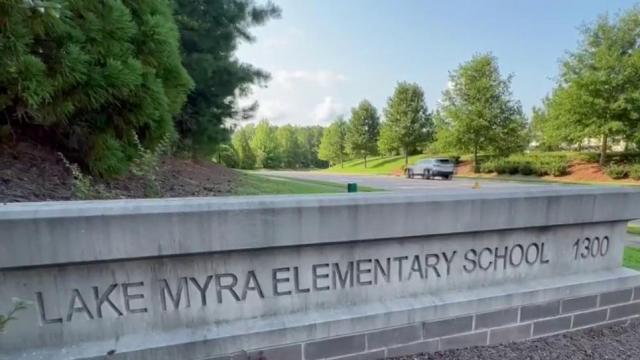
In early August, dangerous heat forced at least two Wake County schools to send students home. Lake Myra Elementary School in Wendell and Moore Square Magnet Middle School in downtown Raleigh had to send students home due to HVAC issues.
The school system has 200 schools — and even more buildings — to maintain. Most don’t close because of HVAC issues in any given year, but the closures are disruptive at the schools that do have an HVAC failure.
About half — seven — of the Wake County Public School System’s 15 heating, ventilation and air conditioning staff positions are vacant. The system’s two chiller technician positions have been vacant for years. Many prospective employees interview but turn down job offers once they realize the pay, Nate Slavik, district senior director of maintenance and operations, told the school board’s facilities committee Tuesday.
The school system uses vendors to respond to most HVAC issues, but those vendors have other clients and can’t always respond within the ideal time frame, Slavik said.
Meanwhile, the school system had about 2,900 emergency worker orders last year related to HVAC issues. Another 2,300 work orders last were labeled “urgent.”
The work orders are so numerous, Board Vice Chairwoman Monika Johnson-Hostler said, that she’s heard from one principal who says they no longer submit one for many of the issues they’ve had. That surprised Johnson-Hostler, who said the principal has lost some teachers over air conditioning issues not being fixed.
“We’ve got people not even using this system because they don’t trust us,” she said.
The school system relies on its employees and vendors to tackle HVAC issues and is able to fix almost all emergency work orders within 24 hours. But within 24 hours means a school may still have to close for the day because of excessive heat.
Part of the problem is that the district is well behind on maintenance and replacement schedules for its HVAC units and other facilities.
The school system has more than $600 million in deferred maintenance, which includes HVAC issues. That’s after a tightening of purse strings at the state and county levels after the onset of the Great Recession in 2008, lasting a few years.
In recent years, the school system has beefed up its “life cycle repair” funding — essentially, the amount of money it spends every year to repair or replace aging infrastructure — from about $20 million to $40 million per year. HVAC work gets $22.5M of that. The system is set to gradually increase annual life cycle spending to $50.6 million in 2030.
If no other issues popped up, it would take 14 years to get facilities up-to-date at $40 million per year, district officials said.
HVAC maintenance is expensive.
Replacing just one chiller can cost $225,000 to $325,000, depending on the size, said Tony Champion, district director of facility assessments and lifecycle. Almost half of chillers already need to be replaced or will need to be replaced in the next five years.
Replacing the entire HVAC system at one school could cost $1.5 million, Champion said.
Capital projects are the main thing counties are supposed to provide toward school spending, while the state is responsible for educational spending for schools.
Wake County is spending more than $700 million in county funds on education-specific expenses, such as additional teachers and social workers and higher employee pay. It has more than $1 billion in bonds for capital projects, largely going toward new schools and major school renovations. Some of the bond money will cover some HVAC and other lifecycle work, such as new floors, new pavement or new fire alarms.
Board Chairman Chris Heagarty said the district could spend more on facilities if school board members didn’t feel like they needed to spend more on staffing. He said the state should step up with increased compensation for school employees to free up counties to spend on facilities.
Counties across the state are facing the same challenges as Wake. Statewide, counties spend nearly $4 billion on education-related expenses but just about $1.5 billion on capital projects.
“We have had to make the choice of, do we pay people so we have teachers in place?” Superintendent Robert Taylor said. “Or do we deal with these kinds of issues?”
But district leaders also cautioned against just providing more money for more HVAC replacements and repairs. The district needs to be able to hire workers, something that can take years to do, Champion said.
“And if you increase the budget by $50M next year we’ll have $30-$35M still sitting in the pot at the end fo the year because we don’t have the manpower to do it,” Champion said.
Some board members urged district leaders to alter hiring processes and workplace culture.
Rice suggested the facilities department explore hiring from new pools of candidates with more diverse backgrounds.
Taylor said the district is looking at working with high school students on training toward careers in HVAC as a way to boost the workforce.
Wake Schools closed more than 40 times in the past year due to failing HVAC systems. According to the meeting agenda for Tuesday, staffing and the age of their equipment are the main concerns.
WRAL spoke with Wake County Schools Superintendent Robert Taylor Tuesday morning about how the district plans to address the issue this school year.
"That is a constant issue that we deal with -- trying to deal with numerous amounts of equipment," Taylor said. "We have roughly 300 chillers, 500 HVAC heating and cooling units, so that is a lot of material and equipment to make sure it is maintained."
According to a 2020 study from the Government Accountability Office, nearly 36,000 schools in the country need HVAC system updates. Last year, some Wake County high schools were forced to close early because of faulty air conditioning units.
Heagarty said Wake County schools closed due to malfunctioning HVAC systems more than 40 times in the last year.
Each one of these closures represents a serious disruption to learning," Heagarty said. "Simply put many of our HVAC units are aging, and we just don't have enough specialists on staff to keep up with maintenance and repairs."
According to school budget documents, nearly $125 million was put aside last year for maintenance and operations, which includes HVAC systems, but there’s a backlog on work orders for HVAC systems that have been "stretched beyond normal and recommended life spans."




Copyright 2026 by Capitol Broadcasting Company. All rights reserved. This material may not be published, broadcast, rewritten or redistributed.