NC Senate leader Berger, facing a 2026 primary challenger, ramps up fundraising
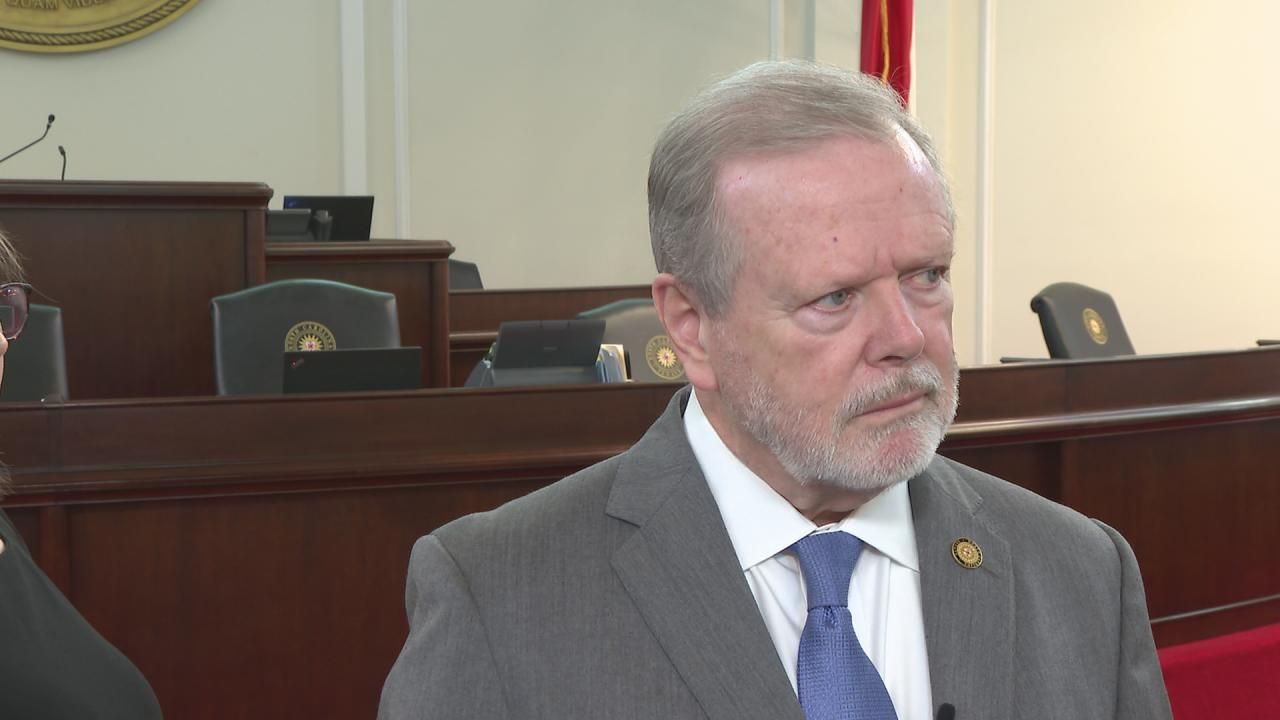
North Carolina Senate leader Phil Berger raised more than $1.7 million during the first six months of 2025, a new campaign document shows — a sizable haul for the Rockingham Republican, who faces a 2026 challenge.
Berger is facing what could end up being his toughest primary since his first election in 2000. Rockingham County Sheriff Sam Page has relentlessly attacked Berger. Page alleges that Berger has ignored or harmed the interests of his district’s constituents as he wields the levers of power in Raleigh.
Other WRAL Top Stories
During the first half of 2025, the state legislature was in session almost daily. Berger adopted a more vocal stance on immigration, guns and other hot-button issues that appeal to the Republican base and backed efforts to inject culture-war issues into unrelated litigation. All the while, records show, he was on a fundraising blitz to ready his campaign for next year.

Berger’s fundraising total is one of the biggest ever for this kind of off-year campaign report, and likely the biggest, according to several longtime observers of North Carolina politics.
“Clearly he’s behaving as if he’s feeling pressure,” said Chris Cooper, a Western Carolina University political scientist who specializes in North Carolina politics. “He’s announcing endorsements well over a year before the primary. He’s been aggressive on social media going after Sam Page. He wouldn’t be doing that if Sam Page wasn't a threat.”
Dylan Watts, a spokesperson for the Senate Republican Caucus, said Berger was traveling around his district Friday and unavailable for comment.
Page’s challenge
On paper, Page’s campaign apparatus pales in comparison to Berger’s. The Berger campaign entered July with more than $1.8 million in the bank; the most recent records for Page show $7,448.46 in his campaign account. But that’s from February; Page has likely raised more than that in the months since.
Campaign finance reports aren’t due until next week, but Berger’s came out early. Page told WRAL Friday his most recent campaign finance numbers weren't yet finished, but that he wasn't worried about the numbers.
"This Senate race will not be won by the millions of dollars from big donors," he said. "Instead this Senate race will be won by the personal relationships that have been established for my more than 27 years while serving my community and my country as the Sheriff of Rockingham County."
The roughly $7,500 Page used to launch his campaign against Berger was what he had left over from his unsuccessful run for lieutenant governor in 2024, when he came in fifth place in the 11-person GOP primary.
While Page may not have resonated with voters statewide in that 2024 primary, he’s much better known at home. County sheriffs have long been among the most influential local leaders in North Carolina. That’s especially true in rural areas, including Rockingham County, where the local sheriff’s office is also among the area’s largest employers. Page remains the sheriff as he also runs for Senate.
His opposition to Berger began after the senator led a failed effort to legalize casinos in North Carolina, pushing for a deal that would’ve put one in Rockingham County. Berger backed it as an idea to boost the state economy; gambling revenues could’ve also helped pay for further cuts to the state’s income tax rate.
That casino plan was kept secret until 2023 when Berger tried to rush it through, as part of the larger state budget, instead of allowing it to be voted on by itself. It all fell apart following a revolt by socially conservative Republican lawmakers who refused to go along, saying they believed gambling to be un-Christian.
It was a rare public loss for Berger, who has often gotten the upper hand in negotiations with fellow Republicans in the state House of Representatives, as well as in power struggles with Democratic governors Josh Stein and Roy Cooper.

Page seized the opportunity and has since expanded his criticism of Berger to focus on other issues ranging from teacher pay to a recent battle with coastal shrimpers. Page has sought to paint Berger as out of touch with everyday people.
“This is really critical,” Chris Cooper, the political scientist, said of the Berger-Page primary. “Not just for who wins or loses an election, but for understanding the power structure of North Carolina politics. Phil Berger is, I would argue, the most powerful person in North Carolina. … And this is a good reminder that even very powerful politicians have to answer to the people back home in their districts.”
North Carolina Democrats, meanwhile, are revelling in seeing one of their most powerful rivals challenged.
Typically legislative leaders raise loads of money but then spread it out to fellow lawmakers in their party, with a particular focus on competitive seats. But if Berger spends more than usual fending off Page in the primary, there will be less money than expected to help other Republicans.
And 2026 will see Democrats on the offensive: They need to flip just one seat in the state Senate to break the GOP’s supermajority and give Democratic Gov. Josh Stein’s veto more power. They’ve already identified their top target, a Rocky Mount-area district which Democratic leader Sydney Batch recently said will likely require at least $3 million in campaign spending.
Senate Democrats didn’t have their own fundraising numbers to report Friday, since the deadline isn’t until next week. But a spokesperson for the Senate Democratic caucus questioned how much attention Berger could’ve been giving to pressing issues facing the state amid his fundraising efforts, pointing out that while he was out raising money, legislative leaders failed to reach an agreement on a state budget for the fiscal year that started July 1.



Copyright 2026 by Capitol Broadcasting Company. All rights reserved. This material may not be published, broadcast, rewritten or redistributed.