I Who Have Never Known Men
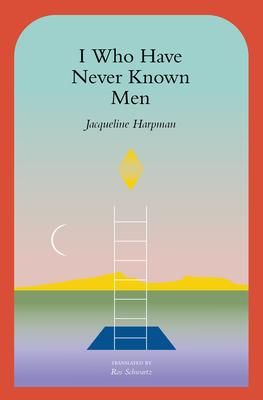
About a year ago, I was beginning a journey that I will forever be on with my health. At the time, I was going through the trenches of the beginning stages of a new autoimmune condition, which had the side effect of causing terrible panic attacks due to the fact that I felt like my airflow was constantly being cut off. What does this have to do with a book club? Just hold on, give me a minute to cook. One of the ways I was able to get through the dark times was by watching YouTube, focusing on my favorite hobby since 4th grade, reading (aka booktube). By far, my favorite channel was and still is allisonpaiges, a fellow chronically ill and neurodiverse booklover. She has introduced me to a number of my favorite books including all of Emily Austin’s books, Convenience Store Woman, The Tea Dragon Society, the Monk and Robot duology, and the book this article centers around, I Who Have Never Known Men.
By the time I had picked up the book, I followed Allison’s example and quit my job to focus on my health (we have been mirroring each other’s lives in an almost scary way). Within a few weeks of quitting, Sue Lucey, the owner of Page158 Books, had reached out to inform me--their best and most loyal customer in my estimation based on my weekly visits--that they had a spot that needed to be filled on their team. Having the privilege of entering a bookstore daily meant my mental healing journey could take off. Finally, I had the mental space to read again!
Other WRAL Top Stories
One of the first books I picked up was I Who Have Never Known Men by Jacqueline Harpman based on the recommendation from allisonpaiges. First published in English in 1997 under the title, the Mistress of Silence. Jacqueline was born in Etterbeek, Belgium in 1929. Her family was forced to flee to Casablanca during WWII. She later returned to Belgium and studied to become a doctor until contracting tuberculosis. Later, she qualified as a psychoanalyst, which absolutely helped her with writing. Her wiki is far too short for the impact her writing should be leaving on humanity (in my humble opinion).
The book left me speechless. I finished it on May 9th, 2024 (thank you storygraph), but have since been unable to put my feelings into words. I thought about the book so frequently that I began to form the concept of a book club in my head that would focus on translated books. We’d read books from around the world and one of the first books we would read would be I Who Have Never Known Men. Of course, we couldn’t start with such a stunner, but we could read it second. And so, we (me and 9 other individuals) met at Page 158 Books in Wake Forest, NC on Sept. 3rd to discuss.
At this point you are probably wondering what the heck this book is about. Well, it centers around our narrator, unnamed but referred to as The Child throughout her life. The book opens with this narrator reflecting back on her life. The Child, now an older woman, tells us “As I write these words, my tale is over” and yanks us backward to her childhood, spent in a cage with 39 grown women guarded round the clock by the same rotating male guards that do not talk to them; they only watch. The women are unable to touch each other. They are forced to eat and unable to harm themselves. They live in this limbo which is all our narrator has ever known. The psychological effects on the women are immediately apparent to the reader, but maybe not our child narrator who knows no better. Do they stay in the cell forever? I wish I could tell you more, but I fear I may spoil the book.
I will tell you a few of the themes we discussed during book club: we explored the themes of death, our need for social interaction, and the thought of living a life unknown and unacknowledged by any other human. A fascinating question was how everyone interpreted the title. We are not even sure the book even takes place on Earth (I am convinced that it does not). Men are absent from the pages, but does the title refer to males or humans in general? An hour was not enough time, but I am happy that I was able to spread this book to more people. How this book has been mostly forgotten until its resurgence with the online book community is beyond me! It challenges its readers, makes you really feel and question or accept some brutal truths. It screams to me that this should be required reading in our educational systems!
How does all of this connect back to the beginning of the article?
We are participants in a community that can share knowledge and discuss the existence of greatness in entertainment materials, but what happens when your ability to communicate with others or even access to those things are all taken away? I would have never known about this book if it were not for the Booktube community. Just how this book was shared can be connected back to our narrator’s story. Now I am left with questions such as, would I crumble under the weight of being separated from humanity? Yes. Could I get through these difficulties (my health) without being able to connect to others that understand my experience? No. Could I stomach the knowledge that I may be the last of my kind or that there are others like myself that will never know me story? No.


Copyright 2026 by Capitol Broadcasting Company. All rights reserved. This material may not be published, broadcast, rewritten or redistributed.