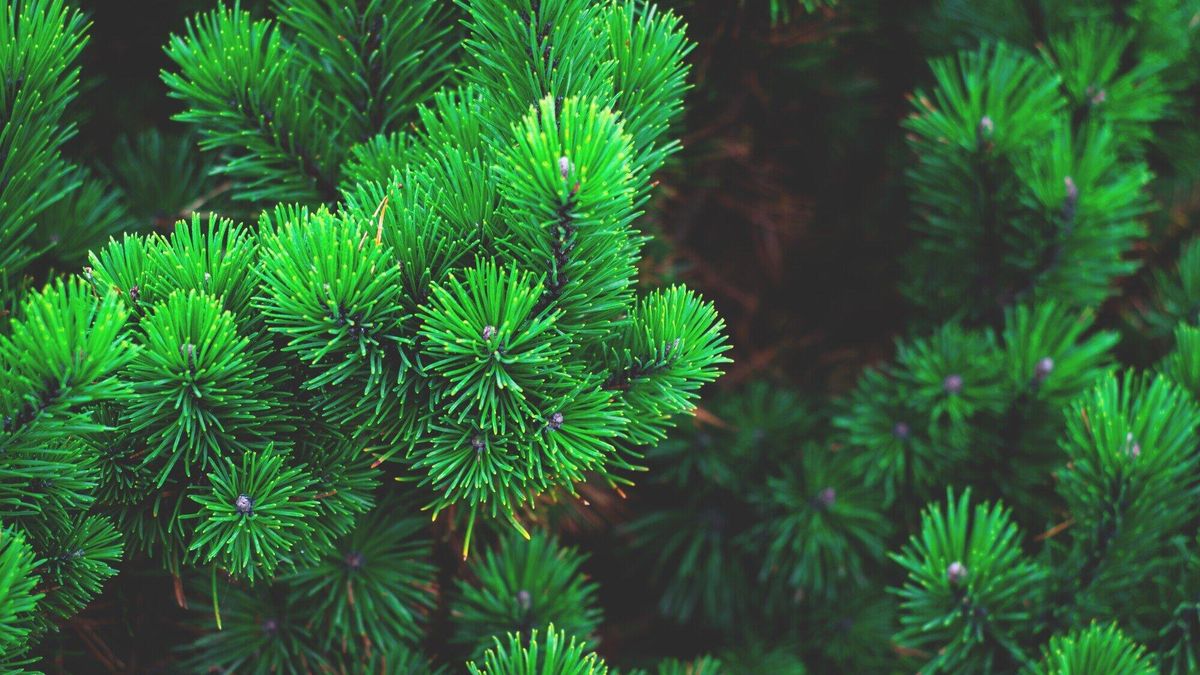
A Goldsboro couple had one of the largest pine trees in the state sitting in their yard. It was 13.6 feet around and 84 feet tall. That made it the fifth-largest pine in the state and the largest in Wayne County.
Pine trees don't always grow to be that large, but they've always been important to North Carolina. The state's early colonists may have never survived without them, and they're still revered today.
Other WRAL Top Stories
Read on to learn more about why pines are the state tree of North Carolina and why they're so significant.
Selecting the state tree of North Carolina
The Garden Clubs of North Carolina began campaigning to select a state tree as early as 1959. They held a meeting and polled their members in 1962. The pine tree was designated as the state tree of North Carolina in 1963.
The state even established the Order of the Longleaf Pine. It's still in place to day to recognize service to the community.
Nine other states also took the pine on as their symbolic tree. They include:
- Alabama
- Arkansas
- Idaho
- Maine
- Michigan
- Minnesota
- Montana
- Nevada
- New Mexico
Pine species
There are 79 different species of pine trees in the United States. At least 12 are native to North Carolina.
Many mistakenly believe the longleaf pine is the North Carolina state tree. It's understandable, considering the State Toast does begin with the words "here's to the land of the longleaf pine."
However, while the species is important, all pine species are lumped together as North Carolina's state tree. They're all unique but equally ecologically and historically significant.
Longleaf pine is a hardy species. It's resistant to:
- Fire
- Drought
- Pests
- Fire
Loblolly pine grows quickly. It's essential for North Carolina forestry in the production of timber and paper products.
Eastern white pine trees are tall with soft wood. They're also commonly used for lumber production.
Pitch pine is adapted to grow in poor soils. You'll find it in sandy areas of the state.
Shortleaf pine has smaller needles than most of the other species. You can find various shortleaf pine habitats across the state.
Other pine species considered indigenous to North Carolina include:
- Table pine
- Pond pine
- Virginia pine or mountain pine
- Slash pine
Importance of pine trees
Pine significance in North Carolina goes back to even before the state's earliest days. Their sap helped create a thriving economy, better than many other early states.
The trees also help maintain healthy ecosystems. Pines provide food and shelter for a diverse range of plants and animals.
Historical significance
Pine trees have been historically significant since ancient Roman times. The health of the needles of the branches of their stone pines in their Forum could allegedly predict the empire's future.
Pines were also crucial to North Carolina's economy during the Colonial period and its early statehood. The sandy soil wasn't right for growing cotton, the primary crop of the South at the time. Luckily for early settlers, it was perfect for pine trees.
They were a primary source of major building materials, especially turpentine. It was created by distilling pine tree sap in a copper still.
It was used as a building material, especially for constructing and repairing ships. North Carolina had the largest naval industry in the country thanks to it. Turpentine also had a wide range of other uses, including:
- Making soap
- Skinning animals
- Lighting lamps
- Curing minor ailments
Turpentine became so synonymous with North Carolina that it led to the creation of its nickname, the Tar Heel State. Harvesting turpentine was a messy business. The material often ended up on workers' feet, thus the name Tarheel.
Ecological importance
A pine habitat supports numerous wildlife species and increases biodiversity. They help create one of the most biodiverse ecosystems in the world.
The US Fish and Wildlife Service has identified over 30 species identified that rely on the longleaf pine. They're all listed as threatened or endangered now.
A few examples include:
- Red-cockaded woodpeckers
- Lousiana pine snakes
- Gopher tortoises
The seeds are released in instantly recognizable pine cones on a seven-year cycle. They're a snack for the animals that can reach them in time. Their hard shell keeps them all from being eaten before they can spread and create new trees.
Pines are also important for fire protection. Longleaf pine in particular is adapted to fire. Controlled burns help maintain the forests and their biodiversity. They prevent excessive growth and remove competing plants that deplete the trees' resources.
Conservation efforts
The importance of pine trees, not only in North Carolina but in North America, can't be overstated. They'll always be essential to the economy and ecosystem of the country.
The spread of the longleaf pine once covered over 60 million acres, but their spread has been threatened. Early colonial practices of obtaining tree sap weren't healthy. They used a method known as "boxing" where they'd cut a box into the tree. Most were then used for logging. The rest were susceptible to:
- Water decay
- Fire
- Drought
- Heavy winds
- Insect infestations
When a pine plantation moved, its former owner didn't take the time to manage the trees they left behind. Current logging and agricultural practices haven't helped. The once massive spread of pine trees across the country has diminished.
Controlled burns help protect existing ecosystems. Replanting efforts help create new ones. Efforts like these can help restore the range of the state tree of North Carolina to its former glory.
All pine species are lumped together as the state tree of North Carolina. Conservation efforts to keep them around because they're more than a symbol. They have a deep historical significance because their sap was used as turpentine. The material was key to the Tarheel State's economy in Colonial times. They also help create diverse ecosystems.