Shakespeare asked, "What's in a name?" The metaphor works because the details in a name are too massive to put into words.
One of the most important parts of Raleigh history is the man it's named after. Even the town's former Groundhog Day groundhog shared his name.
Other WRAL Top Stories
Sir Walter Raleigh is, ironically, often attributed to many of Shakespeare's works. He was a soldier and political figure until he fell out of favor with the ruling king.
Read on to learn the answers to the most important questions about his life, including "Why was Sir Walter Raleigh executed?"
Who was Sir Walter Raleigh?
Sir Walter Raleigh was a major Elizabethan figure. He helped expand the English empire by suppressing rebellion in Ireland.
He was knighted by Queen Elizabeth I in 1585. He had always been one of her favorites because of his efforts to increase Protestantism. He also had royal permission to lead expeditions to explore what later became known as Virginia, named after the Virgin Queen Elizabeth.
Other attempts to colonize the New World ended in tragedy. One even led to the fabled Lost Colony. A few brought back riches that were enough to impress the Queen.
Raleigh was also a devoted husband. He secretly married one of the Queen's ladies in waiting, Elizabeth Throckmorton, also known as Bess, in 1591. Not only had they not asked the Queen's permission, but Bess was pregnant with a child who died soon after. They were sent to the Tower of London for this indiscretion but were later released.
His trial and deferred imprisonment
Raleigh's luck began to turn when Queen Elizabeth died. He no longer had anyone in court to protect him from the consequences of poor decisions or overblown speeches.
He was implicated in what was known as the "Main Plot." It was supposedly meant to overthrow James I and replace him with Arbella Stuart.
The evidence was weak, including the unreliable testimony from Lord Cobham. Raleigh defended himself and spoke well but couldn't cross-examine or confront any supposed accomplices brought up against him. Despite it all, he was convicted of treason. His sentence was deferred but still legally binding.
He spent 13 years in the infamous Tower of London, constantly under the threat of execution. He didn't let it stop him from living. He spent what time he had cultivating plants and writing The History of the World.
The fateful expedition
Sir Walter Raleigh was granted permission to go on one last expedition in 1616. It was a trip to South America in search of El Dorado, the fabled city of gold. The king was nearly bankrupt and needed the legendary money.
Relations between England and Spain were delicate at the time. The Spanish Armada was a devastatingly powerful naval force that Britain wasn't prepared to go up against.
Raleigh was under orders not to provoke the Spanish while he was there. The expedition leader attacked the Spanish outpost of Santo Tomé de Guayana. This was a violation of Raleigh's orders and the conditions of his pardon for his earlier treason charge. It also violated the English peace treaty with Spain.
Since Raleigh was in charge of the mission, he ended up taking all of the blame. The Spanish ambassador, Count Gondomar, demanded that he be taken back to England to be executed.
Why was Sir Walter Raleigh executed?
Sir Walter Raleigh was executed at the age of 65 on October 29, 1618. He wanted it to be a public even so he could have a last chance to speak his peace. He was known for taking it bravely.
Raleigh, who'd been sick for a while, claimed the axe would be "sharp medicine" to cure him of his ailments. His last words were reportedly directed at the executioner when he paused for a moment, saying, "Strike, man, strike!" That statement is even more powerful than the North Carolina state motto.
Raleigh's head was embalmed and given to his grieving widow. It's been said she kept it in a velvet bag until her death 29 years later.
Why was Sir Raleigh executed? It was primarily because he disobeyed King James I's orders during an expedition.
Political motives were also at play. Raleigh had already begun to fall out of favor with the king who was more concerned with repairing relations with Spain. A treason conviction made it simpler to execute him without a new trial.
It was also meant to appease the Spanish. Failing to comply with the ambassador's demands could have led to a war that the English were sure to lose.
His legacy
Most historians view Raleigh's execution as unjust. It's also considered influential in the eventual creation of a common law for confronting accusers in court. In America, it's known as the Sixth Amendment's Confrontation Clause.
He's now celebrated as a tragic figure. Sir Walter Raleigh wore many hats as a:
- Poet
- Soldier
- Explorer
- Historian
His life is an example of the excitement and danger of Elizabethan ambition. Venture out, and you might find El Dorado. Go too far, and you could lose your head.
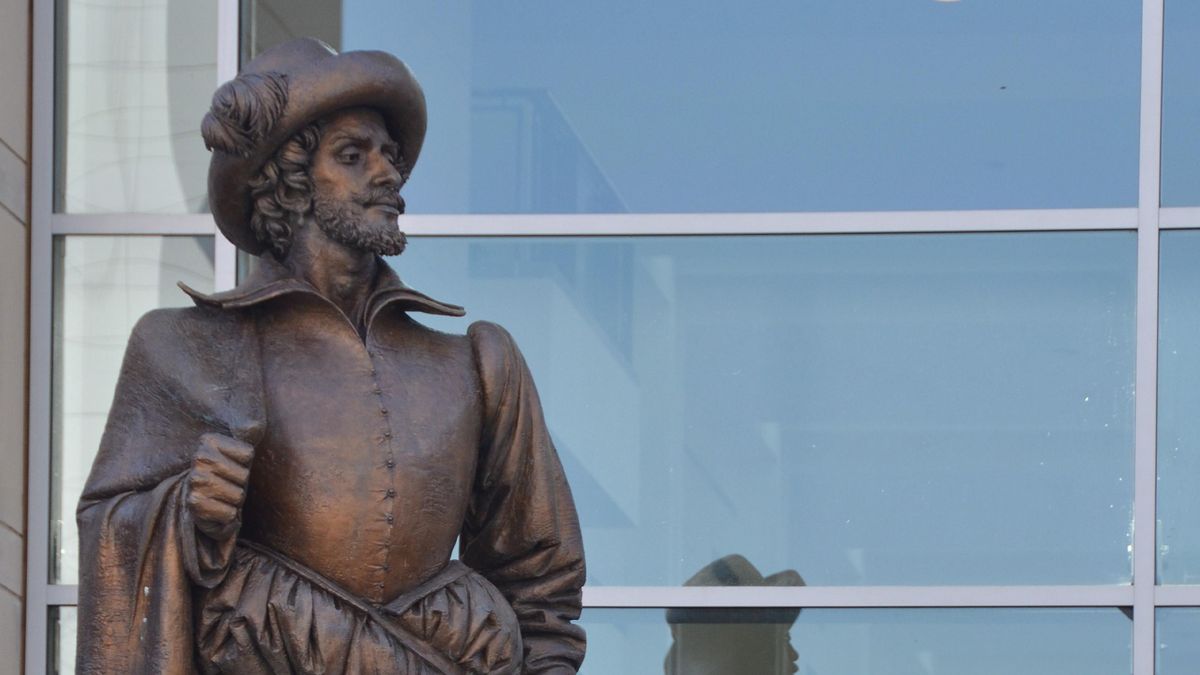
Of course, Sir Walter Raleigh also gave his name to the capital city of North Carolina,which was christened in 1792. There's also a statue of him that's been moved around Raleigh through the ages.
Sir Walter Raleigh is more than a historical figure. He's more than a symbol of an era or a namesake. His life and execution are an essential part of North Carolina history.
Find history everywhere in Raleigh
Why was Sir Walter Raleigh executed? He was, like so many others, the victim of an unfair trial. It gave the ruling king, who already hated him, an excuse to get rid of him forever.
Today, he's viewed as a tragic but inspirational figure. He was a soldier and a writer who helped inspire legal changes. That's why North Carolina named its capital after him. It remains one of the most vibrant cities in the state.