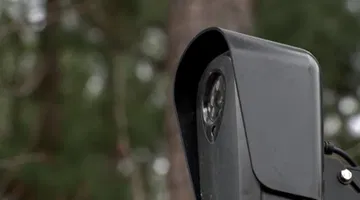
The company Ring ran a Super Bowl LX advertisement for its doorbell camera feature that can find missing dogs.
Ring is a manufacturer of home security and smart home devices owned by Amazon.
Other WRAL Top Stories
The company’s ad served as a reminder that people are always recording.
“It’s just like [Amazon’s] Alexa in that [the device] is recording all of the time because she listening for you to say her name,” Triangle Forensics CEO Duke Rogers said. “So, a lot of these cameras are set to record on motion, or at least to mark the motion.
Even if users only use their cameras to see live video and don't pay the subscription fee to have it recorded, the service still has that video, Rogers said.
“They have to be recording all of the time.”
The technology provides people with safety, which is the reason people buy doorbell cameras.
How law enforcement is using facial recognition technology
On Tuesday, the FBI released pictures and videos from a doorbell camera of a suspect in the disappearance of Nancy Guthrie, the 84-year-old mother of “TODAY” show anchor Savannah Guthrie.
Cameras are everywhere, and the images they capture can be used with facial recognition software to identify an individual. There are cameras in smartphones, outside homes, inside homes, gas stations, parking decks and elevators, cars, schools, stadiums, and grocery stores – they’re at your work and on your drive home.
Oftentimes, cameras can help solve crimes.
With today’s technology, people’s faces are part of the public domain. Companies use that data to find and profile people.
An example of this is a company called Clearview AI. The company scrubs the internet – Facebook, Instagram, Google and everything in between – and they can find your face among billions of pictures.
Clearview AI CEO Joan Ton-That demonstrated how the technology works for a CNN journalist by uploading a photo to the platform.
The technology works even when the photo is poor quality.
BBC News did a similar story on how law enforcement is using facial recognition technology across the U.S.
“They ran a search of this image from the police body cam footage using artificial intelligence,” lawyer Chris O’Brien told BBC News. “This AI popped him up in like three to five seconds.
“Pictures just popping up. Like pop-up ads. Here he is. This is the guy. And it was him, every one. It was wild. It was like hitting the lottery.”
When Clearview AI’s client list got hacked and leaked in 2021, WRAL News learned the company worked with the cities of Raleigh and Fayetteville, along with the town of Cary. However, Raleigh and Cary's police departments no longer use the technology.
Related: Raleigh police abruptly end use of controversial facial recognition tech
Previous: 4 things to know about how Google tracks your location
Clearview AI has contracts with the FBI, Air Force, Army and Homeland Security, along with police departments across the country.
Federal authorities have embraced the tool, and it is sometimes used in child abuse cases.
BBC News produced another story showing how Clearview AI captured a few frames from one of the abuse videos and tracked down the suspect in the background of a random person's Instagram post. The suspect was arrested, and authorities rescued a 6-year-old girl.
Regulating AI and facial recognition technology
Clearview AI’s database can find people’s pictures online anywhere, even in the background or in a crowd.
Even if Clearview AI’s technology does help law enforcement with its job, it makes people uneasy.
That's why cities and states across the country have started passing laws, with guardrails for this sort of tech. It includes San Francisco, Oakland and Boston. In 2020, the Raleigh Police Department ended a contract with Clearview AI, saying its use appeared to violate the agency's own internal policies.
In 2023, the European Union passed legislation for any company with similar AI-powered tools. The law provides oversight to AI technology in the EU’s member countries.
For iPhone users, every picture taken on the device goes to Apple and every app granted access like Instagram, Facebook, TikTok and ChatGPT.
It's not just tech companies either.
In 2025, Google agreed to pay the state of Texas $1.4 billion to settle claims company collected user data without permission, including “facial geometry.”
Kashmir Hill, a reporter for The New York Times, reported a personal story. He went to Madison Square Garden with a friend to see the New York Knicks play, but security stopped them.
“As we were collecting our bags, a security guard came over and pulled this personal injury attorney aside and said you’ve been flagged, we use facial [recognition] here and my mangers going to come over because he needs to talk to you,” Hill said. “And this attorney was one of thousands of attorneys who had been placed on a ban list at Madison Square Garden because she works at a firm that has a case against that company.”
In January, the grocery store chain Wegmans announced it is scanning customers’ faces at some stores. Walmart, Kroger and Home Depot reported they are doing the same.
Some people might argue on behalf of the store, saying they’re looking for repeat shoplifters. However, that argument takes trust.
It raises the question: Where is your line on privacy?
Have a question for WRAL News? Send us an email at 7pm@wral.com