North Carolina prosecutors say state laws don’t adequately deter criminal suspects from breaking law after they’ve already been arrested and deemed unfit to stand trial.
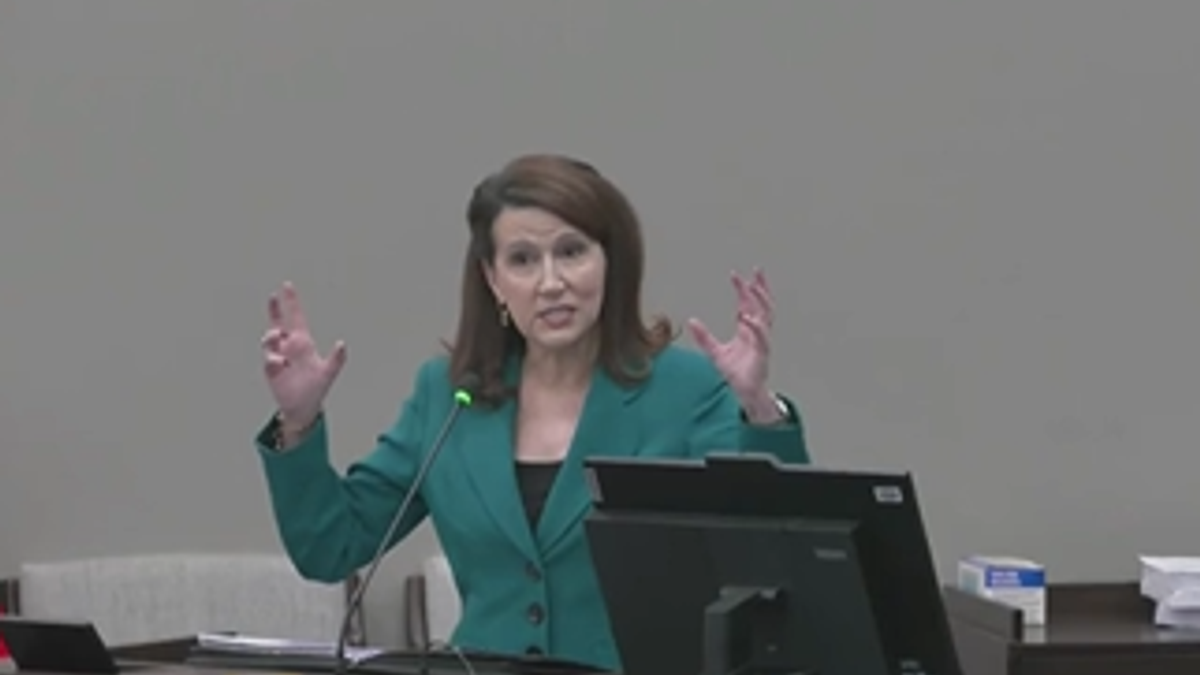
Representatives for the North Carolina Conference of District Attorneys on Tuesday expressed concerns with state laws, saying they inadequately address suspects who have mental illness. Legislators invited the group to testify at the House Select Committee on Involuntary Commitment and Public Safety as part of its ongoing review of state procedures for treating people with mental health problems.
Other WRAL Top Stories
“There’s a mental health system and there’s a criminal justice system, and independently they work pretty well,” said Lisa Coltrain, the conference’s homicide and arson resource prosecutor. “And then when you try to put the two of them together, sometimes there are some gaps.”
Mental health in the criminal justice system has come into focus following several high-profile killings that police say were conducted by people with histories of mental illness who had been in and out of jail. Last week, Gov. Josh Stein signed an executive order aimed at creating new strategies for bridging the gap between the state’s behavioral health and criminal justice systems.
Nonviolent criminal suspects who are deemed unfit for trial will often be released and continue to pick up criminal charges if they’re unable or unwilling to seek mental health treatment, Coltrain said.
State law says suspects can be deemed unfit for trial if they have a mental illness and if they fail to understand the court proceedings, fail to understand their own relation to the proceedings, or are unable to assist in their own defense. Coltrain said suspects are usually committed involuntarily to a psychiatric hospital if they’re deemed unfit for trial, charged with a violent crime, and pose a danger to themselves or others.
In lower-level cases, however, a defendant might walk free. Coltrain offered an example of a suspect with mental illness who is repeatedly arrested for trespassing at a gas station.
“You have somebody who has housing scarcity and they are out trespassing at a gas station,” she said. “They’ve been told they’re not allowed to be at that gas station. They go back out there and … they get arrested for trespassing. We know they don’t have the capacity to proceed. And so they are released. And I can tell you from personal experience, that person will wind up back in court for trespassing at that same gas station within the week.”
In those types of cases, Coltrain said, “there really are not sufficient safeguards to prevent re-offending.”
Coltrain’s comments come as legislators are reviewing the criminal history of a Raleigh man charged with murder last month. Ryan Camacho, who has a documented history of mental illness, is charged with killing Ravenscroft teacher Zoe Welsh at her Raleigh home.
Legislators have expressed outrage that Wake County Judge Louis Meyer in December denied prosecutors’ request to commit Camacho to a mental hospital after he was charged with breaking-and-entering last year. Meyer didn’t immediately respond to a WRAL request for comment.
Carl Fox, a former North Carolina Superior Court judge, told WRAL last month that he didn’t see any major problems with Meyer’s decision in Camacho’s December case.
“Just committing a bunch of crimes, like property crime kind of things, is not something that makes you necessarily committable,” Fox said. Judges commit someone based on whether they’re dangerous to people — not whether they’re dangerous to property, Fox said.
If a suspect is deemed incapable of proceeding, Coltrain said, a judge is expected to order an involuntary commitment hearing. “I will tell you, in practice, that sometimes this step is missed,” she said.
North Carolina legislators turned their attention to laws related to mental illness and crime following the August death of Iryna Zarutska, a 23-year-old Ukrainian who moved to Charlotte in 2022 and was fatally stabbed on a city train. The General Assembly passed the new mental health procedures as part of a larger judicial reform package titled, “Iryna’s Law.”
DeCarlos Brown Jr., who was charged with murder in the case, had been diagnosed with schizophrenia and suffered hallucinations and paranoia that his family hoped to find treatment for, his sister told CNN. Iryna’s Law changed around involuntary commitment rules, but implementation of those changes have been put on hold while legislators consider tweaks to the law.
In the involuntary commitment committee’s November meeting, hospital representatives took issue with a new rule requiring certain defendants to be transported “to a hospital emergency department or other crisis facility” for a psychiatric evaluation.
Hospital leaders said they don’t want the suspects evaluated in emergency departments because they could endanger other patients and hospital staff. Hospital leaders suggested that legislators instead require the evaluations to be done in jails. The North Carolina Sheriffs’ Association pushed back at that idea during the committee’s December meeting, saying that hospitals are more appropriate settings for evaluating someone’s health.
State Rep. Tim Reeder, a Pitt County Republican and physician who co-chairs the committee, said Tuesday that members plan to release a list of recommended changes sometime this April.